🧮 Chalk dust, a blinking cursor, and the itch to solve
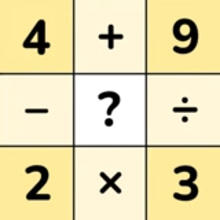
The grid stares back with tidy confidence, little boxes waiting for numbers and a handful of clues that sound simple until your pencil touches the first square. Math Crossword. Number Puzzle is the moment logic meets arithmetic and they both decide to high-five. It’s fast when you’ve earned it, patient when you need it, and weirdly dramatic the second a row and a column agree on the same digit. One clean input, a soft chime, and your brain does that quiet grin that says, yes, this is exactly my kind of trouble.
➕ What a cross-number actually is (and why it’s fun)
Imagine a crossword, but every “word” is a number and every clue is math you can verify. Rows might say 3-digit sum equals 142; columns might demand a product divisible by 9; some cells carry operators, others are pure digits, and everything intersects like polite geometry. Place a 6 in row three, and column five either thanks you or protests immediately. You aren’t guessing vocabulary—you’re negotiating with arithmetic, and it never lies.
🧠 Clues with teeth, but a friendly bite
Clues range from cozy to cunning. You’ll see classic sums and differences, tidy multiples, sneaky prime hints, even rationals that reduce if you’ve been kind with your factors. A row may read “AB + C = 27,” nudging you to realize A can’t be zero, or a column may insist “2×DE is a square,” which quietly eliminates half the candidates. The best part is the cross-check: a bold guess that survives three intersecting demands isn’t a guess anymore—it’s a handshake with the whole grid.
✍️ Tools of a tidy mind
You get pencil marks for candidate digits, quick-tap toggles for even/odd, and a smart note mode that autofills legal options based on current constraints. Hints behave like nudges, not spoilers; a tiny glow around a row says “your logic chain lives here,” while the heavier hint shows one digit the math guarantees. Undo is generous, redo is instant, and an optional “conflict flash” politely warns when a move breaks a clue so you can fix it without drama. There’s also a Check step for purists who like to fly without guardrails until the last second.
🎵 A soundtrack that breathes with your brain
Clicks are soft woodblock taps, confirmations ring like a tiny bell in a quiet library, and the music drifts between lo-fi pianos and warm synths. When you chain three correct placements, the track adds a hush of strings as if the grid itself were exhaling. Miss a deduction and the bass dips for a beat—never scolding, just reminding you to slow down, sip water, and look at the intersections again.
📚 Puzzles that feel hand-crafted
Early boards teach the grammar: small grids, gentle arithmetic, obvious intersections. Midgame starts to braid constraints—carryovers matter, factor trees whisper from the margins, and you’ll start writing little side sums in your head. Late boards do magic tricks with symmetry, palindromic runs, and delightful traps that only spring if you forget that zero can’t lead a number. The design stays fair; every puzzle is solvable with logic, not luck.
🚦 Modes for every math mood
Classic gives you a clean grid and a soft timer you can ignore. Zen removes clocks, dims UI distractions, and lets the music carry your thinking. Sprint offers three bite-sized puzzles back-to-back with cumulative time, delicious for coffee breaks. Brain Gym spices the rules—no pencil marks, or only evens allowed, or all clues are inequalities—so you return to Classic feeling suspiciously powerful. Daily Grid drops one new puzzle each day with a streak counter and a sweet little badge if you stay consistent for a week.
📈 Gentle progression, real improvement
You don’t level up stats; you level up habits. Clearing sets unlocks new clue types, aesthetic themes, and “mentor cards” that summarize strategies you just used without realizing it. Titles celebrate your style: Sum Surgeon for crisp carry logic, Factor Whisperer for product paths, Intersection Poet for those clutch cross-checks. Nothing boosts numbers for you; everything boosts you for the numbers.
🧩 Micro-habits that win boards
Start by marking extremes: if a three-digit sum is ≤ 105, the hundreds cell can only be 0 or 1—write that down. Hunt for odd/even locks; a total ending in 5 demands a 5 or a 0 somewhere interesting. On products, factor the target first; knowing 84 splits into 2×2×3×7 trims candidates instantly. Use the “two birds” move: place a digit that satisfies one row and uniquely rescues a column—those are the heroic squares. And when stuck, strip the grid to intersections and rebuild pencil marks from the most constrained cell outward. Two minutes of ruthless housekeeping beats ten minutes of hopeful tapping.
🎯 Accessibility that actually helps thinking
High-contrast digits keep clarity on bright screens, dyslexic-friendly fonts make 6 and 9 behave, and a color-agnostic symbol set mirrors hue cues with icons so information never relies only on color. A mixed-operation toggle lets learners limit grids to + and − before graduating to × and ÷. Haptic taps echo key beats—conflict found, row solved, board complete—handy when the room is noisy or the volume is low. Inputs remap so left-handed and one-thumb play feel natural.
👨👩👧👦 Learning in the background, joy in the foreground
This is a math game that teaches without announcing it. Younger players absorb place-value sense from carryovers, fraction courage from simplifications, and a fondness for factors by sheer repetition. Grownups rediscover comfortable arithmetic they forgot they were good at. And both get that quiet competence glow when an ugly clue turns elegant because the crossing cells left it no choice.
😂 Bloopers you’ll pretend were research
You will triumphantly type a 9 and watch three clues hiss in unison. You will forget that no number starts with 0 and build a tiny skyscraper of wrongness that topples with theatrical grace. You will chase a product path that looked clever and discover it was a mirage two intersections ago. The fix is fast. The lesson is loud. The next deduction lands with twice the satisfaction because it had to fight for its life.
🎨 Themes and tiny rewards that feel like stickers
Change paper textures from notebook cream to midnight chalkboard. Swap ink colors, toggle a subtle grid bloom on solved rows, and unlock celebratory confetti that looks like tiny plus signs taking a bow. None of this changes difficulty; all of it changes mood. A cozy theme turns late-night sessions into a ritual. A crisp theme makes morning sprints feel surgical.
🧭 Designer breadcrumbs you can actually use
Row clues near the edges are often friendlier than the center; they act like anchors for the whole puzzle. If two adjacent sums share all but one digit, the outlier is your lever—push there. When a clue references divisibility, remember the old tests: 3 checks digits, 4 checks the last two, 9 loves the digit sum. Background dots sometimes line up with natural breaks—if a three-cell block sits under a dot, you can treat it as a mini-number inside a longer run. Little visual hints, big time saves.
🏆 Why the last square always feels cinematic
Because cross-numbers reward patience with symmetry. You place the penultimate digit, the remaining cells collapse into a single legal path, and the final number clicks home with a chime the soundtrack saves just for that moment. The grid fades to a gentle glow, your streak ticks up, and you realize the part of your brain that loves order just got dessert.
🚀 One more grid? Obviously
You’ll promise to stop after this board, then notice the next puzzle has a neat diagonal of multipliers and a cheeky “divisible by 11” hint you can’t resist. That’s the loop: curiosity, structure, surprise, and the tiny celebration when arithmetic behaves. Math Crossword. Number Puzzle on Kiz10 turns clean logic, honest numbers, and satisfying cross-checks into a thinky, tactile ritual you can play for two minutes or twenty. Open a fresh grid, trust your pencil marks, and let the digits line up until the board applauds.







 Share
Share
 Embed
Embed


