🚚 No smooth roads, no easy wins
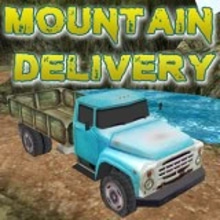
Mountain Delivery feels like the kind of game that starts with one simple instruction — take the cargo up the mountain — and then immediately reveals that the mountain has other ideas. This is a driving and cargo delivery game built around rough terrain, unstable loads, steep climbs, and the constant threat of losing everything because you got a little too confident on a turn. Public descriptions for mountain-delivery-style truck games consistently frame the experience around hauling cargo through dangerous slopes, rough roads, and narrow routes where smooth control matters more than speed.
That is exactly why the game works.
On Kiz10, Mountain Delivery lands in that sweet spot between simulation and chaos. It is not just about reaching the finish line. It is about reaching it with your cargo still intact, your truck still upright, and your dignity only partially destroyed. Every hill feels heavier than it looks. Every descent feels like a negotiation with physics. Every little bump in the road suddenly matters when the back of your truck is carrying something that clearly wants to slide straight into disaster.
There is something very honest about this kind of driving game. It does not flatter you. It does not pretend the road is your friend. It just hands you a vehicle, a difficult route, and a mission that sounds manageable until the first steep incline reminds you that “manageable” is a lie 😅.
⛰️ The road is the real enemy
The smartest thing about Mountain Delivery is that the terrain does most of the storytelling. You do not need dramatic villains when the path itself is already trying to ruin your run. Mountain roads create natural tension because they punish impatience. Too much throttle and the truck bounces. Brake too late and the descent turns ugly. Approach a slope badly and your cargo starts shifting in the exact way that makes your stomach tighten.
That pressure is what gives the game its personality.
Public descriptions of similar truck and off-road cargo games on Kiz10 repeatedly highlight steep hills, rough terrain, cliffs, mud, ramps, and fragile cargo as the central challenge. That design philosophy fits Mountain Delivery perfectly. It turns the environment into a constant mechanical problem. You are not just driving forward. You are reading the road. Measuring angles. Choosing when to push and when to back off. Deciding whether that next section looks survivable or just suspiciously optimistic.
And of course, half the time you only discover the answer after committing to it.
That is part of the fun. Mountain Delivery is not a smooth city driving game where wide streets forgive your mistakes. It is a balance game disguised as a truck simulator. A patience test disguised as a delivery mission. The truck is powerful, sure, but the route always feels like it is quietly asking whether you deserve that power.
📦 Cargo makes everything worse, which is excellent
A truck game becomes much more interesting the second it gives you something important to lose. Cargo changes the entire mood. Suddenly every turn has weight. Every bump matters. Every reckless correction becomes a possible disaster. Similar Kiz10 cargo-driving games describe this exact tension: the challenge is not simply to arrive, but to protect the load across uneven routes, cliffs, and off-road obstacles.
That is where Mountain Delivery really starts to bite.
Without cargo, mountain driving would still be fun. With cargo, it becomes personal. Now the truck does not just need to move. It needs to move well. Smoothly. Carefully. Like a machine hauling something important through a place absolutely not designed for comfort. The road starts feeling narrower. The corners look meaner. The truck feels heavier, slower, more stubborn. Which, honestly, is exactly what you want from a mountain cargo game.
It creates those great little moments of panic too. The rear end shifts slightly and your brain immediately starts doing emergency math. You hit a rock and now you are thinking about your entire route history like it led to this one foolish mistake. You crawl over a ridge at the speed of pure anxiety and somehow save the load by inches. That kind of tension is wonderfully effective because it stays grounded. Nothing magical is happening. Just wheels, weight, bad roads, and consequences.
Beautiful.
🛞 Slow is smart, fast is usually embarrassing
One of the most satisfying things about Mountain Delivery is how it quietly retrains your instincts. Most driving games encourage speed first and precision later. This kind of game flips that around. Precision comes first. Speed is a luxury, and sometimes a trap. Public Kiz10 descriptions for off-road and truck cargo games repeatedly stress smooth driving, early braking, steady throttle, and careful handling as the best strategy for surviving mountain routes.
That advice sounds simple, but in play it becomes almost philosophical.
You stop trying to dominate the road and start trying to cooperate with it. You learn to respect slopes. You approach descents with caution instead of bravado. You stop flinging the truck into turns like a maniac and start treating the cargo like it has emotional needs. It changes the whole rhythm of the game. Suddenly a clean, careful climb feels more impressive than reckless speed ever could.
And the game rewards that mindset. When you thread through a difficult section without losing the load, the satisfaction is immediate. Not flashy. Better than flashy. Solid. Earned. It feels like you solved the mountain rather than simply passed through it.
Of course, sometimes you ignore your own good judgment and floor it anyway. That usually ends in a lesson. A loud, clumsy, rolling lesson.
🌄 Why this kind of delivery game is so addictive
Mountain Delivery has that dangerous “just one more route” quality because every failure feels fixable. You know where the mistake happened. You know which slope you took badly, which turn you entered too fast, which descent got away from you. So naturally you try again, convinced that this time you will be calmer, smarter, more controlled.
Maybe you are.
Maybe you are exactly three seconds away from repeating the same disaster with new confidence.
That loop is what makes good cargo-driving games stick. Public descriptions of similar Kiz10 truck games emphasize progression through harder terrain, repeated route attempts, and improved cargo control as the core appeal. Mountain Delivery fits that pattern beautifully. Every run feels like a small argument between your judgment and the terrain. Sometimes judgment wins. Sometimes the mountain wins. But the next attempt always looks possible, and that is enough to keep you locked in.
It also helps that the premise is so clean. Deliver the cargo. Survive the route. Do not let the truck become a cautionary tale. The game does not need extra nonsense layered on top. The road provides all the drama it needs.
🏔️ Final thoughts from the cliffside
Mountain Delivery is a strong fit for players who enjoy truck simulators, off-road driving games, cargo transport challenges, and rough-terrain skill games. Like other Kiz10 mountain and cargo driving titles, its appeal comes from steep routes, unstable loads, careful throttle control, and the constant tension of trying to arrive without wrecking the mission. On Kiz10, that makes it an easy games to start and a surprisingly stubborn one to leave.





 Share
Share
 Embed
Embed


