🤠🌵 A kid, a stolen life, and a town full of targets
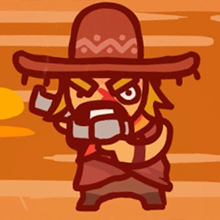
Revenge of the Kid doesn’t waste time pretending the Wild West is romantic. It’s dusty, loud, unfair, and full of bandits who somehow think stealing from a kid is a smart career move. So you do what any stubborn hero would do: you grab the courage you didn’t ask for, you pick up a gun, and you start moving level by level into trouble with the calm stare of someone who has snapped. The hook is simple, and that’s the point, because the real story is the one you create with your aim.
This is an action shooting game with a classic arcade heartbeat. Enemies appear, you line up shots, you clear the wave, you push forward. It feels quick and direct, like a western scene that resets until you play it perfectly. One clean hit boosts your confidence. One sloppy miss turns the screen into panic. That swing, from cool to chaos and back again, is the flavor that keeps you clicking.
🎯💨 Aim first, breathe later
The shooting rewards calm hands, but it’s not a calm game. You’re balancing speed and precision every second. Wait too long and an outlaw gets the advantage. Rush too hard and you throw your shot away, then you do the most human thing possible: you try to “fix” it with another rushed shot. The game doesn’t lecture you for that. It just punishes it quietly and lets you learn the hard way.
When you’re playing well, it feels cinematic. Your crosshair snaps, your timing lands, and you move to the next target like you already knew where they’d pop up. When you’re playing badly, it feels like arguing with your own reflexes. Your eyes see the threat, your hand moves, and the timing slips by a heartbeat. That little heartbeat is everything in a Wild West shooter.
🧱🕶️ Cover, corners, and the art of staying alive
You’re not a tank. You’re a kid in a bad situation with a weapon and a mission, which means positioning matters. Corners become comfort. Walls become tiny promises. Any solid object is a friend for exactly as long as it stays between you and a bullet. You’ll learn to peek instead of charge. You’ll learn to wait half a beat instead of sprinting into open space because you “feel ready.”
That shift is satisfying. You stop treating levels like a straight hallway. You start treating them like little shooting puzzles. Where is the safest line. Which target is closest to landing a clean shot. Which enemy is there only to distract you while someone else lines up a hit. You can feel yourself becoming deliberate, and the game feels better the moment you stop trying to look brave and start trying to be smart.
💥🪙 Greed is a bandit too
Then the game tempts you. Coins, pickups, shiny rewards, whatever form it takes, it always appears in the most suspicious place. Your brain starts negotiating. “I can grab that and still be safe.” And sometimes you can. That’s what makes it dangerous. The risk works often enough that you start believing it always will, and that’s when the West takes its bite.
The best runs happen when you treat rewards as bonuses, not obligations. Clear the threat, then collect. Make space, then grab. It sounds obvious until you’re in the middle of it, heart tapping the table, and a shiny line is sitting right next to an enemy that wants you to step forward. You’ll mess up. Everyone does. The trick is noticing the pattern in your own decisions and tightening up before you throw away a perfect streak.
🦂🔥 Bandits with patterns, bosses with attitude
Not every outlaw is the same kind of danger. Some are straightforward targets. Others exist to break your rhythm, appearing at the worst moment, forcing you to move, daring you to take a rushed shot. As you progress, you stop reacting blindly and start reading behavior. You’ll recognize which threats must go first, which ones can wait, and which ones are basically traps with hats.
When tougher encounters show up, the tension sharpens. The space feels smaller, your mistakes cost more, and suddenly you’re not playing “a shooter,” you’re playing a timing exam. You choose windows. You manage pressure. You fire when the angle is yours, not when your nerves yell “NOW.” And when you clear those moments, it feels earned. Not because the game praised you, but because the screen finally gives you a second to breathe.
🌙🏜️ The quiet between shots
Games like this live on micro pauses. The tiny silence after a wave. The moment where the dust settles and you realize you were holding your breath. Revenge of the Kid uses those gaps to make the action hit harder. You clear the last bandit, the scene calms, and for a second it’s just the frontier and your character standings there like, okay… next.
Those pauses are also where you improve. You replay a level and you remember exactly where you got caught. You remember the corner that tricked you. You promise yourself you’ll be calmer, and then you get surprised anyway because the game is good at poking your weak spots. But the failures feel specific, not random. Each mistake teaches you something sharp, and that makes the next attempt feel personal.
🏁🔫 Why it feels so replayable on Kiz10
On Kiz10, Revenge of the Kid works because it’s straight to the point. It’s a browser shooter you can play for one level and accidentally stay longer because you want the clean run. You want to miss less. You want to clear faster. You want to handle the Wild West like you own it, not like you’re surviving it.
It’s not a complicated game that asks you to memorize menus. It’s a punchy action loop with enough pressure to make every level feel like a little story. Some days you’ll play aggressively, trusting instinct and speed. Other days you’ll play cautiously, using cover and timing like you’re setting a trap. Both styles work, and switching your approach keeps the revenge fresh.
If you like Wild West shooters, quick draw energy, and tight level based action where aim actually matters, this one delivers. It’s a revenge tale told through clicks and courage, through missed shots and clean saves, through that stubborn feeling that says you’re not leaving the frontier until you get your win. Just remember: the bandits aren’t the only thing trying to trick you. Your own impatience is always riding beside them 😈.





 Share
Share
 Embed
Embed


