🌙 Night Shift, Warm Grill, Cold Feeling
There’s a special kind of loneliness that only exists behind a small service window at night. The city is mostly asleep, the streetlights hum like they’re tired, and your world shrinks to a counter, a few ingredients, and the soft heat of a grill that should feel comforting but doesn’t. In Scary Shawarma Kiosk: The Anomaly, you’re not a hero with a shotgun or a detective with a badge. You’re just… working. Taking orders. Wrapping food. Trying to act normal while something out there keeps testing what “normal” even means. 😶🌫️
At first, it’s almost cozy in that weird late night way. A customer taps the window. You open it. They want shawarma. You do your job. Simple. And then you notice a detail that doesn’t fit. A voice that pauses too long. A face that looks correct until you really look at it. A sentence that lands wrong in your stomach, like you ate fear by accident. You close the window and you tell yourself it’s fine. You tell yourself you’re overthinking. And the game quietly leans in and whispers, yes, keep telling yourself that. 🥲
🥙 Your Hands Do the Routine, Your Brain Does the Screaming
The loop is deliciously cruel because it’s built on ordinary actions. Prepare shawarma the way the customer asks. Follow the rules. Keep things clean. Don’t mess up. Except your mind is doing two jobs at once. One part of you is cooking and assembling like a focused little machine, while the other part is scanning the customer like you’re trying to read a lie from the shape of their shadow. 👀
That tension is the whole point. You are constantly forced to decide who gets served and who gets turned away. Some visitors are just hungry. Some are not. And the problem is, the game doesn’t hold your hand and doesn’t give you a shiny obvious warning sign. It’s not a bright red “EVIL CUSTOMER” sticker on their forehead. It’s subtler. It’s the way they speak. The way they stand. The way they repeat themselves, or don’t. The way a detail is slightly off, like a picture that got copied too many times. 😬
So you do what any rational person would do. You squint. You hesitate. You stare a little too long at someone’s face like you’re trying to remember if humans are supposed to have that many teeth. And then you make the call. Serve them or close the window.
📋 Rules That Sound Simple Until They Start Moving
The rules in this game feel like safety protocols at a job you didn’t ask for. Follow them, you survive. Break them, you pay. The terrifying part is that “break them” can mean something you didn’t even realize you did. A wrong serve. A wrong customer. A mistake that feels tiny in your hands but huge in the world behind your window. 🙃
And once the game introduces the idea of punishment, your whole posture changes. You stop playing casually. You lean closer to the screen. Your decisions start to carry weight. You begin to treat each customer like a test you didn’t study for, where the exam questions are written in body language and awkward pauses. 😵💫
There’s a creeping paranoia that grows naturally. Not the loud, jump scare kind that makes you laugh after, but the kind that settles in your shoulders. It turns the simple act of opening a window into a risk. It turns silence into suspicion. It makes you feel like the kiosk itself is watching you work, counting your mistakes, waiting for you to slip. 🫣
🪟 The Window Is a Border Between Worlds
The service window becomes your entire relationship with reality. Open it, and you invite someone into your life for a few seconds. Close it, and you’re trapped with your thoughts. The game does something clever here. It makes you fear both choices. If you keep the window open, you risk letting the wrong thing in. If you keep it closed, you’re stuck listening to the night, and the night has way too much time to get creative. 😶
Sometimes the street feels normal enough to breathe. Then it doesn’t. Reality starts to distort in ways that are hard to explain, like the world is being edited while you’re still inside the scene. You’ll catch yourself thinking, wait, was that always there. Was that sound always like that. Did that customer just… glitch in place, or am I losing it. 😟
This is where the psychological horror really bites. You don’t just fear an enemy. You fear your own memory. You fear your own perception. You start relying on patterns, then you start doubting them, and the game makes that doubt feel like part of the story, not a mistake. 🌀
🕵️ The Inspector, The Price of Being Wrong
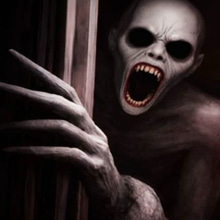
The nightmare has a name in this game, and it comes when you break the rules. The Inspector isn’t just a punishment screen. It’s a presence. A looming idea that turns every decision into a gamble. Even before it arrives, you feel it hanging over you. Like a consequence that has claws. 😨
That’s the genius of it. The Inspector doesn’t need to show up often to control your behavior. Just the possibility is enough. You’ll find yourself triple checking everything, second guessing your instincts, and then second guessing your second guessing because what if that’s what the anomaly wants. It becomes this messy mental spiral where you try to stay calm but your calm is fake and you know it. 😅
And when you do mess up, it doesn’t feel like losing points. It feels like you violated something sacred. Like you broke a rule that wasn’t just in the game, but in the fabric of the night itself.
🧠 You Start Noticing Patterns, Then You Start Seeing Them Everywhere
Each night adds pressure, and not in the cheap “more enemies” way. It’s more like the game keeps expanding your paranoia toolkit. You learn to observe. You learn to remember weird details. You learn to trust your gut, until your gut betrays you because you’re tired and the kiosk light is flickering and the customer is smiling in a way that feels rehearsed. 😐
You begin to build your own mental checklist without realizing it. The way a customer approaches. Their tone. Their confidence. The little inconsistencies. And then the game, because it’s mean in a smart way, starts messing with those expectations. It makes you question whether you’re spotting a real anomaly or just imagining one because you’re stressed. 😵
That’s when you realize the horror isn’t only outside the kiosk. It’s inside your head, growing with every decision. The game doesn’t shout at you. It stares at you. It waits for you to blink first.
🔥 The Weird Comfort of Doing a Job While Everything Falls Apart
There’s something oddly grounding about making food while the world bends. The act of preparing shawarma becomes your little ritual of sanity. Slice, assemble, serve. Repeat. It’s the one thing that still makes sense. And that’s why it’s so unsettling when even that gets corrupted by fear. 😮💨
You’ll have moments where you’re like, okay, I’ve got this, I’m a professional, I run this kiosk, I can handle a few strange customers. Then someone shows up and you freeze because you can’t tell if they’re just awkward… or wrong. The game forces you to live in that gray zone, and it makes every choice feel personal. Like you’re not just playing a horror game, you’re working a shift in a nightmare that pays in dread. 💀
🌅 Holding Out for Sunrise Like It’s a Myth
The goal sounds simple: survive until morning. But after a while, morning starts to feel like a rumor. Like something people invented to cope with night shifts. You keep going anyway. Because you want answers. Because you want to beat the system. Because you want to prove you can keep your cool when reality starts slipping. 😤
And that’s the hook. Scary Shawarma Kiosk: The Anomaly is a first person horror experience that turns customer service into a psychological trap. It’s observation, memory, nerves, and that constant feeling that you’re one tiny mistake away from inviting something into your world that doesn’t belong. If you like tense online horror games where you’re not fighting monsters, you’re judging them, this one digs in deep. Play it on Kiz10, keep the rules close, and when someone taps on the window… take a breath before you open it. 👁️🥙







 Share
Share
 Embed
Embed


