𝐒𝐩𝐫𝐮𝐧𝐤𝐢𝐥𝐚𝐧
Sprunkiland is the kind of rhythm game that stops pretending to be normal almost immediately. It begins with music, yes, but not the calm, friendly kind of music game that politely teaches you where to tap and lets you settle into a comfortable groove. This one feels louder, stranger, and much more unstable. Notes rush forward, the screen starts acting like it drank too much electricity, and the whole experience begins to feel less like a concert and more like surviving a musical meltdown. That is exactly what makes it memorable.
At first glance, the idea is simple. Follow the beat. Hit the right notes. Keep the rhythm alive long enough to finish the level. But Sprunkiland builds its identity by making every one of those steps feel a little more chaotic than expected. The beat does not always feel safe. The visuals do not always stay calm. The game keeps pushing the player toward that perfect point where control and confusion start colliding. One second you are locked in and feeling brilliant. The next, a weird sound effect, a sudden visual shift, or a brutal timing twist tries to break your focus in the funniest possible way.
That is the real strength of Sprunkiland. It understands that rhythm games become addictive when they create tension between confidence and collapse. You start a level carefully, listening for patterns, watching how the notes move, trying to build a clean streak. Then the music gets bolder, the timing gets tighter, and the whole thing begins to feel like a dare. Can you keep the combo alive while the game gets louder, faster, and more ridiculous? That pressure is the engine of the whole experience.
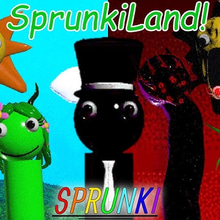
The Sprunki identity helps a lot. This is not a cold, minimalist note lane with no personality. It is full of odd energy, weird sounds, and chaotic character flavor that turns every run into something more theatrical. Sprunki does not feel like decoration. It feels like the spirit of the whole game. Loud, twitchy, funny, a little unhinged, and somehow still musical. That gives the game much more character than a standard browser rhythm challenge. You are not only chasing accuracy. You are surviving a whole bizarre performance.
𝐖𝐡𝐚𝐭 𝐦𝐚𝐤𝐞𝐬 𝐒𝐩𝐫𝐮𝐧𝐤𝐢𝐥𝐚𝐧 𝐬𝐨 𝐚𝐝𝐝𝐢𝐜𝐭𝐢𝐯𝐞
The best part of Sprunkiland is that it keeps changing the emotional texture of the run. Some moments feel clean and smooth, almost like a normal rhythm game. Then something happens. The music shifts style. The visual energy spikes. The pattern that looked manageable suddenly becomes a tiny panic attack with a soundtrack. That instability is not a flaw. It is the design. The game wants you to feel slightly unsafe even when you are playing well.
That works because the controls stay readable. Even when the game gets noisy, the challenge still comes back to rhythm and reaction. Your hands always know what they are trying to do. The hard part is keeping your head clear while the game does everything it can to distract you. That creates a great skill loop. Players do not only improve by learning patterns. They improve by learning how to stay calm inside the nonsense. 😵💫
And that is where replay value really starts to grow. A bad run never feels completely wasted. You can feel where the timing slipped. You can hear the moment the rhythm got away from you. You know when you reacted too early, too late, or let the visual chaos drag your fingers off the beat. That makes restarting feel natural. One more try never sounds unreasonable in Sprunkiland. It sounds necessary.
𝐓𝐡𝐞 𝐫𝐡𝐲𝐭𝐡𝐦 𝐥𝐨𝐨𝐩 𝐚𝐧𝐝 𝐭𝐡𝐞 𝐜𝐡𝐚𝐨𝐬 𝐥𝐨𝐨𝐩
What really separates this game from a generic music challenge is the way it combines rhythm with absurdity. Sprunkiland is not content with asking for precision alone. It wants a reaction. It wants you to laugh, panic, recover, and somehow keep the beat going anyway. That is why the game feels alive. The notes are only part of the battle. The rest is psychological. The screen flashes, weird little surprises interrupt your comfort, and the music keeps pushing forward like it knows your hands are close to failing.
This also gives the game stronger SEO value as a music title because it fits several player expectations at once. People looking for a Sprunki rhythm game, a weird music game, a browser note challenge, or a chaotic beat-matching game are all searching for the same promise: fast input, catchy sound, weird visual identity, and a loop that keeps getting stranger the longer you survive. Sprunkiland fits that promise beautifully.
There is also something very satisfying about the way the game turns embarrassment into motivation. Missing a note feels bad for a second, but in a funny way. The game does not make failure feel heavy. It makes it loud. That difference matters. It means the player is more willing to jump back in. A failed chart becomes a challenge, not a punishment. The whole tone of the game supports that. It is chaotic, but not joyless. Difficult, but not dull.
𝐇𝐨𝐰 𝐭𝐨 𝐠𝐞𝐭 𝐛𝐞𝐭𝐭𝐞𝐫
The smartest way to approach Sprunkiland is to trust the music more than the screen. The visuals are part of the fun, but they are also part of the trap. Players who improve fastest are usually the ones who start listening harder. Once you let the beat guide your timing, the chaos becomes easier to read. The notes stop feeling random. Even the weirdest moments start feeling survivable.
It also helps to stay light with your inputs. Rhythm games punish panic. Sprunkiland punishes it even harder because panic makes the absurdity feel bigger. Clean taps, steady focus, and a willingness to restart without frustration will take you much farther than frantic button mashing ever will.
Sprunkiland works because it knows exactly what it wants to be. It is not trying to look elegant or serious. It wants to be noisy, memorable, addictive, and just unstable enough to make every successful run feel like an achievement. If you want a browser music game that feels wild, funny, and surprisingly intense, this one gives you plenty of reasons to keep the beat alive. 🎧✨





 Share
Share
 Embed
Embed