🦑⛵ The Ocean Is Calm… Your Cage Situation Is Not
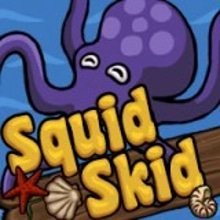
Squid Skid starts with a problem so simple it feels rude: your octopus brother is stuck in a cage, hanging there like a sad sea souvenir, and you’re the only one with a boat and a plan that can best be described as “physics hope.” On Kiz10, this is a quick, goofy arcade puzzle where you don’t fight enemies with weapons or cast magic spells. You fight gravity, momentum, and your own impatience. The goal is clear: move the boat left and right to swing the cage, reach the key, and end the captivity. Easy to understand, surprisingly tricky to do cleanly, and extremely good at making you say “I almost had it!” about thirty times. 😅
The game is built around that classic skill loop: simple controls, one central mechanic, and a challenge that comes from timing rather than complexity. You’re basically conducting a floating pendulum rescue mission, and the ocean doesn’t care if you’re nervous. It just keeps bobbing. 🌊
🔁🧠 It’s Not About Speed, It’s About Rhythm
At first you’ll try to brute force it. You’ll slam the boat left-right-left-right like you’re shaking a vending machine that owes you snacks. The cage will swing wildly, miss the key, and you’ll feel personally attacked by basic physics. Then you’ll realize the secret: this game rewards rhythm. Small pushes at the right time create bigger swings than frantic mashing. It’s all about building momentum like you’re pushing a playground swing, except the swing contains your brother and the prize is freedom. No pressure. 😭🔑
You begin to feel the timing in your hands. Move the boat when the cage is coming back toward center. Ease off when it’s reaching the edge so it doesn’t lose its line. Let the swing grow naturally until the cage is close enough to reach the key. That moment, when the cage finally arcs into the right spot and you’re holding your breath like it’s a final boss fight… that’s the fun. The game turns a tiny action into a dramatic moment because it makes you earn it through control. 🧠✨
🧩⚓ The Boat Is Your Lever, Not Your Character
A lot of games put you directly in control of the hero. Squid Skid is sneaky: you’re controlling the boat, and the boat controls the cage, and the cage controls your destiny. That separation is what makes it feel like a puzzle instead of a reflex spam test. You’re not steering toward the key. You’re steering to influence the swing. You’re manipulating the environment.
And once you accept that, the game becomes less frustrating and more satisfying. You start predicting arcs. You start understanding how wide the cage can swing before it loses alignment. You begin making tiny corrections instead of big swerves. It’s like learning to balance something delicate while waves try to mess with you. The better you get, the calmer your movement becomes, and that’s always a good sign in a physics-based arcade game. 😎⚓
🔑🦑 The Key Is Always “Just One More Swing” Away
The key is the perfect tease. It sits there like a simple solution, but the cage doesn’t naturally want to line up with it. You have to earn that alignment. You have to build the swing gradually, then hold it steady long enough for the cage to reach the exact spot. That’s where most players fail: they get close, get excited, over-correct, and ruin the whole rhythm. It’s the classic human mistake. Success is near, so you panic. 😅
When you’re close to the key, the game becomes a test of patience. You don’t need more power, you need less panic. The best move near the end is often the smallest movement, just enough to keep the swing alive without throwing it off line. And when the cage finally hits the key and the rescue triggers, it feels absurdly rewarding for something so simple. You’ll get that little victory rush like you just solved a big puzzle, even though you basically just “wiggled a boat” with style. 🏆🦑
🌊😂 The Comedy Is in the Struggle
Squid Skid has that light Kiz10 arcade vibe where failure doesn’t feel punishing, it feels funny. You miss the key by a pixel and you can almost imagine the octopus brother inside the cage doing the “really?” face. The whole situation is ridiculous in the best way, and the game leans into it by keeping everything quick and replayable. You don’t lose ten minutes of progress when you mess up. You lose a moment, then you try again with a slightly better understanding.
That’s why it’s easy to keep playing. It’s low commitment, high satisfaction. You’re always close to improving because the mechanic is so focused. You’re not learning ten systems. You’re learning one rhythm. And once you nail that rhythm, you’ll wonder why you struggled earlier. Then you’ll play again and struggle anyway because humans never learn permanently. 😭🔁
🎯🧠 How to Win More Consistently (Without Going Full Rage Mode)
The best strategy is to treat your movements like gentle pushes instead of sharp yanks. Build swing amplitude slowly. Watch the cage’s lowest point and time your boat movement as the cage passes through that center zone. If you push at the wrong time, you cancel momentum. If you push at the right time, you amplify it. Once you’re near the key, stop making big moves. Maintain the arc. Let the cage do the work. The ocean is already adding chaos; you don’t need to add more. 🌊😅
And if you miss, don’t reset your brain into “faster.” Reset into “cleaner.” Cleaner wins this game.
🦑🔓 A Tiny Rescue Game That Feels Weirdly Addictive
Squid Skid is a simple, charming physics arcade rescue on Kiz10: swing the cage, reach the key, free your octopus brother. It’s the kind of game that proves you don’t need complicated mechanics to be fun. You just need one mechanic that feels good when mastered and annoying when ignored. And here, mastery is all about timing, momentum, and staying calm while your cage swings like it’s mocking you.
Will you get the release? Yes. Probably. Eventually. Maybe after ten near-misses and one dramatic final swing where you whisper “please” at the screen. 🦑🔑⛵











 5 (36 votes)
 Share
Share
 Embed
Embed