🧺🧸 The picnic looked friendly… and then it blinked wrong
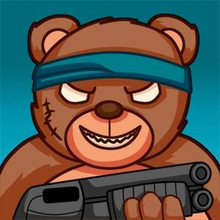
Teddy Bear Picnic Massacre is the kind of game that smiles at you first. You see the title, you picture blankets, cupcakes, maybe a harmless little forest vibe. Then you load in and realize the word “picnic” is basically a prank, because these teddy bears are not here to share snacks. They’re here to swarm you like plush nightmares with zero respect for personal space. On Kiz10, this plays like an arcade survival shooter with a twisted cartoon mood: simple to understand in one breath, strangely intense the moment the first wave closes in.
It’s not about a long story or cutscenes. The story is the panic you create. The second your brain goes “okay, I’ll just clear a few,” and then the screen fills with bears and your fingers suddenly forget how aiming works. That’s the charm. It’s fast, a little ridiculous, and it turns something cute into something that makes you lean forward and whisper “nope nope nope” while you keep firing anyway. 😅
🔫🎯 Simple controls, mean consequences
The controls feel clean and classic. Move, aim, shoot, survive. That’s the whole contract. But the consequences build quickly because the game doesn’t wait for you to get comfortable. The teddy bears push in, and if you hesitate, you get boxed in. If you get greedy, you miss a shot. If you miss a shot, the crowd gets thicker. If the crowd gets thicker, you start doing those frantic half-steps where you’re trying to create space and your brain is screaming “WHY IS THERE NO SPACE?!” 🫠
What makes it addictive is that it’s readable. You always understand why you failed. You can point at the moment it went wrong. “I reloaded at the wrong time.” “I got trapped near the edge.” “I chased the wrong target.” That clarity makes you restart immediately because it feels fixable. Not easy, but fixable. And fixable is dangerous. Fixable keeps you playing.
🧨🧸 Plush enemies that feel way too confident
The teddy bear enemies are funny in a dark way because they look like they belong on a toy shelf, but their behavior is pure pressure. They rush, they crowd, they force you into movement. That contrast is the game’s personality: cute shapes, hostile intent. It’s basically a comedy of discomfort. Your brain keeps trying to label them as harmless, and the game keeps correcting you with a swarm.
And the swarms are the real threat. One teddy bear is nothing. Two is manageable. A pile is a problem. A wave is a crisis. You start learning to read the flow: where the bears are coming from, where you can kite them, how to avoid getting pinned. The moment you get cornered, the game becomes a tiny survival horror scene, except the monsters are stuffed and your dignity is the first thing to die. 😭
🎁⚡ Presents, upgrades, and the “I can totally handle more” lie
This is where the game turns into a loop you can’t ignore. You survive, you gain progress, you unlock upgrades and perks, and suddenly your character starts feeling stronger. That power spike is intoxicating. It makes you bold. And the game loves bold players because bold players take risks. You’ll see new gear, new boosts, new ways to keep yourself alive longer, and your brain starts planning the next run before the current one even ends.
Upgrades change how you approach the waves. More power means faster clears, which means more room to breathe. Better survivability means you can recover from mistakes instead of instantly collapsing into chaos. The funniest part is how quickly confidence returns. You’ll die horribly, restart, pick a better perk path, and immediately feel like a professional. Two minutes later the bears remind you that you are not a professional. You are a person with shaky aim and big dreams. 😂
🧠🌀 The real strategy is space, not shots
Yes, you’re shooting, but the true skill is managing space. You want distance. You want lanes. You want an escape route. The moment you stop respecting space, the game turns into a traffic jam made of plush bodies, and you’re the one stuck in the middle with a weapon that suddenly feels too small.
A good run is built on rhythm. Fire, reposition, fire, reposition. Keep the swarm shaped like a problem you can solve, not a blob you can’t control. There’s a weird satisfaction in “training” the enemies into a pattern: drawing them into lines, thinning the front, keeping yourself away from bad angles. When it works, it feels smooth, almost cinematic, like you’re directing a chase scene. When it doesn’t, it feels like you tripped over your own feet in public. 😬
😈🎬 Dark humor, arcade pacing, and that constant grin-of-doom
The tone is what makes Teddy Bear Picnic Massacre memorable. It’s not trying to be realistic. It’s going for that dark, playful shock: turning something innocent into something absurdly aggressive. The “massacre” part stays stylized and arcade-like, more about survival, speed, and wave pressure than anything graphic. It’s the kind of game that makes you laugh because it’s ridiculous… and then you stop laughing because you’re about to lose your run. 😅
The pacing does something clever too: it gives you moments where you think you’ve stabilized, then it adds just enough pressure to push you back into panic. That up-and-down rhythm is why it’s so easy to say “one more attempt.” You’re always one smarter decision away from a new personal best. And even when you fail, it feels like a near-miss rather than a dead end.
🏆🔥 Chasing the perfect run
Once you’ve played a few rounds, the goal quietly shifts. At first, you just want to survive. Then you want to survive longer. Then you want to survive cleanly. Then you want to survive in a way that makes you feel clever. You start caring about efficiency, about upgrades, about not wasting shots, about not getting tagged in dumb ways. You start thinking like a player who’s optimizing instead of reacting.
That’s the moment the game really hooks you. You’re not just playing. You’re improving. You’re building a personal strategy that fits your style. Maybe you like mobility and breathing room. Maybe you prefer raw firepower. Maybe you like “safe” runs where you play patiently and never get cornered. Whatever your approach, the game rewards the learning process, which is why it feels sticky.
🧸💥 Why it lands so well on Kiz10
Kiz10 is perfect for these high-energy browser shooters: quick starts, instant action, and enough depth to keep you returning. Teddy Bear Picnic Massacre fits that mold with a weird, memorable theme and a survival loop that never feels boring. Every run is a new little story: the moment you got greedy, the moment you clutched, the moment a swarm nearly swallowed you, the moment you finally found a perk combo that made you feel unstoppable for five glorious seconds.
So if you want an arcade survival shooter with dark humor, fast waves, upgrades that actually matter, and a theme that’s equal parts silly and unsettling, this is your kind of chaos. Load it on Kiz10, keep moving, keep your space, and remember: the teddy bears do not care about your childhood memories. They want the picnic, and they want you gone. 🧺🔫🧸





 Share
Share
 Embed
Embed


