𝗧𝗛𝗘 𝗧𝗥𝗔𝗜𝗡 𝗜𝗦 𝗙𝗔𝗦𝗧, 𝗧𝗛𝗘 𝗧𝗥𝗔𝗖𝗞 𝗜𝗦 𝗥𝗨𝗗𝗘 🚂⚡
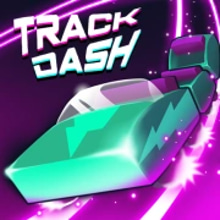
Track Dash begins with a rollercoaster train that has apparently decided safety inspections are for other people. You race forward on a 2D track, build speed, launch into the air, and try to land cleanly before the next gap, ramp, pit, or weird piece of track turns your run into a very short story. The idea is simple, almost dangerously simple: hold to keep moving on the track, release to jump or fly, and survive as far as possible. Then the game starts moving faster, the track gets meaner, and suddenly one button feels like it controls your entire destiny.
On Kiz10.com, Track Dash works as a quick arcade skill game where timing matters more than luck. You are not steering through a giant set of controls or managing complicated upgrades. You are reading the track, using momentum, and deciding exactly when to release. A good jump can carry you over danger. A bad jump can send the train straight into a crash with no polite warning. It is clean, fast, and very good at making you say, “One more run,” even when the last five runs ended in suspiciously similar mistakes.
The charm is in the rhythm. Hold. Release. Fly. Land. Hold again. The best runs feel smooth, like the train is dancing with the track instead of fighting it. The worst runs feel like the track moved one pixel just to annoy you. Either way, Track Dash makes every second active.
𝗢𝗡𝗘 𝗕𝗨𝗧𝗧𝗢𝗡, 𝗠𝗔𝗡𝗬 𝗪𝗔𝗬𝗦 𝗧𝗢 𝗠𝗘𝗦𝗦 𝗨𝗣 👆
The controls in Track Dash are easy to understand. Hold the mouse button to run along the track. Release it to launch into the air. That is it. No long instruction screen. No complicated key combinations. Just one simple action that becomes more demanding the farther you go. The game takes a tiny control idea and squeezes a lot of skill out of it.
Holding too long can keep the train glued to a route that is about to vanish. Releasing too early can leave you short of the landing. Releasing too late can send you into the wrong angle, and suddenly your beautiful rollercoaster dream becomes a crash report. Timing is the whole game, but it is not mechanical. It has feeling. You start learning how long the train needs before a jump, how far it travels in the air, and how much momentum is enough to clear a dangerous section.
That is what makes Track Dash satisfying. Improvement is easy to notice. At first, you may jump too soon or land badly. After a few attempts, the rhythm starts to settle into your hands. You release with more confidence. You land more often. You begin to understand when the track wants a short hop and when it wants a big glide. The game feels better as you learn it, which is exactly what a strong arcade challenge should do.
𝗟𝗔𝗡𝗗𝗜𝗡𝗚 𝗜𝗦 𝗧𝗛𝗘 𝗥𝗘𝗔𝗟 𝗩𝗜𝗖𝗧𝗢𝗥𝗬 🛤️
Flying is fun, but landing is what keeps the run alive. Track Dash makes airtime exciting because it gives you distance, points, and the chance to pass over hazards. But every jump eventually has to end, and if the train returns at the wrong angle or misses the track completely, the game ends fast. A good landing feels almost better than the jump itself. It is the moment where risk becomes progress.
Safe landings require reading the track ahead. You cannot only look at where the train is right now. You need to watch the next platform, the slope, the gap, and the landing zone. Is the track flat? Is it rising? Is there a ramp that can help you continue? Is there a pit waiting just after the landing? Track Dash rewards players who look forward instead of reacting late.
This creates a nice balance between courage and caution. Big jumps can cover more distance and feel amazing, but they can also make landing harder. Smaller jumps are safer, but they may not clear the next hazard. The game constantly asks how much risk you want to take. Sometimes the brave move wins. Sometimes the brave move becomes a tiny train falling into nothing. Both are memorable.
𝗧𝗛𝗘 𝗧𝗥𝗔𝗖𝗞 𝗚𝗘𝗧𝗦 𝗪𝗢𝗥𝗦𝗘, 𝗕𝗘𝗖𝗔𝗨𝗦𝗘 𝗢𝗙 𝗖𝗢𝗨𝗥𝗦𝗘 𝗜𝗧 𝗗𝗢𝗘𝗦 🕳️🔥
Track Dash becomes more difficult as the run continues. The early track gives you time to understand the movement, but later sections introduce bigger gaps, sharper layouts, ramps, dangerous pits, and more awkward landing spaces. The game does not need to change the rules. It simply makes the same rule harder to obey.
That progressive challenge is important. It means every run has a rising tension. At the start, you settle into the rhythm. Then the track begins asking for cleaner timing. Then it adds hazards that punish lazy releases. Eventually, the run becomes a chain of quick decisions where hesitation can be as dangerous as impatience. The farther you go, the more the game feels like a test of focus.
Acid pits and dangerous zones make the pressure more visual. A normal gap is already threatening, but a deadly pit underneath gives every jump extra drama. You can feel the risk while the train is flying. Is the arc long enough? Will the landing line up? Did you release too late? The answer arrives quickly, sometimes politely, sometimes with a crash.
𝗠𝗢𝗠𝗘𝗡𝗧𝗨𝗠 𝗜𝗦 𝗬𝗢𝗨𝗥 𝗕𝗘𝗦𝗧 𝗙𝗥𝗜𝗘𝗡𝗗 𝗔𝗡𝗗 𝗬𝗢𝗨𝗥 𝗪𝗢𝗥𝗦𝗧 𝗘𝗫𝗖𝗨𝗦𝗘 🚀
Momentum is what gives Track Dash its satisfying feel. The train is not just jumping in a flat, boring way. It carries speed, arc, and weight. When you release at the right moment, the train sails forward beautifully, landing with enough flow to continue. When you misjudge the momentum, the result is immediate. Too little force and you fall short. Too much airtime and you overshoot the safe zone.
Learning momentum is the secret to better scores. You begin to understand that not every jump needs maximum airtime. Some sections need a quick pop. Others require a longer launch. Some ramps are best used with patience, letting the train build the right speed before you release. A good player does not just press and release. A good player listens to the motion.
That may sound dramatic for a rollercoaster train, but it is true. Track Dash feels best when you stop fighting the physics and start working with them. The train wants to move. The track wants to trick you. Your job is to turn that movement into distance.
𝗛𝗜𝗚𝗛 𝗦𝗖𝗢𝗥𝗘𝗦 𝗔𝗥𝗘 𝗕𝗨𝗜𝗟𝗧 𝗙𝗥𝗢𝗠 𝗦𝗠𝗔𝗟𝗟 𝗖𝗟𝗘𝗔𝗡 𝗠𝗢𝗠𝗘𝗡𝗧𝗦 🏆
The score chase in Track Dash is straightforward but addictive. Go farther, survive longer, land cleaner, and beat your previous distance. There is no mystery about what went wrong in most runs. You released badly. You landed poorly. You trusted a gap that did not deserve trust. The mistake is visible, which makes the next attempt feel possible.
That is one of the best things about simple arcade games. Failure is fast, but improvement is faster. You do not need to replay a long story section or rebuild a setup. You start again and try to make the next jump cleaner. The game keeps the loop tight, and that tight loop makes every personal best feel earned.
A strong run does not come from one lucky jump. It comes from many small correct decisions in a row. Each safe landing protects the run. Each good release creates more distance. Each avoided crash keeps the score growing. Track Dash turns consistency into excitement, which is harder than it sounds.
𝗛𝗢𝗪 𝗧𝗢 𝗚𝗘𝗧 𝗙𝗔𝗥𝗧𝗛𝗘𝗥 𝗪𝗜𝗧𝗛𝗢𝗨𝗧 𝗙𝗟𝗬𝗜𝗡𝗚 𝗜𝗡𝗧𝗢 𝗧𝗛𝗘 𝗩𝗢𝗜𝗗 🧠
The best advice is to watch the landing before you release. Do not launch just because a jump is coming. Look for where the train needs to come down. If the landing zone is short, use a controlled jump. If the gap is wide, build more momentum before releasing. The track gives clues if you pay attention.
Avoid overusing big airtime. It feels good to fly far, but long jumps can make the next section harder to read. Sometimes staying closer to the track is safer and gives you more control for the next obstacle. Spectacular jumps are nice. Surviving them is better.
Keep calm after a rough landing. If the train barely survives, do not panic-release immediately. Regain rhythm. Track Dash punishes chain mistakes, where one bad landing leads to a bad jump, then another, then the run collapses. A small correction can save everything.
𝗪𝗛𝗬 𝗧𝗥𝗔𝗖𝗞 𝗗𝗔𝗦𝗛 𝗪𝗢𝗥𝗞𝗦 𝗦𝗢 𝗪𝗘𝗟𝗟 𝗢𝗡 𝗞𝗜𝗭𝟭𝟬 🌟
Track Dash is perfect for players who enjoy fast arcade games, one-button skill challenges, endless runner games, rollercoaster games, jump timing, and high-score survival. It is easy to start, hard to master, and built around a clean mechanic that always feels fair. When you crash, you usually know why. When you survive, it feels like your timing earned it.
On Kiz10.com, Track Dash delivers quick action with no wasted time. You can begin a run instantly, chase a better distance, and feel your timing improve after only a few attempts. The minimalist style keeps the focus on the track, the jumps, and the landings. Nothing gets in the way of the skill test.
Hold to run, release to fly, land safely, and keep the rollercoaster alive as the track becomes more dangerous. Track Dash turns one button into a full arcade challenge where momentum is everything and every clean landing feels like a tiny victory on rails. 🚂



 2 (164 votes)
 Share
Share
 Embed
Embed