𝗦𝗔𝗡𝗗 𝗜𝗡 𝗬𝗢𝗨𝗥 𝗧𝗘𝗘𝗧𝗛, 𝗦𝗠𝗢𝗞𝗘 𝗜𝗡 𝗧𝗛𝗘 𝗦𝗞𝗬 🚁🌵😬
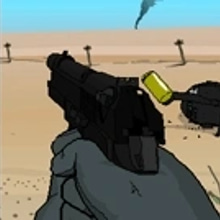
Weapon starts with the kind of bad luck that feels personal. You’re down in the desert, your helicopter is damaged, the air looks too bright, and the horizon is doing that shimmering thing that screams “this place is not friendly.” Then the enemies show up and suddenly the vibe shifts from survival story to loud, immediate problem-solving. On Kiz10, this is a helicopter shooting game where you don’t get the luxury of slowly warming up. You’re already the target, and your main job is brutally simple: keep the chopper alive long enough to turn the battlefield into your paycheck.
It’s a defensive action shooter, but it doesn’t feel passive. You’re not waiting behind a wall. You’re hovering, firing, tracking movement, and constantly judging distance like your brain turned into a radar dish. The desert is open, which sounds easy until you realize open space means enemies can come from wherever they feel like. One side gets noisy, you swivel. Another side starts creeping in, you swivel again. Your screen becomes this moving panic map, and your weapon is the only thing keeping the panic from becoming permanent.
𝗧𝗛𝗘 𝗛𝗘𝗟𝗜𝗖𝗢𝗣𝗧𝗘𝗥 𝗜𝗦 𝗬𝗢𝗨𝗥 𝗛𝗢𝗠𝗘, 𝗔𝗡𝗗 𝗧𝗛𝗘 𝗗𝗘𝗦𝗘𝗥𝗧 𝗪𝗔𝗡𝗧𝗦 𝗜𝗧 𝗕𝗔𝗖𝗞 🛠️🚁🌪️
There’s something oddly intimate about defending a vehicle you can’t afford to lose. You start caring about it. Not in a “cute pet” way, more like a “this is my entire plan” way. Every hit feels like an insult. Every near-miss feels like you got away with something. And because the game keeps the pressure close, you learn fast that a helicopter defense shooter isn’t about being brave, it’s about being consistent.
The best moments in Weapon aren’t the giant explosions. It’s when your aim is sharp, your timing is clean, and you’re quietly deleting threats before they even get close. That’s the fantasy: you’re not just surviving, you’re controlling the airspace. Then you slip once, get tagged, and immediately start taking it seriously again. It’s hilarious how quickly you go from “I’m fine” to “okay okay okay everyone calm down, we are NOT losing this run.” 😅
𝗖𝗟𝗜𝗖𝗞, 𝗧𝗥𝗔𝗖𝗞, 𝗗𝗘𝗟𝗘𝗧𝗘 🎯💥🧠
Weapon lives on a simple combat loop that gets deeper the more you respect it. You spot targets, you track them, you fire, you re-center, you prioritize, you repeat. It’s not complicated in a mechanical sense, but it becomes demanding because the game loves stacking pressure. Two enemies become five. Five become a swarm that forces you to decide what matters right now.
That’s where you start thinking like a real defender, even though it’s a fast browser shooter. You stop shooting “whoever is closest to your cursor” and start shooting whoever is most dangerous to your helicopter’s survival. Fast movers? Delete them before they become a problem. Tough enemies? Chip them down early so they don’t linger. A clump forming on one side? Break it before it becomes a wall. You’re basically doing threat management at high speed, with sand and noise and a helicopter that would like to not explode today. 😮💨
And the aiming has this satisfying clarity. When you hit, you feel it. When you miss, you know why. That honesty is a big deal. It keeps you coming back because every failure feels fixable. Not “the game cheated,” but “I got distracted,” or “I stayed on the wrong target too long,” or “I panicked and sprayed.” The game quietly trains you into being calmer, which is funny because it’s also constantly trying to stress you out.
𝗠𝗢𝗡𝗘𝗬 𝗜𝗦 𝗔𝗠𝗠𝗢, 𝗔𝗠𝗠𝗢 𝗜𝗦 𝗧𝗜𝗠𝗘 💰🔫⏳
Here’s the hook that makes Weapon feel like more than a one-off shootout: money and upgrades. You’re not just blasting for points. You’re collecting enough cash to invest in new weapons, and that progression changes everything. Early on, you might feel underpowered, like you’re always one step behind the wave. But as you earn and upgrade, the tone shifts. Suddenly you’re not surviving by scraping through. You’re surviving because you built a better solution.
Upgrades in games like this are basically confidence in a store. You buy more damage and the enemies stop feeling endless. You buy better firepower and the battlefield starts clearing faster. You buy the right improvements and the whole experience becomes smoother, almost rhythmic, like you’re conducting chaos instead of being chased by it.
But the upgrades also tempt you into bad habits. You’ll get stronger and think you can relax. Then you’ll take unnecessary hits because you got lazy with your aim or you ignored a flank for too long. Weapon doesn’t let you coast. It lets you feel powerful, sure, but it still demands attention. Power is not a shield against poor decisions. It’s just a brighter flashlight while you’re still in the dark. 🔦😬
𝗧𝗛𝗘 𝗗𝗘𝗦𝗘𝗥𝗧 𝗪𝗔𝗩𝗘𝗦: 𝗪𝗛𝗘𝗡 𝗣𝗥𝗘𝗦𝗦𝗨𝗥𝗘 𝗦𝗧𝗔𝗥𝗧𝗦 𝗧𝗔𝗟𝗞𝗜𝗡𝗚 🌵🔥😵
At some point the game stops feeling like a simple defense and starts feeling like a test. The waves get meaner, your screen gets busier, and you realize your biggest enemy is not the attackers. It’s overload. The moment you stop seeing the whole field, you start making little mistakes. You tunnel-vision on one target, and two others sneak in. You chase a threat too far, and you lose control of your center. The panic doesn’t come from dying instantly, it comes from watching the situation get worse while you’re trying to fix it.
That’s the moment Weapon becomes genuinely fun in a slightly evil way. It forces a kind of focus that feels physical. You’ll lean in. You’ll tighten your jaw. You’ll start muttering things like “nope nope nope” as you swing back to a side that’s getting crowded. You’ll have a near-collapse, then recover, and that recovery feels better than a clean run because it proves you can stabilize under pressure. It’s like the game gives you a little crisis just so you can feel like a hero when you solve it. 😤🚁
𝗟𝗜𝗧𝗧𝗟𝗘 𝗧𝗥𝗜𝗖𝗞𝗦 𝗬𝗢𝗨 𝗗𝗜𝗦𝗖𝗢𝗩𝗘𝗥 𝗪𝗜𝗧𝗛𝗢𝗨𝗧 𝗥𝗘𝗔𝗟𝗜𝗭𝗜𝗡𝗚 🤫🧩🎯
The best players don’t look fast. They look smooth. They shoot in short, controlled bursts instead of drowning the screen in wasted fire. They keep their aim where enemies are going, not where they were. They rotate early, before a side becomes dangerous. They treat the battlefield like a circle, constantly scanning, constantly re-centering, constantly maintaining balance.
And the weird part is you learn these things without a lecture. The game just… teaches you through consequences. If you ignore one side, you get hit. If you chase too hard, you lose control. If you shoot the wrong targets, you get overwhelmed. So you adapt. You start playing smarter because being smart feels safer. Then you get a new weapon and everything changes again, and you have to re-learn your pacing because stronger firepower can make you sloppy if you let it.
That constant adaptation is why Weapon works as a replayable arcade shooter on Kiz10. It’s not a long story campaign with cutscenes. It’s a pressure loop with progression, and it feels good because you can immediately tell when you’re improving.
𝗧𝗛𝗘 𝗣𝗘𝗥𝗙𝗘𝗖𝗧 𝗥𝗨𝗡 𝗜𝗦 𝗔 𝗠𝗬𝗧𝗛, 𝗔𝗡𝗗 𝗧𝗛𝗔𝗧’𝗦 𝗪𝗛𝗬 𝗬𝗢𝗨 𝗞𝗘𝗘𝗣 𝗣𝗟𝗔𝗬𝗜𝗡𝗚 🔁🏜️🚁
You know what Weapon does really well? It makes you believe the next run will be cleaner. You’ll remember the moment you got hit and think, I could’ve prevented that. You’ll remember the upgrade you delayed and think, I should’ve bought that earlier. You’ll remember the wave where you panicked and think, next time I’ll keep my head. And that’s the loop. It’s not just “play again.” It’s “prove it.”
If you like helicopter combat, defense shooters, survival waves, and upgrade-driven action where your aim and your choices both matter, Weapon fits perfectly. It’s quick to start, easy to understand, and sneaky about how much focus it demands. You’ll come for a few minutes of shooting and suddenly you’re locked in, defending your helicopter like it’s your last working idea in the middle of the desert. 🚁💥🌵





 4.5 (30 votes)
 Share
Share
 Embed
Embed