🛰️🧬 A protocol sounds clean, until the walls start screaming
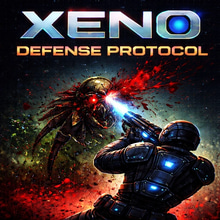
Xeno Defense Protocol has that cold, military name that makes you think of checklists and calm voices. Then the first wave arrives and the whole idea of “calm” evaporates. You drop into a top down battlefield where your base is not a cozy hub, it is a target with a countdown. The mission is brutally simple and emotionally rude: establish a perimeter, defend it against endless insectoid horrors, and extract alive. That’s it. No long introductions. No time to admire the scenery. On Kiz10, the game feels like a pressure cooker with a trigger finger.
It starts with quiet. You look at the space you have, the angles, the lanes where enemies could funnel in. Your brain does that strategic thing where it pretends you’re in full control. Then you hear it. The skittering. The swarm rhythm. Suddenly you’re not thinking in minutes, you’re thinking in seconds. Where do I place my first turret. Where do I stand so I can cover a weak side without getting surrounded. How do I make this base feel less like a soon to be obituary 😅
🏗️🔫 Build first, shoot second, regret both immediately
The core loop is a delicious hybrid. Part tower defense, part top down shooter, part RPG progression that keeps tightening the screws. You are not just placing defenses and watching. You are in it, moving, aiming, reacting, patching holes in your own plan. A turret can hold a lane, sure, but lanes shift. The swarm doesn’t politely walk in a straight line forever. Some enemies rush, some soak damage, some slip through gaps like they were born to be annoying.
So you build a little network of safety, then you personally become the emergency response team for everything your network cannot handle. It creates this constant back and forth: place a tower, reposition, fire into a cluster, pick up resources, upgrade something, sprint to the other side because that corner is suddenly on fire. The game makes you feel smart and panicked at the same time, which is honestly the ideal mood for alien base defense.
🧠🕷️ The swarm is the real teacher, and it grades harshly
Insectoid enemies are not just “targets,” they are problems with legs. The scary part is not one creature, it’s patterns. You start noticing how waves evolve. Early on, you can brute force with basic defenses and quick shooting. Later, the wave composition changes and your old habits start failing in embarrassing ways. The game does that thing where it waits for you to feel comfortable, then introduces a new kind of threat that makes your turrets feel underpaid.
That’s when strategy stops being optional. You begin reading the map like it’s a living circuit. Where do enemies bunch up. Where do they split. Which corner is always one mistake away from collapsing. You’ll catch yourself staring at a lane, thinking, if I upgrade here, I can hold that choke point, but if I do that, I might lose the other side. And while you’re thinking, a swarm arrives to remind you that hesitation is a luxury item 😬
⚙️📈 RPG progression that turns “survival” into “momentum”
The upgrades are the addictive glue. You’re not only improving structures, you’re improving yourself. That RPG layer makes every run feel like a build in progress, not a one off match. You earn, you invest, you come back stronger, and the next wave feels different because you feel different. Your weapons hit harder, your tools feel smoother, your defensive setup becomes more deliberate.
But the game is clever about it. Progress does not erase danger. It changes the shape of danger. As you gain power, the waves gain attitude. So instead of the classic “I grinded, now I win,” you get “I grinded, now I can survive longer while the game finds new ways to bully me.” That’s good design for a defense shooter. It keeps the tension alive. You’re always chasing the next threshold: one more upgrade so your base stops bleeding resources, one more level so your weapon feels reliable, one more improvement so extraction becomes a real possibility instead of a funny fantasy.
🧱🔦 Choke points, kill zones, and the art of not being everywhere
The smartest moments in Xeno Defense Protocol are the ones where you stop trying to cover everything and start deciding what matters. Tower defense instincts tell you to build a perfect wall. Shooter instincts tell you to roam and react. The game asks you to blend both without overcommitting.
A good setup creates kill zones where enemies melt before they touch the base. A great setup leaves you enough freedom to handle surprises. Maybe you lock down one lane with heavy firepower and keep another lane lighter, trusting your own aim to fill the gap. Maybe you build a layered defense so that if the first line breaks, the second line buys you time. The key feeling is time. Every turret, every upgrade, every position you take is really just a way to purchase a few more seconds of control.
And when it works, it’s beautiful. You watch a wave crash into your defenses, you step in to finish the stragglers, you grab resources mid-fight, and the base stays intact. You feel like you outplayed the swarm, not just outgunned it 😈
🚨🧪 Extraction is not a victory lap, it’s a final argument
Extraction changes the emotional flavor. It’s not “keep playing until bored.” It’s “get out alive.” That single objective makes every decision sharper. Do you push for more resources to upgrade, or do you preserve what you have so you can escape. Do you chase kills for progress, or do you stabilize and prepare an exit route. It’s the difference between greed and survival, and the game loves watching you struggle with it.
The funniest part is how your brain tries to negotiate. Just one more wave, then I’ll extract. Just one more upgrade, then I’ll be safe. Then the game drops a wave that nearly breaks your base and you suddenly become a humble person who respects the word “leave” 😅
🎯🔥 The flow state is real, and it feels like controlled disaster
Once you understand the rhythm, the game becomes this intense dance. You place defenses with confidence, you rotate between pressure points, you manage cooldowns and upgrades, you keep firing while your eyes scan for the next breach. It’s chaotic, but it’s readable chaos. You can feel yourself improving because you stop reacting late and start predicting early.
You’ll also have runs where everything collapses and you learn something painful. Like how one weak corner can ruin your whole plan. Or how focusing too hard on damage can ignore survivability. Or how standing still for half a second is basically asking the swarm to sign your death certificate. Those failures sting, but they also feel fair. The game doesn’t punish you with randomness, it punishes you with consequences.
🛡️👽 Why it keeps pulling you back on Kiz10
Xeno Defense Protocol hits that sweet spot where strategy matters, aim matters, and progression keeps you hungry. It’s not a slow tower defense where you sip coffee and watch lanes. It’s not a pure shooter where you only rely on reflexes. It’s a messy blend where you build your safety, then fight inside it, then upgrade your way into a better version of yourself, then get tested again.
If you like the feeling of holding a line while everything tries to break it, this game delivers. If you like top down shooting with real pressure, it delivers. If you like watching your base evolve from fragile to formidable, it delivers, and then it dares you to extract before your confidence turns into a mistake. Build smart, shoot sharper, upgrade with purpose, and remember one thing: the swarm does not get tired. You do. So make your time count 🛰️🕷️





 Share
Share
 Embed
Embed