🧟♂️🌵 Jack is a zombie… and the other zombies are the problem
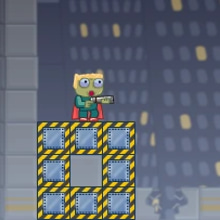
Zombieland doesn’t do the usual “human hero saves the world” routine. It flips the whole vibe on its head and drops you into the boots of Jack, a zombie who’s not trying to bite brains today. Today he’s armed. Today he’s hunting. And the twist is simple but surprisingly fun: you’re a zombie fighting other zombies… but only the ones that are actually your enemies. That one detail makes everything feel a bit more paranoid, a bit more careful, like the undead world has its own ugly politics and you’re stuck cleaning it up with bullets.
On Kiz10, Zombieland plays like a straightforward action shooter: move, aim, shoot, survive. But the tension creeps in fast because the battlefield never feels “clean.” Enemies show up in awkward spots. Targets overlap. Shots need to be intentional. And the moment you treat it like a mindless spray-and-pray game, it punishes you with the most annoying consequence in any shooter: you lose control of the situation. When the situation gets out of control, everything becomes panic.
🔫🧠 The real gameplay is target discipline
Zombieland looks simple, and it is simple, but it’s the kind of simple that forces you to be awake. If you’re fighting the wrong targets, wasting ammo, or hesitating while enemies get too close, you’ll feel it instantly. You’re basically managing a small war in real time, and the skill isn’t “can you shoot,” it’s “can you shoot the right thing at the right moment.”
That’s where the game starts feeling addictive. Your brain begins prioritizing without you even noticing. Closest threat first. Fast threats before slow threats. Enemies that block your movement before enemies that are just wandering. You’ll develop a rhythm where you’re not reacting late anymore, you’re predicting early. You’ll aim where the enemy will be, not where it is. That shift is the difference between surviving and getting overwhelmed.
💥🧟 Chaos happens fast, so your positioning matters more than you think
In Zombieland, the map isn’t just scenery. It’s a pressure tool. If you stand in a bad place, you invite problems from multiple angles. If you keep moving without thinking, you can walk into the worst lane and trap yourself. If you back up too much, enemies stack and the screen becomes cluttered with threats you should have thinned earlier.
The cleanest runs happen when you’re constantly creating space. Not running away forever, but repositioning just enough to keep your aim stable. You want a line of sight. You want a buffer zone. You want an escape route. The second you lose those three things, the game turns into a scramble where every shot feels late and every movement feels desperate.
And that’s when you realize: Zombieland is secretly about staying calm. It’s about keeping your hands steady while the undead world tries to turn your screen into a moving pile of problems.
🧟♂️😈 Being a zombie changes the mood in a fun way
There’s something weirdly satisfying about playing as the monster. Jack isn’t fragile in the typical “survivor” way. He’s already undead. The fear factor flips into a different emotion: stubborn aggression. You’re not escaping the apocalypse, you’re enforcing order inside it. That gives the game a slightly darker comedy vibe. Everyone is already a zombie… and still they can’t stop fighting each other. Great. Perfect society.
That theme also makes the action feel less “heroic” and more “grimy,” in a good way. You’re not saving anyone’s speech about hope. You’re just trying to survive and win the fights you’re thrown into. No speeches. Just outcomes.
🎯⚙️ Accuracy is your currency
If you want to get good at Zombieland, don’t think “faster clicking.” Think “cleaner decisions.” A clean shot is worth more than five messy ones, not because the game is punishing, but because momentum is everything. When you delete the right threats quickly, the whole screen becomes manageable again. When you don’t, enemies stay alive long enough to become a crowd, and crowds are where mistakes multiply.
You’ll also notice how the game rewards little bursts of control. You clear a cluster, the area opens up, you breathe for half a second, then you plan the next move. That half-second breath is the entire difference between a run that feels sharp and a run that feels like you’re constantly being chased by your own mistakes.
🧩🩸 The best moments are the “I almost lost it” recoveries
Zombieland shines when a situation goes ugly and you manage to stabilize it. Maybe you get pressured from a side you ignored. Maybe a couple enemies slip closer than they should. Maybe you waste a shot and suddenly your timing is off. Those are the moments where the game stops being a casual shooter and turns into a tiny survival test.
If you recover, it feels great because it feels earned. You didn’t win because of a cutscene or a power-up miracle. You won because you made a better decision under pressure. You aimed cleaner. You repositioned smarter. You stopped trying to fix everything at once and focused on the one threat that mattered most.
And the funny part is, once you experience one recovery like that, you start chasing it. You want to play cleaner next time. You want to survive longer. You want a run where everything feels controlled from start to finish. That “perfect run” obsession is how Zombieland keeps you replaying.
🧟♂️🏁 Why it works so well on Kiz10
Zombieland is quick, direct, and replayable. It doesn’t ask you to learn a complicated system. It asks you to aim, decide, and stay calm when the screen gets crowded. It’s a zombie shooter with a twisty perspective, because you’re not the human survivor… you’re Jack, the undead gunman dealing with enemy zombies in a world that already fell apart.
If you enjoy action shooters, arcade zombie games, and that satisfying loop of “fail, learn, survive longer,” Zombieland fits perfectly. It’s simple enough to jump into instantly, but tense enough that you’ll keep trying to play cleaners, smarter, and a little more ruthless every time.





 4.9 (9 votes)
 Share
Share
 Embed
Embed


