🧟♂️ Blood on the walls, questions in your head
The first thing you notice is not the pain. It is the silence. The kind of silence that feels wrong, like a movie with the sound turned off at the worst possible moment. Then your eyes adjust to the darkness and the scene around you finally loads in your brain. Blood on the walls. Bodies on the floor. A flickering light that does not help at all. You are Alone in the Madness, and the game does not bother with a gentle tutorial. It throws you straight into a nightmare and quietly asks one question. How long can you stay alive in this zombie horror game before the madness wins.
There is no nice explanation, no friendly voice telling you what went wrong in this place. You just stand up, half dizzy, and try to understand why there are so many corpses in this cramped room and why your hands are shaking. Somewhere in the distance, you hear the first growl. It is not loud, but it is enough to make your heartbeat feel like a loud notification inside your skull. You know zombies are coming. You also know you are not ready. That combination is basically the entire spirit of Alone in the Madness, a brutal zombie survival experience where hesitation is just another word for game over.
🔫 First steps in a waking nightmare
Your first minutes are messy. You click too late, you misjudge the timing, you forget where the weapon is, you panic and die. That is part of the charm. Alone in the Madness is not a relaxed horror game where you slowly walk and admire the atmosphere. It is a quick reaction test wrapped in grotesque scenes. Each screen feels like a tiny interactive trap. There is always something around the corner, always a zombie leaning just out of sight, always a moment where you either act instantly or become the next body on the floor.
The game turns simple interactions into life or death choices. Do you grab the gun on the table. Do you move to the door. Do you check that dark corner just in case. Everything happens fast. One click too early might alert a monster, one click too late might let it reach your face. The result is a tense zombie game where you spend half your time trying not to blink and the other half wondering why you thought this was a good idea for a relaxing session.
🧠 Tiny decisions, huge consequences
What keeps Alone in the Madness interesting is how small the scenes are and how big the consequences feel. This is not an open world game where you slowly collect resources and build a base. Instead, each encounter is like a small puzzle made of timing, attention and fear. You look at the scene, notice the weapons, the doors, the possible threats, and then you try to guess what the game is about to throw at you.
Maybe you have to shoot before the zombie gets close. Maybe you have to wait until it steps into the right position. Maybe the game wants you to grab a melee weapon instead of wasting bullets. You never fully trust yourself because you know one wrong guess sends you back. That constant doubt creates a nervous, addictive rhythm. You die, you retry, you swear that this time you will not miss the clue the scene is giving you.
🩸 Weapons, panic and that one perfect run
The arsenal you collect on your journey through the invasion is not there for show. Guns, blades, improvised tools, each weapon feels like a tiny chance at survival in this horror action game. The zombies are not delicate targets. They rush, they lunge, they twist in weird directions. The animations make them look unstable and that adds to the tension because you are never sure if they will fall when they should or if they will somehow slide one step closer to you before collapsing.
The best moments are the ones where everything goes right by accident. You click exactly when you should. Your shot connects, the zombie drops, you move to the next scene with a mix of relief and disbelief. Alone in the Madness is built for those little victories. Not long campaigns, not deep skill trees, but sharp moments of pure survival chaos. The game keeps you in that fragile zone where you are never fully comfortable, always one mistake away from replaying the entire sequence again. And strangely, that is what makes you say just one more try every time.
🎮 Fingers on the edge controls and feel
Even though the story is dark, the controls stay simple so your brain can focus on survival instead of memorizing combinations. This is a zombie shooting and survival game designed to be played quickly in your browser. You point, you click, you react. On keyboard and mouse you feel the tension of lining up a shot under pressure. On touch devices you tap with that tiny fear that your finger will slip at exactly the wrong moment.
Because the mechanics are straightforward, the difficulty comes from your own reactions and from the way each scene is staged. Some screens give you a clear view of the threat. Others hide part of the danger, forcing you to read the environment. A door slightly open. A shadow near a hallway. A weapon placed just far enough to make you nervous. Alone in the Madness uses these visual cues to keep your eyes moving and your hand hovering over the click.
🏚️ Atmosphere of a doomed survivor
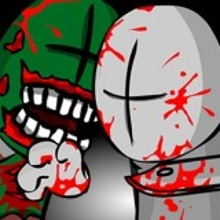
Visually, the game leans into the grim side of zombie horror. Dark rooms, bloody details, twisted bodies and cruel little surprises in the background. It is not just about jump scares, it is about building the feeling that everything went wrong long before you woke up. You are not a hero arriving to save the world. You are a late guest in a disaster that already happened, trying to slip through the remaining cracks before the undead close in.
That mood seeps into every level. You feel it when you pick up a weapon from the ground and wonder who dropped it. You feel it when you see a corridor full of bodies and realize you might join them in ten seconds if you miss your shot. The game does not spoon feed story, but the visuals suggest enough to let your imagination create ugly explanations. That mixture of mystery and danger makes Alone in the Madness more than just a reflex test, it becomes a little horror story you play with your own nerves.
🔥 Why you keep coming back on Kiz10
So why does this particular zombie survival game work so well for quick sessions on Kiz10. It is simple. The structure is perfect for fast retries. You fail, you reload, you try again with slightly better timing. Every death teaches you something about the scene. You start noticing where the zombies appear, which object matters, when to shoot, when to wait. It is like learning a dangerous rhythm by heart.
At the same time, the intensity makes it feel memorable. You remember that room where the zombie came from behind, that corridor where you misclicked and lost, that one perfect run where everything finally clicked and you slipped out of the trap by a fraction of a second. Those moments are the reason people come back to horror action games like this. Short, sharp, full of adrenaline and just frustrating enough to be satisfying when you finally conquer them.
Playing Alone in the Madness on Kiz10 means you can jump into the apocalypse directly from your browser, no downloads, no waiting. You can treat it like a quick reflex challenge or dive deep, replaying scenes until your muscle memory takes over. Either way, every time you wake up in that bloody room again, you will feel the same question tapping at the back of your mind. Are you fast enough this time, or will the zombies add one more body to the floor.





 Share
Share
 Embed
Embed


