🏀 𝗕𝗔𝗦𝗞𝗘𝗧𝗕𝗔𝗟𝗟, 𝗕𝗨𝗧 𝗦𝗢𝗠𝗘𝗢𝗡𝗘 𝗠𝗔𝗗𝗘 𝗜𝗧 𝗪𝗔𝗬 𝗠𝗢𝗥𝗘 𝗗𝗔𝗡𝗚𝗘𝗥𝗢𝗨𝗦
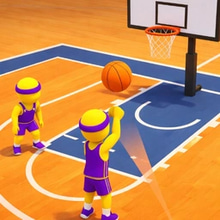
Basketball Dash does not treat basketball like a calm sport. It looks at a ball, a hoop, and a court, then decides that what this setup really needs is panic, traps, narrow platforms, enemy players, and the kind of precision that makes your fingers tense up for no reason. The result is a fast 3D arcade basketball game that feels less like a normal match and more like a survival run disguised as sports. You are not standing still and lining up comfy shots here. You are dragging the ball through hazardous routes, reacting to moving barriers, avoiding hostile rivals, and trying to reach the basket without losing control halfway through the madness.
That twist gives the game its personality immediately. Instead of asking you to score from a fixed position over and over, Basketball Dash turns every level into an obstacle course. The hoop is still the goal, sure, but reaching it is a challenge on its own. You need reflexes, control, patience, and the occasional ability to not completely melt under pressure when a platform gets thinner and an opponent slides into your path like your success personally offended them. It is sporty chaos. The good kind.
⚡ 𝗧𝗛𝗘 𝗚𝗔𝗠𝗘𝗣𝗟𝗔𝗬 𝗟𝗢𝗢𝗣 𝗜𝗦 𝗦𝗜𝗠𝗣𝗟𝗘, 𝗙𝗔𝗦𝗧, 𝗔𝗡𝗗 𝗩𝗘𝗥𝗬 𝗔𝗗𝗗𝗜𝗖𝗧𝗜𝗩𝗘
The beauty of Basketball Dash is how quickly it explains itself. You control the ball directly, guiding it through each level by dragging on desktop or swiping on mobile. That is it. No bloated tutorial. No ten-button input map. Just movement, hazard awareness, and the final shot waiting for you at the end like an exam written by gravity itself.
Because the controls are so direct, the game becomes instantly readable. You always know what you are trying to do, and when you fail, you usually understand why. Maybe you turned too hard near a narrow edge. Maybe you reacted too late to a moving obstacle. Maybe an opposing player blocked your line and you panicked like the ball had suddenly become emotionally fragile. Whatever the reason, the game makes failure feel sharp but fair. That matters a lot in an arcade game. When you lose, you want to restart because you think, “Okay, I can fix that.” And then you try again. And again. And now twenty minutes are gone.
That restart energy is a huge strength. Levels are structured around quick attempts, rising difficulty, and that satisfying feeling of learning the route. At first a section may look messy and impossible. A little later, the same section starts to feel readable. You anticipate the barrier. You dodge the defender. You line up your entry angle more cleanly. Suddenly you are not surviving the track anymore. You are flowing through it.
🎯 𝗥𝗘𝗔𝗖𝗛𝗜𝗡𝗚 𝗧𝗛𝗘 𝗛𝗢𝗢𝗣 𝗜𝗦 𝗢𝗡𝗟𝗬 𝗛𝗔𝗟𝗙 𝗧𝗛𝗘 𝗝𝗢𝗕
One of the smartest things about Basketball Dash is that the final basket actually matters. A lot of games with obstacle-based sports themes would be satisfied just letting you touch the end zone and call it a day. Not this one. Here, the final shot is part of the challenge. You still have to make a precise finish to move on, which keeps the basketball identity alive all the way to the last second.
That last moment changes the rhythm nicely. The run toward the hoop is tense and active, full of movement and danger. Then the finish asks for focus. Precision. Calm. You have to transition from pure navigation into scoring execution, and that shift makes every successful level feel more complete. You did not just arrive. You earned the basket.
It is also the source of some of the game’s best drama. You can survive the entire obstacle path, avoid every trap, dodge every rival, then mess up the final shot and just stare at the screen in offended silence 😅 It is cruel, but in a funny, arcade-perfect way. Success feels better because the finish line still demands skill.
🚧 𝗧𝗥𝗔𝗣𝗦, 𝗣𝗟𝗔𝗧𝗙𝗢𝗥𝗠𝗦, 𝗔𝗡𝗗 𝗣𝗥𝗘𝗦𝗦𝗨𝗥𝗘 𝗙𝗥𝗢𝗠 𝗘𝗩𝗘𝗥𝗬 𝗔𝗡𝗚𝗟𝗘
The obstacle design is where Basketball Dash really separates itself from a standard basketball game online. Each level introduces dangerous routes with narrow platforms, moving barriers, and defensive interruptions that keep your attention locked in. This is not just decoration. The hazards shape how you move. They force route decisions. They punish lazy steering. They make every clean run feel surprisingly elegant.
Narrow platforms are especially effective because they create instant tension. A basketball is round, the path is thin, and your brain immediately understands the risk. Even before anything moves, you feel the danger. Then the game adds timing elements and enemy interference, and now you are not simply rolling forward. You are threading a needle while being watched by the ghost of every bad decision you made in the last level.
The rival players are another nice touch. They give the game a sense of opposition without forcing full sports simulation. They are not there to recreate a realistic match. They are there to get in your way, break your momentum, and make the route feel alive. That small layer of hostility adds pressure and keeps the experience from feeling too mechanical. You are not just navigating a puzzle track. You are pushing through resistance.
🔥 𝗜𝗧 𝗞𝗘𝗘𝗣𝗦 𝗚𝗘𝗧𝗧𝗜𝗡𝗚 𝗛𝗔𝗥𝗗𝗘𝗥, 𝗔𝗡𝗗 𝗧𝗛𝗔𝗧’𝗦 𝗘𝗫𝗔𝗖𝗧𝗟𝗬 𝗪𝗛𝗬 𝗜𝗧 𝗪𝗢𝗥𝗞𝗦
A game like this needs escalation. If every level felt the same, the concept would wear out quickly. Thankfully, Basketball Dash understands the rhythm of difficulty. The challenge rises step by step, adding more aggressive routes, trickier obstacle patterns, and tighter moments where the margin for error starts to disappear. That progression gives the game its hook.
You begin with manageable sections that teach the idea. Then the game starts asking more from you. Better control. Faster reactions. Cleaner lines. More discipline at the finish. That gradual increase is satisfying because it makes your own improvement visible. You notice that your movement becomes smoother. You stop overcorrecting. You learn when to slow down and when to trust your momentum. The game gets harder, yes, but you also get better, and that balance is what keeps the experience fun instead of exhausting.
It helps that the pace remains lively. Basketball Dash is not interested in long delays or overly complex setups. It wants motion. It wants urgency. It wants you leaning into every turn like that somehow changes physics. That fast tempo makes the game a great fit for short sessions on Kiz10, but it also gives it strong replay energy. You can jump in for a few levels or get locked into a full run without noticing how long you have been at it.
📱 𝗚𝗥𝗘𝗔𝗧 𝗙𝗜𝗧 𝗙𝗢𝗥 𝗠𝗢𝗨𝗦𝗘 𝗔𝗡𝗗 𝗧𝗢𝗨𝗖𝗛
The drag and swipe controls make a lot of sense for this style of game. On desktop, holding and dragging with the mouse creates a smooth feeling of steering the basketball through each hazard zone. On mobile, swiping keeps the movement immediate and physical. That kind of direct control is ideal for an arcade sports challenge because it reduces friction between intention and action. You see a gap, you move toward it. You see danger, you react. Simple, clean, effective.
Because of that, the game feels accessible without feeling shallow. Anyone can understand the basic input in seconds, but mastering the routes still takes focus. That balance is why games like this work so well in the browser. They are easy to enter and hard to leave.
🏆 𝗪𝗛𝗬 𝗕𝗔𝗦𝗞𝗘𝗧𝗕𝗔𝗟𝗟 𝗗𝗔𝗦𝗛 𝗜𝗦 𝗦𝗨𝗖𝗛 𝗔 𝗚𝗢𝗢𝗗 𝗙𝗜𝗧 𝗢𝗡 𝗞𝗜𝗭𝟭𝟬
Basketball Dash turns basketball into a reflex-based obstacle run without losing the thrill of the final shot. It mixes 3D ball control, arcade pacing, hazardous level design, and scoring precision into something that feels fresh, intense, and very replayable. It is a sports game, yes, but also a dodge game, a timing game, and sometimes a “please do not roll off this tiny ledge again” simulator.
If you enjoy fast browser games with responsive controls, escalating challenge, and a fun blend of sports and obstacle course mechanics, this one lands cleanly on Kiz10. Every level asks for agility. Every basket feels earned. And every failed attempt whispers the same dangerous sentence into your soul: one more run 🏀





 Share
Share
 Embed
Embed