🏁🧊 ICE WALL PANIC, ZERO EXCUSES
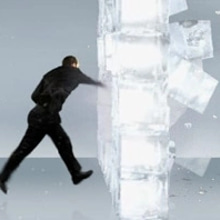
Break the Wall is one of those deceptively simple games that feels like a joke until the joke starts winning. You’ve got a character, you’ve got an ice wall sliding into your personal space with bad intentions, and you’ve got one job: break it at the exact right moment. Too early and you waste the hit, too late and… well, the wall doesn’t politely push you back. It crushes you like you’re a snack. On Kiz10, this plays like a pure reflex action runner, a tiny arcade challenge where the whole thrill is living on the edge of a single decision.
At first, it feels almost relaxing. The wall approaches, you watch the distance, you wait, you hit. Clean. Satisfying. Then the game starts speeding up, and that calm turns into a little internal alarm system. Your brain begins doing the “distance math” in a panic voice. Your fingers hover like they’re afraid of touching anything. And suddenly you’re not playing a small Flash game, you’re performing a timing ritual under pressure. 😅
👀⏱️ THE RULE IS EASY, THE FEELING IS NOT
The mechanic is basically a timing window. You run toward the wall and you need to strike when you’re close enough to actually shatter it, but not so close that the wall’s hitbox eats you first. It’s a tight little balance and it teaches you something quickly: confidence is dangerous. The moment you start thinking “I’ve got this,” you’ll press a fraction too early and the wall will glide over your failed punch like it’s embarrassed for you. Then you’ll hesitate on the next attempt and get flattened. It’s like the game is training you to respect timing the way a metronome trains musicians. 🎵🧠
What makes it addictive is that the failure always feels understandable. You can see it. You can feel it. You know exactly what went wrong, which means your next thought is never “this is unfair,” it’s “okay, I can do that cleaner.” That’s the loop: instant feedback, instant correction, instant “one more try.” And that phrase is basically how half your evening disappears.
💥🧱 SATISFACTION IN ONE PERFECT HIT
When you nail a hit in Break the Wall, it lands with that crunchy arcade satisfaction. The wall breaks, you keep moving, and for a second you feel like you’re in control of the whole pace. It’s a tiny victory, but it’s loud in your head. The game makes a simple action feel meaningful because you’re always risking something. You’re not just pressing a button, you’re betting your run on a split-second decision.
And the walls don’t feel like generic obstacles. The ice theme gives them a certain vibe: cold, heavy, unforgiving. You can almost imagine the sound of the thing sliding toward you, like a giant frozen door closing. That’s the pressure. It’s not complicated pressure, it’s primal pressure. Do it now, but not too now. 😬🧊
🚦🏃 THE SPEED RAMP THAT TURNS SKILL INTO INSTINCT
As you break more walls, the game ramps the difficulty by tightening your timing and increasing the pace. This is where Break the Wall stops being “a reflex game” and starts being “a reflex habit.” You don’t have time to think in full sentences anymore. You think in sensations. Distance, rhythm, approach, hit. You start trusting your eyes more than your thoughts.
It’s a funny transformation. Early on, you’re calculating. Later on, you’re reacting. The best runs feel like your fingers learned the wall’s attitude and started answering automatically. You’re basically building muscle memory, but the muscle is your patience.
And yes, there’s a little psychological trick at play: the game speeds up just enough that you feel stressed, but not so much that you feel hopeless. You’re always one small adjustment away from doing better. That “almost” is the hook. 🎣⚡
🧠🧊 THE MENTAL GAME: DON’T FLINCH
Break the Wall is secretly a flinch detector. The wall comes at you and your instincts scream “press!” and the game says, “Nice try, but that was fear, not timing.” The strongest players don’t mash early. They wait for the real moment.
A good way to think about it is: you’re not hitting when you feel nervous, you’re hitting when the wall is in the strike zone. That strike zone becomes a visual cue you learn to recognize. After a while, you’ll even notice your breathing change. You’ll hold it for half a second, press at the exact point, then exhale when the wall breaks. It’s a tiny rhythm, but it’s real. 😮💨👊
🎬✨ WHY IT FEELS LIKE A MINI ACTION SCENE
Even though it’s simple, the experience feels cinematic in a silly way. You’re sprinting at a massive obstacle, committing to a last-second strike, and either bursting through like an action hero or getting turned into wallpaper. There’s no long story, but the drama is built into the timing. Each wall is a mini climax. Each success is a “keep going.” Each failure is a hard cut to credits.
That’s why it works so well for quick sessions on Kiz10. You can jump in, play for a minute, and feel the tension immediately. Or you can fall into the trap of trying to beat your own streak, because your brain keeps insisting you can do it with fewer mistakes, cleaner rhythm, sharper confidence.
🔧🎯 QUICK HUMAN TIPS THAT ACTUALLY HELP
Don’t stare at your character. Stare at the gap. The distance between you and the wall is the only information that matters. Treat the hit like a calm tap, not a panic slam. If you’re missing early, force yourself to wait one heartbeat longer than you want. If you’re missing late, stop hesitating after a good wall break; the next wall will arrive faster than your brain expects.
Also, don’t let one bad miss tilt your timing. Break the Wall punishes emotional playing. The wall doesn’t care that you’re mad. The wall only cares about the strike window. Reset your rhythm, trust your eyes, and chase clean timing instead of revenge. 😄🧊
By the time you’re deep into a run, Break the Wall feels like a pure test of focus: simple inputs, sharp pacing, and that delicious fear of being a fraction too early or too late. If you love reaction games, timing challenges, and fast arcade loops where every second feels like a small dare, this one fits perfectly on Kiz10. Now go punch some ice… politely, precisely, and at the last possible moment. 👊🧊🏁





 3.4 (18 votes)
 Share
Share
 Embed
Embed


