🧱🌟 The Workshop Door Is Always Open
Build it All: Craft Sandbox is the kind of game that looks calm for about three seconds, right up until you realize you can bolt an engine onto almost anything and call it “a vehicle.” It’s a sandbox building game with a creator’s heart and a prankster’s grin: you assemble machines from parts, launch them into a huge open world, and let realistic physics decide whether your invention is genius… or a spectacular mistake. On Kiz10, it feels like stepping into an endless garage where the only rule is “try it.” And the second rule is “try it again, but louder.” 😅🔧
You start with simple pieces and a big blank space, which is honestly the most dangerous combination. Because the moment you place your first block, your brain begins writing plans it can’t possibly finish in a sensible way. A tiny car becomes a truck. A truck becomes a ramp experiment. The ramp experiment becomes a plane attempt. The plane attempt becomes a flying brick that somehow still makes you proud. This game doesn’t ask you to be perfect. It asks you to be curious. ✨🧠
⚙️🛠️ Parts, Pieces, And The Beautiful Mess Between Them
The building system is the main attraction. You craft with blocks, wheels, wings, engines, and weird mechanisms that exist purely to make your vehicle either functional or hilarious. The magic is how quickly “construction set” turns into “engineering drama.” You’ll put wheels on, feel confident, then notice the chassis is too short and the front flips up like a startled cat. You’ll add weight, then the engine can’t push it. You’ll add more engine, then the steering becomes a suggestion instead of a feature. 😭🚗
And that’s where the game gets addictive. Every problem has a fix, and every fix creates a new problem that feels oddly exciting. You don’t just build once. You build, you test, you adjust, you rebuild, you test again, and suddenly you’re doing iterative design like you’re running a tiny vehicle laboratory with a very questionable safety policy. 🧪🧷
The best builds usually aren’t the prettiest. They’re the ones that survive the first real test. The ones that don’t wobble like jelly when you accelerate. The ones that don’t yank left because one wheel is slightly misaligned. The ones that don’t explode into parts because you placed a hinge where a support should’ve been. When something finally drives smoothly, it feels like a victory you earned with your hands, not a reward the game handed you. 🏆😌
🚙💨 Testing Day: Where Confidence Gets Punchlines
Driving your creation isn’t just “press forward.” It’s a proper physics test. Acceleration, balance, weight distribution, traction, turning radius, stability, all of that matters in a way you can feel instantly. The first time you hit the gas and your build lurches forward, you’ll probably laugh because it moves like a creature learning to walk. Then you’ll try to turn. Then you’ll discover you built a rocket with the steering of a shopping cart. 🛒😵💫
The fun is that failure still teaches you something. A vehicle that tips over on hills is begging for a lower center of mass. A plane that refuses to lift is telling you your wings are decorative, not aerodynamic. A flying machine that lifts but instantly spins is basically screaming “balance your thrust, please!” The game turns physics into feedback, and feedback into motivation. You don’t rage quit. You go back to the workshop and whisper, “Okay… one more change.” 😅🔁
And when you finally get a clean run, it’s absurdly satisfying. You roll down a road, climb a hill, cross rough ground, maybe even catch air for a second, and you realize your build is behaving like an actual vehicle. Not perfect, but real. The kind of “real” that makes you immediately try something riskier, because now you believe in yourself again. 😈
✈️🌬️ Planes, Gliders, And The Art Of Not Falling
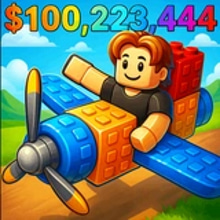
Building aircraft is where the sandbox turns into pure obsession. Cars are forgiving. Planes are not. A plane demands symmetry, lift, and the kind of patience that you only discover after your fifth crash. You’ll craft wings, attach engines, shape a fuselage, and feel like a genius right up until you launch and the whole thing nose-dives like it’s offended you tried. 😭✈️
But that’s also why it’s so good. When flight finally happens, even for a few seconds, it feels magical. You’ll tweak wing placement, adjust thrust, add stabilizers, redistribute weight, and slowly your machine stops behaving like a thrown chair and starts behaving like something that wants to stay airborne. The moment you glide over a hill or skim above a platform, you get that tiny rush of “I built this.” And for a sandbox game, that feeling is everything. 🧡✨
You’ll also learn a funny truth: sometimes the best plane is barely a plane. A glider with a small engine can be easier to control than a full-power monster. Too much thrust turns your craft into a spinning stress test. A calmer design gives you time to steer, correct, and actually enjoy the open world instead of panic-screaming while you fall. 😅🌤️
🌍🗺️ The Open World Is Your Playground, Not A Background
The map isn’t just decoration. The world is built for experiments. Roads let you test speed and handling. Hills expose stability problems immediately. Islands and rough terrain challenge your suspension and balance. Open spaces dare you to build faster machines. Elevated platforms and air routes tempt you into building aircraft even when you swore you’d “just make a simple car today.” Sure you will. 😏
Exploration feels rewarding because your vehicle changes how you interact with the world. A nimble buggy makes you weave through uneven land. A heavy truck bulldozes through with brute confidence. A plane turns everything into a flight line, and suddenly you’re not traveling the map, you’re hovering above it, scouting new places to crash respectfully. 🌊🏝️
And because you can always rebuild, the world becomes a series of challenges you set for yourself. Can your car climb that steep hill without flipping? Can your boat-like contraption handle water edges? Can your plane take off from a short runway? The game doesn’t have to force you into fun. It hands you tools and lets your curiosity do the bullying. 🔧😄
🔓🧩 Tasks, Unlocks, And That “Better Parts” Hunger
Progress isn’t only about imagination. Completing tasks and challenges gives you a reason to refine your builds and unlock new parts. That matters because every new part changes what’s possible. A better engine can turn a sluggish creation into something snappy. A new mechanism can solve stability issues. A new building piece can let you create stronger frames or lighter structures. You start dreaming in upgrades. “If I just unlock that, my plane will finally stop wobbling.” And then you chase it. 🏁🤝
The best part is how the sandbox stays flexible. You can be a task-focused player who builds efficient machines to complete objectives. Or you can be the chaos inventor who builds a flying bus because it’s funny. Or you can be both, switching moods depending on what kind of day your brain is having. 😅🧠
😈🚀 The Joy Of Experimenting Without Being Judged
Build it All: Craft Sandbox is a game that respects tinkering. It doesn’t punish you for trying dumb ideas. It rewards you for trying them fast. The “realistic physics” don’t exist to ruin your fun, they exist to make success feel earned. When something works, it’s because your design is actually stable enough, balanced enough, and powered enough to survive the world. That makes every good build feel personal. Not generic. Not copied. Yours. 🧱❤️
So come in. Build a car that can climb. Build a plane that can glide. Build a ridiculous machine that shouldn’t function but somehow does. Then take it out into the open world and let physics tell the story with tire marks, wobbles, near-crashes, and the occasional glorious landing you’ll remember like a trophy. 🏆🌍





 Share
Share
 Embed
Embed