🏰🪓 Welcome to a Castle That Never Stops Asking for More
Castle Woodwarf drops you into a tiny kingdom with a huge problem: everything is unfinished, everybody is hungry, and the future is basically a long list of “we should probably upgrade that.” It’s an idle strategy game, but not the boring kind that feels like staring at a spreadsheet until your soul evaporates. This one has a pulse. You’ve got dwarves with jobs to do, a castle to expand, a steady drip of resources to chase, and a constant little threat in the background that keeps you from turning your brain fully off. On Kiz10, it plays like a bite-sized management fantasy where your best plans are always one bad raid away from getting roasted.
At first it feels harmless. Cute little dwarves, a small base, a few trees, a bit of water. You start thinking, alright, I’ll just gather wood, maybe catch some fish, easy. And then the game quietly teaches you the rule of dwarf life: if you want peace, you build it, you maintain it, and you defend it with your whole stubborn heart. Because the moment you start doing well, the world notices. The world always notices. 😅
🌲🐟 The Loop of “Just One More Upgrade”
This is the real engine of Castle Woodwarf: collect, improve, repeat… but with enough personality that it doesn’t feel like a chore. Wood matters because wood becomes buildings, and buildings become a better economy, and a better economy becomes the thing that lets you survive the next wave of enemies without making that helpless squeak noise. Food matters because dwarves are not magical robots. If you want workers, you feed them. If you want progress, you keep the pipeline moving. It’s resource management with an almost cozy rhythm, like tending a weird little garden where the plants sometimes swing axes.
And the game is sneaky about how it tempts you. You’ll see an upgrade you want, think “that’s not expensive,” buy it, and immediately realize you’ve just created a new problem. More dwarves means more mouths. More buildings means you need more wood. More progress means tougher attacks. The balance is the game. The fun is the constant negotiation between what you want right now and what you’re going to desperately need in ten minutes. 🙃
👷♂️⛏️ Your Dwarves Are Adorable, Unhinged, and Very Busy
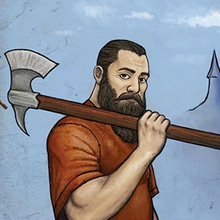
There’s something satisfying about assigning roles and watching a tiny workforce come alive. In Castle Woodwarf, you’re basically the manager of a chaotic, hardworking clan. Some dwarves are built for gathering and hauling, the dependable “I’ll do whatever needs doing” type. Others specialize, which feels like you’re unlocking new gears in a machine. A lumber dwarf makes wood flow faster, turning slow starts into steady growth. A fisher dwarf keeps food coming, which is less glamorous than gold but way more important when things get tight. And once you’ve got a few workers rolling, the whole fortress starts to feel like it’s breathing on its own, even while you’re making the big calls.
But don’t get too sentimental. Your dwarves are brave, sure, but they’re also… extremely willing to walk into danger if you let them. You’ll catch yourself thinking like a real leader: okay, you, go fish. You, chop. You, gather. You, please don’t stand there when the raid begins, I’m begging you. It becomes this funny mix of strategy and protective instinct, like herding cats with beards. 🧔♂️✨
🧱💰 Castle Upgrades Feel Like Building a Legend Brick by Brick
Upgrading your castle is where the game turns from “small camp” into “okay, we might actually become a serious fortress.” Each improvement changes the vibe. More capacity, more efficiency, better defenses, smoother production. It’s not just cosmetic progress. You feel it. The moment your resources start flowing faster, you get that delicious management-game dopamine: yes, the machine is working, the plan is real, I am a genius. For about thirty seconds.
Then you’ll see the next upgrade. And the next. And the next. And suddenly you’re deep in that classic idle strategy trance where every purchase feels like a tiny victory and also a new commitment. Because upgrades aren’t just “nice to have.” They’re how you stay alive when enemy waves stop being polite and start being personal.
The fun is that you’re never fully finished. There’s always a better wall, a stronger setup, a smarter way to allocate your resources. The castle becomes your long-term project, and your brain starts organizing itself around it. You’ll plan ahead without noticing. You’ll hoard materials like a dwarf should. You’ll make little economic sacrifices now to fund the big defensive build later. That’s the fantasy: you’re not just clicking, you’re shaping a kingdom. 🏰🔥
🐉🛡️ The Dragon Under Your Feet and the Panic Above Ground
Here’s where Castle Woodwarf gets that spicy edge. It’s not purely peaceful building. There’s danger. There are raids. There’s the sense that something valuable is in your care, something that draws trouble like a magnet. The presence of a dragon in your world adds this mythic pressure. It’s not just “protect the base.” It’s protect the treasure, protect the clan, protect the sleeping power beneath you, because if you lose control, it won’t be a cute little setback. It’ll be a collapse.
When enemy waves show up, the tone shifts instantly. Your cozy resource loop becomes a defense game, and suddenly every choice you made earlier is being tested. Did you invest enough in protection, or did you go full greedy and buy upgrades that looked pretty while leaving your defenses weak? Did you stockpile enough resources to recover after a rough fight, or did you spend everything the moment you earned it like a reckless goblin? The best part is how these moments make your quiet planning feel meaningful. Your fortress is not an aesthetic. It’s a survival plan.
And yes, you will have that moment where you realize you’re underprepared. You’ll feel it in your stomach. You’ll watch enemies push in and think, oh no, I did the economy thing too hard. That’s when the game becomes a little story generator. Your dwarves aren’t just workers anymore, they’re defenders. Your upgrades aren’t just numbers, they’re the difference between “we live” and “we rebuild from ash.” 😬
🎯🧠 Strategy That Feels Like Instinct After a While
At the start, you’ll play on vibes. Chop, fish, upgrade, hope. But after a few raids, you start getting sharper. You learn the quiet art of pacing. You learn that steady growth beats chaotic spending. You learn to keep your resource flow healthy, not just high. You’ll start making decisions like, okay, I can afford that upgrade, but if a wave hits right after, do I have the safety net? You’ll start leaving yourself a cushion, like a responsible ruler… who still occasionally panic-clicks because a raid is underway and your pride is screaming.
The game rewards that kind of player growth. Not with a lecture, not with a long tutorial, but with the simple fact that your fortress runs better when you think like a builder and a defender at the same time. That’s why it fits so well as a Kiz10 strategy game: it’s easy to start, but it has enough bite to keep you engaged once you realize you can optimize your little dwarf society in a hundred different ways.
✨🏆 Why It’s Weirdly Hard to Quit
Castle Woodwarf has that classic idle magic where progress feels constant, but it also has a personality that makes you care. Your clan starts as nothing and becomes something. Your castle evolves from a humble setup to a serious stronghold. Your economy goes from fragile to stable, then gets tested again, because the game refuses to let you settle into complacency. And that push and pull is addictive. You want to see the next upgrade. You want to see the next wave and prove you’re ready. You want to turn your scrappy dwarf camp into a fortress that laughs at danger.
It’s the kind of strategy management game you play for “a quick session” and then realize you’ve been min-maxing fish and wood like it’s a life mission. And honestly? That’s the charm. You’re building a tiny legend, one stubborn decision at a time, right here on Kiz10. 🪓🏰🐉





 4.3 (45 votes)
 Share
Share
 Embed
Embed


