🪨 𝗢𝗻𝗲 𝗰𝘂𝘁, 𝘁𝘄𝗼 𝗽𝗿𝗼𝗯𝗹𝗲𝗺𝘀, 𝗮𝗻𝗱 𝗮 𝘃𝗲𝗿𝘆 𝘂𝗻𝗵𝗲𝗹𝗽𝗳𝘂𝗹 𝗹𝗮𝘄 𝗼𝗳 𝗴𝗿𝗮𝘃𝗶𝘁𝘆
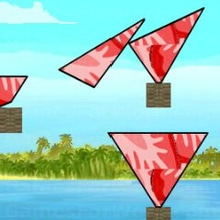
Deslizze is the kind of puzzle game that takes a very simple action and turns it into a quiet little crisis. You cut a rock. That sounds easy. Safe, even. But the moment the slice happens, the level starts negotiating with gravity, balance, shape, and momentum, and suddenly that one neat cut you were so proud of becomes a full conversation with physics. That is exactly the charm. Public descriptions of Deslizze consistently frame it as a physics puzzle game built around slicing large stones so one part slides away while another part remains where it needs to be.
That setup is excellent because it wastes no time. No fake complexity. No giant tutorial opera. Just a clean problem placed in front of you and a mouse-based cutting mechanic that immediately tells your brain, “All right, clever person, prove it.” On Kiz10.com, that translates beautifully into the kind of browser puzzle experience that feels approachable for one minute and unexpectedly demanding the next. The idea is easy to understand, but the consequences of each cut are where the real game begins.
And those consequences are deliciously rude.
You are not merely dividing shapes. You are deciding weight distribution. You are controlling movement without really controlling it. You are trying to predict what a chunk of stone will do after you split it, which sounds calm until the level proves that your “obvious solution” was a catastrophic misunderstanding of how unstable everything actually was. Very normal physics puzzle behavior, honestly.
✂️ 𝗧𝗵𝗲 𝗰𝘂𝘁 𝗶𝘀 𝘁𝗶𝗻𝘆, 𝘁𝗵𝗲 𝗿𝗲𝗴𝗿𝗲𝘁 𝗶𝘀 𝗵𝘂𝗴𝗲
What makes Deslizze fun is that each move feels small while the results feel enormous. You draw a horizontal slice across a boulder, and that one line changes the future of the whole level. One half stays, one half slips, and all the puzzle tension lives inside that difference. The original descriptions specifically emphasize that the large cobblestones cannot remain on their “long legs” forever, so you must cut them in the right way so part of the rock slides off and a smaller portion remains balanced.
That is a brilliant foundation for a physics game because it turns geometry into drama. Every angle matters. Every size matters. Every slightly-too-greedy cut has consequences. If you slice too high, the wrong mass stays behind. Slice too low, and the whole structure may collapse in a way that feels personally insulting. The game keeps asking the same core question in increasingly annoying forms: do you actually understand what this rock will do next?
Sometimes the answer is yes.
Sometimes the answer is an immediate restart and a long stare at the screen.
That loop is why the game works so well. Failure in Deslizze is not random chaos. It is educational chaos. You can see the mistake. You can trace the collapse back to your decision. You learn. Then you come back with a slightly cleaner plan, a slightly humbler attitude, and the same dangerous confidence that this next cut will definitely be the one. Sometimes it is. Sometimes gravity laughs first.
🧠 𝗧𝗵𝗶𝗻𝗸 𝗳𝗶𝗿𝘀𝘁, 𝘀𝗹𝗶𝗰𝗲 𝘀𝗲𝗰𝗼𝗻𝗱, 𝗽𝗮𝗻𝗶𝗰 𝗼𝗻𝗹𝘆 𝗶𝗳 𝗻𝗲𝗲𝗱𝗲𝗱
A lot of puzzle games reward speed. Deslizze rewards restraint. The better you get, the more you realize that the real move happens before the cut, not during it. You study the level. You imagine the weight shift. You picture the direction of the slide. You ask yourself which piece should stay and which piece needs to fall away. Then, and only then, do you draw the line.
That process is the whole magic of the game.
It also makes the pacing feel smart rather than frantic. This is not a reflex challenge pretending to be a puzzle. It is a real logic-and-physics challenge, and those are always more satisfying when the game trusts you to think. Deslizze seems built around that trust. Public listings describe it plainly as a “physic puzzle,” and that simple label fits perfectly because the joy comes from understanding how objects will behave once your slice changes the structure.
There is something wonderfully mean about the way a level can look obvious at first. You see the rock. You see the supports. You think the solution is obvious. Then the cut happens and the wrong chunk shifts, the balance changes, and the puzzle calmly informs you that no, actually, you had not understood anything at all. That is not frustrating in a bad way. It is the good kind of frustration. The kind that makes you want another try because the answer feels close enough to touch.
🪵 𝗚𝗿𝗮𝘃𝗶𝘁𝘆 𝗶𝘀 𝘁𝗵𝗲 𝗿𝗲𝗮𝗹 𝗯𝗼𝘀𝘀 𝗼𝗳 𝘁𝗵𝗶𝘀 𝗴𝗮𝗺𝗲
The genius of Deslizze is that the rock is never the only puzzle piece. Gravity is the real co-designer. Once you cut, the game stops being about intention and starts being about consequences. That is why physics puzzle games can feel so alive. You are not inputting a static answer into a static question. You are causing an event. A little mechanical drama unfolds every time you act, and whether it succeeds depends on how well you read the invisible forces holding the level together.
That is exactly why games in this category stay memorable. Kiz10’s physics puzzle catalog uses similar ideas in titles where removing, slicing, or triggering one object reshapes the whole room. Jelly Slice asks players to separate shapes cleanly with smart cuts, Beaver Blocks turns each block removal into a balance-and-timing problem, and Omit Orange 2 is built around knocking the right shapes away without ruining the setup. Deslizze belongs naturally in that same family of games where one move changes everything and the fun comes from predicting the fallout.
And that family is always satisfying for one reason: the game never feels dead. The level reacts. It answers back. It punishes lazy assumptions and rewards careful reading. That makes every successful solution feel earned.
🎯 𝗪𝗵𝘆 𝘀𝗶𝗺𝗽𝗹𝗲 𝗽𝘂𝘇𝘇𝗹𝗲𝘀 𝗹𝗶𝗸𝗲 𝘁𝗵𝗶𝘀 𝘀𝘁𝗮𝘆 𝘀𝘁𝘂𝗰𝗸 𝗶𝗻 𝘆𝗼𝘂𝗿 𝗵𝗲𝗮𝗱
Deslizze has the classic strength of good browser puzzle design: it teaches quickly, but mastery is all in the refinement. At first you are just trying to finish the level. Then you start wanting cleaner cuts. Better prediction. Less trial and error. More elegance. That shift from “solve it somehow” to “solve it properly” is where these games become addictive.
Because once you understand the rules, every level feels like a small personal test. Can you see the right line before drawing it? Can you control the collapse instead of merely causing one? Can you stay patient long enough to avoid the one foolish cut that ruins everything?
That is real puzzle energy. Quiet, sharp, and surprisingly sticky.
For players on Kiz10.com who enjoy physics puzzles, slicing mechanics, gravity-based challenges, and browser games that reward observation over noise, Deslizze has exactly the right kind of hook. It is simple without being shallow, clever without being cold, and full of those tiny moments where the perfect cut makes you feel absurdly smart. A rock, a line, a falling piece, and suddenly the entire level either works beautifully or turns into geometric humiliation. ✂️
Which, in a puzzle game, is usually a very good sign.











 4.5 (5 votes)
 Share
Share
 Embed
Embed