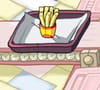
🍔 Heat, hunger, and the terrifying beauty of a busy counter
Fast Food is the kind of game that pretends to be simple right up until the first rush hits and your tiny kitchen turns into a stress machine with ketchup on it. On Kiz10, the title appears as Fast food bar, and the core idea is deliciously direct: you manage a new fast food restaurant, prepare orders quickly, and keep customers happy enough to pay well before your whole shift collapses into fried regret.
That setup is exactly why it works.
You are not wandering around a giant world looking for a purpose. You already have one, and it is standing at the counter with zero patience. Every customer arrives with an order, an expectation, and that very familiar restaurant-game energy of “please do not mess this up while three more people enter behind me.” The result is a management game that feels immediate, readable, and wonderfully cruel in the best way. One second you are calmly assembling a meal. The next, you are staring at the screen like a sleep-deprived shift manager trying to remember whether table three wanted fries, a burger, or your emotional stability.
That kind of pressure is gold in a browser game. It turns tiny actions into momentum. It makes every correct order feel smart and every delay feel personal. Fast Food does not need giant complexity to stay interesting. It just needs speed, attention, and the constant threat of customer disappointment, which honestly is more than enough.
⏱️ Why fast food games are never really about food
The funny thing about games like this is that the burgers and drinks are only half the story. The real challenge is flow. Fast Food is about keeping the whole restaurant moving without letting one mistake snowball into a full disaster. The Kiz10 page describes the loop clearly: prepare the food as fast as you can so customers stay happy and reward you with more money.
That sentence contains the entire trap.
Because now speed matters, but not reckless speed. You cannot just wave ingredients around like a panicked magician and hope for the best. You need rhythm. Order recognition. Smart timing. Maybe even a little memory once the line starts growing and the pressure rises. That is where the game starts getting its hooks in. At first, it seems manageable. A simple order here, another there. Then the room gets busier, the tickets pile up, and suddenly you are prioritizing tasks like a battlefield commander trapped inside a burger shop.
Beautiful genre, honestly.
What keeps Fast Food so addictive is that it always feels fixable. A messy round makes you want another chance. A good round makes you think you can do even better. One cleaner sequence, one faster service streak, one less embarrassing delay when the counter fills up. The game keeps feeding that urge to improve, and before long you are no longer casually playing. You are fighting for kitchen efficiency with the intensity of someone defending a national secret.
🍟 Every order is small until five of them arrive together
The best restaurant games understand one crucial thing: panic should arrive gradually. Fast Food handles that well. It does not overwhelm you immediately. Instead, it lets the pressure build. That is much smarter. You get comfortable first. You start trusting your routine. Then the pace increases, the crowd thickens, and now every tiny delay starts feeling louder than it should.
This is where the game really comes alive.
A customer waiting too long is not just a customer waiting too long. It is a timer ticking inside your brain. A missed step in the kitchen is not just a small error. It is the first domino in a chain of terrible decisions that may soon include burnt food, delayed service, and the silent shame of knowing you absolutely had this under control thirty seconds ago. That emotional arc is exactly why fast food management games remain so replayable.
And yet the game never loses its charm. It still feels light, playful, and satisfying even when it gets hectic. That balance matters. If it were too punishing, the fun would vanish. If it were too easy, the whole fantasy would fall flat. Instead, Fast Food lives in that sweet middle space where every shift feels like a scramble, but also like a scramble you can master if you stay sharp enough.
🥤 The secret pleasure of getting everything right for once
There is a special kind of joy in games built around service flow. When Fast Food clicks, it really clicks. Orders move smoothly. Ingredients line up. Customers leave happy. Money comes in. For a few glorious seconds, your restaurant stops feeling like a public experiment in pressure and starts feeling like a well-oiled machine. Those moments are fantastic because they feel earned.
Nothing in this game is loud for no reason. The satisfaction comes from competence. You read the queue correctly. You assembled the right items. You stayed ahead of the rush instead of drowning under it. That may sound small, but in a fast food game, competence is basically magic. One smooth streak can carry an entire session and make you want to keep going just to protect that feeling.
That is also why the management angle matters so much. This is not just a cooking game. It is a time management game, a customer service game, and a business game all rolled into one compact little pressure cooker. Kiz10’s food and cooking categories both frame these games around preparing meals, serving quickly, and running busy restaurants, which fits Fast Food perfectly.
💸 Money, speed, and the ancient restaurant promise of “one more shift”
Fast Food also benefits from the classic business-game reward loop. Serve faster, earn more, keep people happy, and watch the whole operation feel more successful. That money feedback matters because it turns the stress into purpose. You are not just surviving the counter. You are building results through performance.
That gives the game a stronger identity than a simple reflex challenge. It is not about random speed. It is about organized speed. Smart speed. Speed that produces better outcomes. And once a game starts rewarding that kind of improvement, the replay value becomes dangerous. You always feel one better shift away from proving you finally understand the rhythm.
For players who enjoy cooking games, restaurant simulators, food management, and fast service challenges, Fast Food is an easy fit on Kiz10. It belongs in the same chaotic family as burger games, cafe games, and restaurant time-management titles where efficiency is everything and hesitation is basically a public scandal. Similar live Kiz10 titles in that lane include Burger Restaurant Express, Burger Restaurant 3, Hamburger Shop, and Cafe Panic: Cooking Restaurant.
So yes, Fast Food is about burgers, speed, and hungry customers. But more than that, it is about rhythm under pressure. It is about building order inside chaos. It is about that absurdly satisfying feeling of surviving a rush without dropping the whole restaurant into digital ruin.
And when the grill is hot, the queue is growing, and you somehow still keep every order moving, the game delivers the exact reward it should: not calm, not peace, but the proud little feeling that your fast food empire is still standing because you refused to let lunchtime win.














 5 (38 votes)
 Share
Share
 Embed
Embed