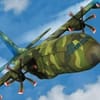
First day in the Hercules cockpit ✈️🛫
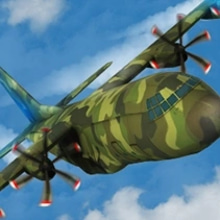
You spawn on the apron and the sheer size of the C 130 fills the screen. Four engines, a wide wing, a cargo bay that could swallow small trucks, and you are the one sitting in the left seat. Flight Simulator C 130 Training does not treat this like a toy. The nose is pointed toward a long runway, instruments glow softly in front of you and the radio murmurs in the background. The feeling is simple and a little overwhelming you are in charge of one of the most famous transport aircraft in military aviation and everyone is waiting for you to move.
The first moments are slower than you expect. No explosions, no dogfight, just checklists and patience. Throttle forward a little, feel the engines spool up, watch your speed creep along the ground. There is a calm in that slow roll that makes the first mission feel serious. Even before you leave the earth, you understand that this is not an arcade toy but a simulator style experience built for players who enjoy the craft of flying.
Learning to feel the weight of a real transport plane 🧭⚙️
The C 130 is not a light stunt aircraft. It is a heavy machine built to haul cargo and soldiers into rough places, and the game wants you to respect that. When you pull back on the controls, the nose lifts with a deliberate motion. Climb too steeply and you feel the aircraft protest as speed bleeds away. Level off and the whole machine steadies like a giant metal ship finally finding calm water.
In the air you learn to think ahead. Every turn needs more space. Every altitude change takes time. You cannot simply yank the stick and expect the aircraft to dance. Instead you plan gradual banks, use trim and throttle together, and watch the horizon line with the kind of focus that pulls you into the simulation. The more you fly the more you start to feel the mass of the airplane in your hands, even though you are just pressing keys and moving a mouse. That is where the training feeling becomes real.
Twenty missions that tell their own story 🌍🎯
Flight Simulator C 130 Training gives you a full set of missions instead of a single free flight and done. Around twenty scenarios lead you through different aspects of military transport work. One mission might be a basic training sortie where you practice clean takeoffs, smooth climbs and simple circuits around the field. Another might ask you to thread the aircraft through terrain, following a valley or coastline while holding a specific altitude.
Later, objectives get trickier and the stakes feel higher even if you are still in a simulator seat at home. Precision landings on shorter strips, approaches in poor visibility, timed routes that push you to manage speed and navigation more carefully, flights where you must handle rough weather without losing control. Each mission feels like a small chapter in a larger training course. Clear one and you know that the next will build on what you just learned instead of simply repeating it. That steady progression is what makes the campaign feel like a real pilot syllabus instead of a random mission list.
Weather that actually fights you back 🌧️🌩️
The briefing might show calm skies but the world outside does not always cooperate. One of the standout features in this simulator is the way weather becomes a true opponent. You will fly through heavy rain that drums against the windscreen, gusty crosswinds that tug at the wings during landing, and storm cells where lightning flashes around the aircraft while the clouds toss you up and down.
The first time you push a fully loaded C 130 into a storm, you feel the tension in your shoulders. The nose wanders more than you like. Instruments become more important than the view out the window as visibility drops. Turbulence makes every small control input feel exaggerated. The game uses that discomfort to teach a deeper lesson about instrument flying and energy management. Hold your heading, respect your speed, trust the panel when your eyes cannot see enough detail outside and suddenly the wild weather becomes something you can manage instead of fear.
Mastering takeoffs and landings like a real pilot 🛫🛬
Anyone can shove the throttles forward and roar into the sky. The real art in a flight simulator game appears when you start caring about how you leave the ground and how you return to it. In Flight Simulator C 130 Training, the runway is a constant character. Every departure and every arrival tells you how far your skills have come.
On early missions your takeoffs may look clumsy. You might drift from the centerline, rotate too early or lift off with a lurch that makes the climb feel ragged. Landings can be even more dramatic long floats, heavy bounces, or touchdowns that happen far down the runway because you carried too much speed. Over time you begin to correct these mistakes almost without thinking. You flare at the right moment, reduce power smoothly, hold the nose just a little higher than before and let the main wheels kiss the ground instead of slam onto it. That little tap of a perfect landing in a huge transport aircraft feels better than any explosion.
Cockpit discipline and small pilot rituals 📋📻
The game rewards players who enjoy the ritual side of aviation. You will find yourself glancing at instruments before every big move. Airspeed, altitude, engine readings, vertical speed, heading all of these numbers matter when you are trying to keep a large aircraft inside safe limits. Before long, checking them becomes a habit. You walk your eyes around the panel the way a real pilot would, confirming that nothing is out of place.
You also start building routines. Small mental checklists for approach, for climb, for cruise, for descent. Reduce power here, adjust pitch there, level at this altitude, set this speed. The missions do not always shout these steps at you. Instead they gently push you to discover how much smoother things feel when you treat each phase of flight with respect and order. It is strangely satisfying to realize that you have created your own cockpit discipline without anyone forcing it on you.
When training turns into calm confidence 😅😎
At the beginning of the campaign, just reaching the destination in one piece feels like a victory. You grip the controls, overcorrect constantly, and breathe a little too fast during tricky weather. Somewhere around the middle missions the tone changes. You are still alert, but not scared. You see a crosswind and think about technique instead of disaster. You hear the engines surge and know exactly how to balance climb and speed.
By the time you approach the later scenarios, you have that quiet pilot confidence. You roll onto final approach with the nose lined up and the runway centered. You correct gently for gusts instead of snatching at the controls. You respond to turbulence with measured inputs, not panic. There will still be rough landings and messy approaches, but the overall trend is clear you are becoming better, and the simulator gives you constant feedback in the most honest way possible through the behavior of the aircraft itself.
Why Flight Simulator C 130 Training belongs on your Kiz10 list ⭐✈️
There are plenty of fast arcade plane games on Kiz10, but Flight Simulator C 130 Training fills a different role. It focuses on the experience of commanding a heavy military transport aircraft through realistic environments, detailed terrain and challenging weather. The missions are built to teach and to entertain at the same time, giving you clear goals while still leaving enough room for your own style.
If you enjoy serious flight simulator games, military aviation themes or simply the calm intensity of managing a complex machine through difficult conditions, this title fits perfectly into your Kiz10 rotation. You can load a single mission for a focused session or work through several flights back to back as if you were finishing a full day in a virtual squadron. Every successful sortie feels like a small step toward real pilot discipline, and every rough landing is another reason to come back, adjust your technique and try again.
In the end, Flight Simulator C 130 Training is about more than just flying from one point to another. It is about learning to respect the weight of a legendary aircraft, mastering the sky even when the weather turns angry, and discovering how satisfying it can be to bring a big transport home safely, mission after mission, on Kiz10.















 Share
Share
 Embed
Embed