🍺 One sidewalk, zero dignity, and the longest walk of your life
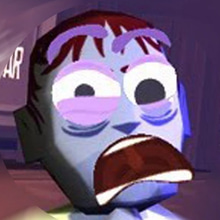
Go Home, You’re Drunk is the kind of game that takes an incredibly ordinary problem and turns it into complete mechanical chaos. You are not saving the world. You are not fighting monsters. You are not piloting anything glamorous. You are just trying to get home after drinking far too much, and somehow that tiny objective becomes one of the most difficult, humiliating, and strangely hilarious adventures a browser game can throw at you.
The whole idea works because it is so immediate. Everybody understands the mission instantly. Walk home. Easy. Except the game clearly has other plans. Public descriptions of the title consistently present it as a skill-based runner or physics game where a drunk character stumbles his way home, struggling to move properly and crashing into the environment like his legs were designed by an enemy engineer. That awkward movement is not a side feature. It is the whole point. The challenge is not distance alone. It is surviving your own body for long enough to make progress.
And honestly, that is what makes the game so funny and so addictive. If the movement were normal, this would be nothing. But it is not normal. It is wobbling, collapsing, drifting nonsense. Every tiny success feels ridiculous. Every failure feels deserved and unfair at exactly the same time. You are always one awkward step away from losing the illusion that you were ever in control in the first place.
🌀 Walking becomes a physics crime scene
Games like this live on one beautiful principle: simple objective, awful execution. You know what to do. The game knows you know. And then it sabotages the basic act of doing it. Public descriptions of Go Home, You’re Drunk repeatedly emphasize that the player has to guide a drunk father or husband home while he can barely walk straight, which tells you exactly what kind of pressure this is. It is not the pressure of enemies attacking from all sides. It is the pressure of your own movement becoming the enemy.
That creates a really satisfying kind of comedy because every surface suddenly becomes dramatic. A curb is a problem. A turn is a problem. A small obstacle on the sidewalk becomes a full event. The game turns ordinary urban space into a trap-filled obstacle course without changing the setting very much at all. It just changes how your character interacts with it. That is brilliant in a very mean way.
And once that starts happening, every step matters more than it has any right to. You are no longer “walking.” You are negotiating with gravity, momentum, and a body that seems deeply committed to making bad choices. The level is not huge, but the journey feels enormous because your movement keeps threatening to collapse into disaster.
😂 The real reward is not getting home, it is getting there without completely falling apart
What makes Go Home, You’re Drunk memorable is that the success condition feels tiny but emotionally huge. Getting a little farther should not feel triumphant, yet somehow it does. Physics games have that magic. They take a small bit of progress and make it feel like a full heroic act because the system is working against you in such a personal, physical way.
The public game page on itch.io describes the setup with a domestic deadline too: the missus is about to arrive home and you did not even do your chores, so you need to get home fast while trying not to fall. That extra layer gives the whole thing a bit more comic urgency. You are not stumbling home for romance or glory. You are stumbling home because your life is a mess and this is somehow still the plan.
That sort of framing is perfect for a browser game. It keeps the mission human and funny. The player is not asked to care about lore. The player is asked to care about embarrassment, timing, and one character’s desperate little crawl toward domestic consequences. Very strong comedy engine.
And because the controls and movement are clearly the heart of the game, every better run feels meaningful. You start learning how the body behaves. Not perfectly, never perfectly, but enough to make the next attempt a little less chaotic. Then you get overconfident, overcorrect, and end up face-first in another fresh disaster. Excellent pacing.
🏠 Why one more try becomes inevitable
The reason games like this are so hard to quit is that every failure looks fixable. You do not finish a run thinking the game is impossible. You finish it thinking, no, wait, I almost had that turn, or I should have leaned earlier, or that obstacle only ruined me because I panicked. That is the most dangerous kind of feedback loop because it always creates another attempt.
Go Home, You’re Drunk fits that loop perfectly. Public references place it in the same kind of “rage game” category as titles people play because they are funny, hard, and weirdly compelling. The better version of the run is always sitting right in front of you mentally. You know the route. You know the problem. You just need one cleaner stretch of control. Then the game reminds you that “control” is a generous word.
That back-and-forth is what keeps it alive. A strong physics-comedy game needs to be frustrating in a visible way. The player must feel the failure came from a readable mistake, even if the system itself is delightfully cursed. This title seems to do exactly that. You wobble, fall, recover, and try again because the next few steps always feel possible, at least until they very much are not.
🎮 A perfect fit for players who enjoy chaos with simple goals
Go Home, You’re Drunk is a great match for players who enjoy physics games, awkward movement challenges, comedy runners, and browser games where the entire joke is built into the controls. Public descriptions consistently frame it as a funny, skill-based runner about stumbling home drunk while struggling not to fall, and that is exactly the right way to think about it.
That is why the concept lands so well. It does not overcomplicate itself. It has one idea, commits to it completely, and lets the movement do all the hard work. The player instantly understands the missions, but the game still has enough mechanical cruelty to turn that mission into a real challenge. That is a very strong browser-game combination.
So yes, Go Home, You’re Drunk is ridiculous. It should be. That is the appeal. One sidewalk, one wobbling disaster of a character, and one extremely simple objective stretched into a hilarious endurance test by broken momentum and bad life choices. Very hard not to enjoy.





 Share
Share
 Embed
Embed


