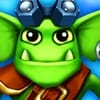
👺🕳️ A goblin, a dungeon, and the world’s worst “job interview”
Goblin Quest: Escape doesn’t start with a heroic speech. It starts with you being a goblin in a place that clearly wasn’t designed with goblin comfort in mind. Cold stone, narrow corridors, weird mechanisms humming like they’re excited to ruin your day, and a sense that someone built this dungeon just to watch you panic-run in circles. On Kiz10, it hits as an escape game with action DNA: you’re not fighting your way out like a muscular knight, you’re surviving your way out like a clever little menace with good legs and questionable life choices. 😅
The main vibe is simple and mean in the best way: keep moving, stay sharp, and don’t assume the next room is safe just because the last one didn’t explode. The dungeon doesn’t want you dead in a dramatic way. It wants you dead in a routine way, like you’re another test subject and the traps have a schedule. That’s what makes the game so addictive. Every corridor is a question. Every corner is a dare. And every time you think “okay, I’ve got the rhythm,” a tower blinks at you like… nah. Not yet. 👀
🏃♂️⚡ Running is your superpower, greed is your weakness
This is not a slow puzzle where you can sip tea and rotate tiles. Goblin Quest: Escape is built around movement. Your goblin is quick, and the game expects you to use that speed like a tool, not a panic reaction. There’s a difference. Panic running is chaotic: you run because you’re scared. Smart running is tactical: you run because you’re managing space.
The dungeon throws threats that punish hesitation. Towers that shoot when you step into their lane. Traps that punish timing. Enemies that move like they’ve already studied your route and they’re just waiting for you to repeat a mistake. So the real “combat” is footwork. It’s juking. It’s baiting a shot and slipping past while the tower resets. It’s learning how long you can stay in a danger zone before the room decides you’ve overstayed your welcome. 😬
And then there’s gold. Sweet, shiny, absolutely unnecessary gold that you will still chase because your brain cannot handle leaving loot behind. Goblin Quest: Escape knows that. It places coins in ways that tempt you into risk. You can play safe and escape clean… or you can drift toward the glitter and discover how quickly a safe plan becomes a messy sprint. The funniest part is how often you’ll say, out loud, “I can grab that.” Then you grab it, and instantly regret your confidence. 💀💰
🗼💥 Towers aren’t enemies, they’re problems with timers
The towers in this game don’t feel like monsters. They feel like systems. Like security cameras that decided to upgrade into violence. You learn their behavior in a very practical way: by almost getting hit. Their shots create rhythms. Windows. Safe beats and dangerous beats. Once you start seeing those patterns, the game changes. You stop fearing the towers and start reading them.
That’s when it gets satisfying. You step into range, trigger the shot, step out, step back in, and slide past while the tower is cooling down. It feels like tricking a machine. Like you’re winning an argument with a built-in delay. And when you chain several of those maneuvers in a row, the whole dungeon run starts feeling smooth, almost stylish… until you bump a trap you forgot existed and everything becomes chaos again. 😭
🧠🧨 “Escape” doesn’t mean “straight line”
One of the most annoying, beautiful things about Goblin Quest: Escape is that the best path is rarely the most obvious path. The dungeon loves to funnel you into danger and then reward the player who thinks like a coward in the smartest way possible. Not cowardly as in weak. Cowardly as in alive.
Sometimes the right move is waiting half a second so a shot goes wide. Sometimes the right move is taking the longer route because the short route is a kill box with three towers and a trap that definitely hates you. Sometimes the right move is sacrificing a coin cluster because you can already feel it: if you go for it, your route will collapse and you’ll get cornered. The game makes you do that little internal negotiation. “But I want it.” “But I’ll die.” “But I want it.” “But I’ll die.” And then you do it anyway. That’s the relationship. 😅
👺🧥 Loot, upgrades, and the joy of becoming less fragile
A big part of the loop is getting stronger through what you collect. Gold matters because it turns into options. Better survivability, better consistency, a run that feels less like desperate scrambling and more like a planned getaway. This progression is important because the dungeon pressure can escalate, and you want to feel that your time is building toward something.
What’s fun is how upgrades change your attitude. Early on, you behave like prey: careful, twitchy, always looking for the safest lane. Later, with better gear or better stats, you start behaving like a nuisance: still careful, but more confident. You’ll take routes you avoided before. You’ll grab coins in riskier places because you know you can survive a mistake or recover from a bad timing window. The game doesn’t turn into a faceroll. It just gives you the power to play bolder, which is a dangerous gift because boldness is how you end runs. 😈
🌀😵 The dungeon is basically a panic treadmill
There’s a particular kind of tension this game nails: you’re always one mistake away from disaster, but also always one clean decision away from total control. That’s why it’s so replayable on Kiz10. Runs are short enough to restart without pain, but intense enough that each attempt feels meaningful. You’ll fail and instantly know why. You’ll restart and say, “Okay, I won’t do that again.” Then you’ll do a new version of that same mistake, because you’re human and the dungeon is petty. 😂
You also start building “escape instincts.” You learn to glance ahead instead of staring at your goblin. You learn to respect tight corridors. You learn that corners are dangerous because they hide tower angles and enemy positions. You learn that smooth movement beats frantic zigzags. Frantic movement feels faster, but it’s sloppy, and sloppy is how you clip a trap by one pixel and watch your run evaporate. 😭
🗺️🔑 The best runs feel like you’re stealing daylight
When everything clicks, Goblin Quest: Escape feels incredible. You slip through shots like you’re dancing with the dungeon’s security system. You scoop up gold without breaking pace. You dodge enemies with a little sidestep that looks effortless. You hit the exit feeling like you pulled off something illegal in a very polite way. That’s the fantasy: a small creature escaping a giant machine designed to stop it.
And that’s why the title works. It’s not “Goblin Quest: Victory.” It’s “Escape.” Your win condition is survival, and survival feels earned because the game keeps applying pressure in small, sharp doses. Every stage is a test of timing, greed control, and spatial awareness. It’s simple, but it bites. 👺🕳️✨
🏁🔥 Why it’s perfect on Kiz10
On Kiz10, Goblin Quest: Escape belongs in that sweet category of games that are easy to understand, hard to perfect, and impossible to play only once. It blends dungeon runner energy with trap dodging and tactical movement. It rewards patience without becoming slow. It rewards bravery without pretending bravery is the same as recklessness. And it gives you that constant little thought that keeps you clicking restart: I can do that cleaners. I can do that faster. I can grab that coin line and still survive. Probably. 😅





 Share
Share
 Embed
Embed