🛰️🎯 Coordinates, Cold Silence, Then a Hit Marker
Intergalactic Battleships takes the classic battleship mind game and launches it into space, where the grid feels less like paper and more like a radar screen blinking in the dark. You’re not driving the ships directly. You’re commanding them from a distance, making decisions that feel small—one square at a time—until those squares start stacking into a real war. On Kiz10, it lands as a strategy game with instant tension: every click is a gamble, every miss is information, and every hit is the start of a hunt that can spiral into total domination… or a humiliating reversal if you get sloppy. 😬
You begin with placement, and placement is already a personality test. Do you cluster your fleet because it feels safer? Do you spread wide because you trust misdirection? Do you do the “I’m going to make a pattern that looks random but is secretly a plan” thing and then forget your own plan five moves later? Yep, that’s part of the charm. Because once the shooting starts, you’re not just guessing—you’re reading. Reading your opponent’s habits, reading the grid, reading the tiny story your misses are trying to tell you.
🚀🧠 The Real Weapon Is Your Brain (Annoying, I Know)
This isn’t a reflex shooter. It’s a thinking game with the emotional swings of a thriller. One moment you’re calm, scanning like a professional commander. The next you’re staring at an empty stretch of space thinking, “They HAVE to be here,” and you click anyway, like confidence can change probability. Spoiler: probability does not care about your confidence. 🙃
What makes Intergalactic Battleships feel sharp is how quickly it punishes lazy patterns. If you shoot randomly, you’ll spend too many turns learning nothing. If you shoot in a smart pattern, you’ll start carving the board into “possible” and “not possible,” and that’s when the game becomes addictive. The grid stops being a grid. It becomes a map of suspicion. You’re not looking for ships anymore—you’re looking for the shape of a ship hiding in negative space.
🌌🔍 Search Mode vs Destroy Mode (Two Different Personalities)
There’s a rhythm to battleship strategy that feels almost like switching masks. First comes search mode. You’re spreading shots efficiently, trying to cover territory without wasting turns. This is where patience wins. It’s the phase where you act like a scientist, placing controlled probes into the void. Miss? That’s a data point. Miss again? Great, that area is clean. Keep going. 😌
Then you get a hit, and everything changes. Now you’re in destroy mode, and destroy mode is pure focus. You stop thinking wide and start thinking narrow. If a ship is here, where can it extend? Which adjacent squares make sense? Should you check up or down first? Do you commit to a line, or do you confirm the orientation before you chase it? One wrong guess here can waste multiple turns, and wasting turns in a battleship game is basically handing the opponent a free advantage wrapped in your own impatience.
And yes, the emotional difference is wild. Search mode is calm. Destroy mode is hungry. 🐺✨
🛸🧩 Fleet Placement: The Quiet Opening That Decides Everything
People underestimate placement because it happens before the fun part. But placement is where you plant traps for the future. A clever layout creates “false confidence” for the opponent. They think they’ve found a cluster, they start committing shots, and suddenly they realize they’re chasing a ghost while your real ships are hiding where nobody looks.
The funniest part is that there’s no single perfect placement. There are only placements that match your style. If you like control, you spread ships to reduce catastrophic losses. If you like risk, you place them in ways that bait predictable search patterns. If you like chaos, you do something that looks wrong, and then you grin when it works. 😈
But no matter what, Intergalactic Battleships rewards one thing: unpredictability. If your fleet looks “too logical,” you become easier to read. If it looks like you’ve played this game before, you’re already dangerous.
💥👽 When the Alien Fleet Starts Hitting Back
The pressure spikes when the enemy starts landing hits on you. That’s when your own board becomes a psychological battlefield. You’ll see a hit land and instantly start bargaining with the universe: “Okay, just don’t find the rest of that ship.” Then they hit again, and you feel that cold sinking feeling that your careful placement is being decoded in real time. 😭
This is where Intergalactic Battleships becomes a true duel. You’re not only trying to win your offense—you’re trying to survive their offense. You start paying attention to how quickly they shift after a miss, how focused they become after a hit, whether they chase lines aggressively or confirm carefully. Those habits matter. If you can predict how they think, you can place ships in ways that waste their turns later. It’s like playing chess, except the pieces are invisible and the board is space.
🛰️🎭 The Mind Games You Don’t Notice Until You’re Doing Them
You’ll start doing subtle things without realizing it. You’ll avoid shooting near your own ships because you “feel” like that’s a risky zone… even though your shots don’t affect your own fleet. You’ll hesitate on a square because it looks too obvious. You’ll overthink a corner because corners feel sneaky. And then, sometimes, the correct move is the obvious one and you skip it because you wanted to feel clever. Classic commander behavior. 😂
The game’s beauty is that it keeps teaching you through consequences. If you chase too hard after one ship and ignore the rest of the board, you’ll fall behind. If you refuse to commit after a hit, you’ll waste the advantage you earned. If you tilt and start clicking emotionally, you’ll bleed turns fast. The grid records everything. It remembers your choices. It quietly judges you.
⚡🧠 Tiny Strategy Shifts That Change the Whole Match
Want to improve fast? The secret isn’t a magic pattern, it’s discipline. Treat misses as useful. Don’t stack shots in a tight cluster unless you have a reason. When you hit, don’t immediately spiral—confirm orientation, then finish efficiently. And when you sink a ship, reset your brain back to search mode instead of wandering around half-focused. That reset is where strong players separate themselves. 🧊
Also, watch for the “ship-length logic” moment. Once you’ve cleared enough space, certain placements become impossible. That means some squares are no longer worth shooting because no ship can fit there. That’s when you stop playing guesswork and start playing deduction. It feels so good when it clicks because suddenly your board isn’t random anymore. It’s constrained. And constrained means solvable.
🏆🌠 Why It’s So Replayable on Kiz10
Intergalactic Battleships is one of those strategy games that fits perfectly in the browser because it gives you a full battle experience without requiring an hour of commitment. A match is tense, quick, and satisfying, and every match teaches you something about your own habits. You’ll notice patterns in yourself: you chase too early, you spread too wide, you ignore corners, you overuse the same search shape. Then you adjust. Then you win more. Then you get overconfident and lose again because the universe loves balance. 😅
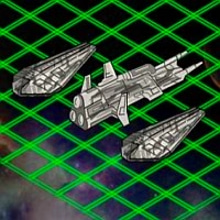
And the space theme adds that extra flavor. The grid feels like a tactical star map. Your ships feel like a fleet. Your hits feel like laser strikes across the void. It’s not just “battleship again.” It’s battleship with a sci-fi coat of paint and a little more drama in your imagination, which is honestly the best way to play.
If you want a space strategy game on Kiz10 where smart guessing, clean deductions, and a bit of psychological warfare decide the winner, Intergalactic Battleships scratches that itch perfectly. One more shot. One more square. One more “I swear it’s here.” 🎯🛸





 Share
Share
 Embed
Embed