🌿🧱 The jungle isn’t quiet, it’s just watching you fail
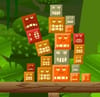
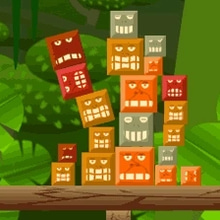
Jungle Tower 2 starts with that soft, friendly illusion: bright jungle colors, cute chunky shapes, a calm background that looks like a postcard. Then you drop the first block and the whole mood changes. Not because the game yells at you, but because physics does. The piece lands, it shifts a little, the base breathes like it’s alive, and you immediately understand what this game really is: a balance fight. On Kiz10, Jungle Tower 2 plays like a stacking puzzle where every block you place is a tiny promise, and gravity is waiting to collect on it the second you get cocky.
You’re not building a tower because you like architecture. You’re building a tower because your brain wants that perfect “stable stack” feeling. The kind of stability that looks easy from far away and feels impossible up close. The jungle theme makes it playful, sure, but the real atmosphere is tension. A gentle tension, the kind that keeps you leaning forward with your mouth slightly open like… okay, if this lands clean, I’m fine. If it doesn’t, I’m rebuilding my confidence from the ground up. Literally.
🌀🪵 The wobble is the main character
In Jungle Tower 2, the tower has moods. It sways. It settles. It lies to you. Sometimes you place a block and it looks fine, so you place the next one, and suddenly the earlier block decides it never agreed to that plan and shifts half a pixel… which becomes the beginning of the end. That’s the magic and the cruelty: small mistakes don’t explode immediately. They simmer. They wait. They turn into delayed disasters that show up three blocks later when you least expect it 😅
That’s why the game feels so addictive. It’s not only about dropping blocks. It’s about reading the wobble like a language. How fast is it swaying? Which side is heavier? Is it settling or is it building momentum? You start noticing micro-movements like you’re a professional tower therapist. Calm down, tower. Breathe. We’re okay. Please don’t do that.
🌴🎯 Placement isn’t precision, it’s judgment
A lot of stacking games pretend it’s all about perfect alignment. Jungle Tower 2 is more about judgment. Sometimes the “perfect” placement isn’t the safest one. Sometimes you need to offset slightly to counterbalance a lean. Sometimes you need to sacrifice neatness for survival. The tower doesn’t care if you’re symmetrical. The tower cares if you’re stable.
So you start making decisions that feel weirdly strategic. Do I place this block centered, or do I shift it to cancel the tilt? Do I wait for the swing to slow, or do I drop now while the motion is predictable? Do I risk a fast drop to keep rhythm, or do I slow down and treat this like a bomb disposal job in the rainforest? Jungle Tower 2 keeps asking these questions without ever spelling them out.
🐒⏱️ Speed tempts you, patience saves you
There’s a trap every player falls into at least once: you start doing well, you get confident, and then you speed up. You drop blocks faster because it feels smooth, like you’re on a streak. And for a moment, it works. Then you place one block slightly off, the tower sways harder, and because you’re rushing, you place the next block before it settles, and now the sway becomes a swing, and now you’re in panic mode trying to “fix it” while the tower is actively betraying you. It’s a classic spiral. A very jungle-flavored spiral. 🌿😵
The game rewards patience in a way that feels fair. When you wait for the tower to settle, your placements become cleaner. When placements are cleaner, the tower stays calm. When the tower stays calm, you can go higher. It’s almost like the tower wants to cooperate… but only if you respect it. The second you treat it like a toy, it becomes a lesson.
🧠🌧️ That quiet mental math you don’t notice you’re doing
Jungle Tower 2 makes your brain do physics math without calling it math. You’re measuring distance with your eyes. You’re predicting momentum. You’re sensing weight distribution. You’re watching how the base reacts and adjusting without even thinking in words. It’s one of those puzzle games where you can feel yourself improving because the improvement is physical. You place a block, you see it settle, you feel relief.
And relief is the reward here. Not coins, not upgrades, not story progress. Relief. The tower stayed up. You didn’t ruin it. You earned another piece. That’s why it’s so easy to keep playing on Kiz10. The feedback loop is instant and emotional: stable equals happy, unstable equals panic, collapse equals “I can do better than that” and restart.
🌿🧱 The height chase turns into a personal rivalry
At first you’re just trying to understand the game. Then you hit a decent height and something changes. Now it’s not about learning, it’s about beating yourself. You start thinking in personal bests. You start remembering where you failed last time. You start promising yourself you won’t repeat the same mistake. Then you repeat it in a slightly different way, which somehow feels even more insulting 😭
The tower becomes a scoreboard you can’t ignore. Every extra block is proof you’re getting better. Every collapse is proof you got greedy. Jungle Tower 2 is basically a polite jungle-themed way to teach you discipline, and it does it by letting you build something fragile and then daring you to keep it alive.
🧩🍃 Different pieces, different problems
As you play, you’ll notice that not every block “behaves” the same in your head. Some feel forgiving, like they give you a wide surface and a stable landing. Others feel awkward, like they’re designed to create uneven weight or tricky edges. That variety matters because it prevents the game from turning into pure repetition. You can’t rely on one single habit forever. A different shape forces a different decision. A different surface forces a different correction.
This is where the jungle theme fits perfectly. It feels like nature’s version of building challenges: nothing is perfectly uniform, everything has quirks, and your job is to adapt. When you do adapt, the game feels smooth. When you don’t, the tower reminds you immediately.
🎭😅 The collapse is embarrassing, but it’s also the fun
Let’s be honest. Half the joy in stacking games is the collapse. Not the moment you lose, but the moment right before it happens, when you see the sway, you realize you’re in trouble, and you still try anyway. You drop a block thinking it will stabilize the tower. The tower says no. It tips, it slides, it collapses in slow-motion chaos, and you just sit there like… wow. I really did that.
The reason Jungle Tower 2 works is that the failure doesn’t feel unfair. It feels earned. The game doesn’t steal your run. You donate it. And that’s why the restart button feels inviting instead of punishing. You want another attempt because you know exactly what went wrong, and you know you can fix it with one better decision. Just one. That’s how it gets you.
🏁🌿 Why Jungle Tower 2 belongs on Kiz10
This is a perfect Kiz10 puzzle game because it’s simple to jump into and hard to master, with short sessions that accidentally become long sessions. You can play for two minutes and feel the tension. You can play for twenty minutes and start developing real skill. It’s a physics stacking challenge with a playful jungle skin, but underneath it’s pure balance logic: patience, timing, and careful placement.
If you like tower building games, block stacking, physics puzzles, high score chasing, and that strangely satisfying moment when a shaky structure finally settles into stability, Jungle Tower 2 is the kind of game that keeps pulling you back. Build higher, breathe slowers, and remember the secret rule: the tower always falls right after you say “this is easy.” 🌿🧱😈



 4.6 (13 votes)
 Share
Share
 Embed
Embed