𝗕𝗼𝘅 𝗼𝗳 𝗸𝗲𝘆𝘀, 𝗯𝗿𝗮𝗶𝗻 𝗼𝗳 𝗮 𝗱𝗿𝗶𝗳𝘁𝗲𝗿 🏎️🫠
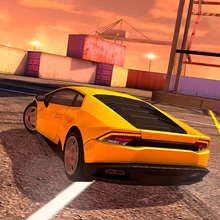
Lamborghini Drift Simulator on Kiz10.com starts with a fantasy and then immediately tests if you deserve it. A Lamborghini is sitting there like a shiny promise, and your brain does that automatic thing: “I will drive perfectly. I will be elegant. I will be fast.” Two seconds later you tap the throttle, the rear gets playful, the car begins to slide, and suddenly you’re not elegant anymore… you’re negotiating with physics like it’s a stubborn shopkeeper. This is a 3D drift simulator that feels simple when you explain it and intense the moment you try to do it clean. Because drifting isn’t “turn and pray.” It’s timing, balance, and tiny decisions that compound into either a beautiful arc or a spinning disaster you pretend was intentional.
And the best part is the vibe. It’s not a racing story with cutscenes. It’s not a long tutorial that treats you like you’ve never seen a steering wheel. It’s straight to the good stuff: the soundless scream of tires in your imagination, the weight shift, the moment the car goes sideways and you either catch it like a hero or lose it like a clown. Both are fun. One just makes you sit up straighter.
𝗧𝗶𝗿𝗲 𝘀𝗺𝗼𝗸𝗲 𝗶𝘀 𝗮 𝗹𝗮𝗻𝗴𝘂𝗮𝗴𝗲 🌫️😈
This game speaks in drift lines. You’re basically writing on asphalt with the back end of the car. A clean drift feels like a sentence with perfect punctuation: enter, rotate, hold, exit. A messy drift feels like you dropped the keyboard down the stairs and called it poetry. The car will let you slide, sure, but it’s picky about how you slide. Too much steering and the car snaps. Too much throttle and you balloon wide. Too much braking and you kill the momentum and the drift collapses like a bad magic trick.
What makes it “simulator” flavored is that it nudges you to drive with intention. Not in a hardcore, punishing way, but in a “you can’t just mash everything and expect art” way. You’ll notice quickly that smooth inputs matter more than dramatic ones. The difference between a controlled drift and a spin is often a tiny correction you make half a second earlier than your instincts want. Your instincts will scream NOW. The game wants NOW… but calm. Which is rude, honestly.
You’ll also start reading the road differently. Corners stop being corners and start being setups. Where do I want the car to be before I initiate? How much space do I need to hold the slide? Where do I want to exit so I can accelerate without wobbling? It’s weird how quickly your brain turns into a little racing engineer, making plans like you’re on a professional team, even though you’re just trying to look cool on Kiz10.com.
𝗦𝗹𝗶𝗱𝗲 𝗰𝗼𝗻𝘁𝗿𝗼𝗹 𝗮𝗻𝗱 𝗺𝗶𝗰𝗿𝗼-𝗽𝗮𝗻𝗶𝗰 🧠🛞
There’s a special kind of panic that happens only in drift games: the “I’m sliding, I’m sliding, I’m sliding… am I still sliding on purpose?” panic. Lamborghini Drift Simulator lives right there. At first, you’ll overcorrect constantly, because the car stepping out feels like danger. Later, you’ll realize the step-out is the point, and the danger is actually your hands being too loud.
A good drift is mostly quiet control. Small steering adjustments, careful throttle management, and that magical moment where the car is sideways but stable. Stable doesn’t mean slow. Stable means predictable. And predictable is what gives you confidence to push harder. Once you find that rhythm, the game stops feeling like chaos and starts feeling like flow.
But it takes a bit. You’ll have runs where you enter a corner and the car just refuses to behave. You’ll swear you did the same thing as last time. You didn’t. You were a little faster, a little later, a little more aggressive, a little more impatient. Drift games expose your impatience like a spotlight. They’re basically therapy with engines. You can’t hide from your own habits. The car tells on you immediately.
And when you finally string together a few corners cleanly, you’ll catch yourself smiling for no reason. Not because you “won” something. Because you controlled something that wanted to escape you. That’s the pleasure loop.
𝗧𝗵𝗲 𝗰𝗮𝗿 𝗳𝗲𝗲𝗹𝘀 𝗳𝗮𝘀𝘁 𝗲𝘃𝗲𝗻 𝘄𝗵𝗲𝗻 𝘆𝗼𝘂’𝗿𝗲 𝗻𝗼𝘁 😅⚡
A Lamborghini has that psychological effect: everything feels faster. Even when you’re just rolling into a corner carefully, it feels dramatic because the car looks like drama. Lamborghini Drift Simulator leans into that by making the driving feel punchy and responsive. You’ll want to accelerate early. You’ll want to swing the rear out big. You’ll want to hold longer drifts because they look cooler. And that’s where the game starts asking the real question: do you want style, or do you want control?
The funny answer is “both,” and the game lets you chase both, but not at the same time, not immediately. Early on you’ll get style accidentally and control rarely. Later you’ll get control consistently and style on demand. That’s when you start doing intentional entries, intentional angles, intentional exits. You stop hoping the car behaves and start making it behave.
And then you start pushing again, because drift players are never satisfied. You’ll think, okay, I can hold a medium angle. What about a bigger angle? What about faster entry? What about linking two corners without straightening fully? That’s when the game becomes a little obsession machine. Not a loud obsession. A quiet one. You’ll tell yourself you’ll do one last clean run, and then you’ll keep going because you almost had it.
𝗖𝗼𝗿𝗻𝗲𝗿𝘀 𝗮𝗿𝗲 𝘁𝗿𝗮𝗽𝘀 𝗶𝗻 𝗱𝗶𝘀𝗴𝘂𝗶𝘀𝗲 🌀🧨
Every track in a drift game has “friendly” corners and “liar” corners. Friendly corners give you room and let you recover. Liar corners look friendly until they tighten or throw you into an awkward exit that punishes your drift angle. Lamborghini Drift Simulator feels like it has plenty of those liar moments, where you’ll think you’ve got space and then realize the car is drifting wider than your plans.
So you learn the art of setup. Setup is unglamorous but powerful. You position the car before the corner so your drift doesn’t start from a bad angle. You slow down just enough so the car rotates smoothly. You avoid yanking the wheel because that makes the car snap and you end up doing an accidental pirouette. Setup is basically saying, “I will be patient now so I can be aggressive later.” It’s grown-up driving, and it feels oddly satisfying when it works.
Also, let’s be honest, sometimes you’ll mess up and then save it, and those saves feel better than perfect drifts. The car slides too far, your heart jumps, you correct gently, you catch traction for a second, then you slide again and it looks like you planned a stylish transition. You didn’t. But it looked cool, and that’s what matters 😌🔥.
𝗧𝗵𝗲 𝗯𝗲𝘀𝘁 𝗿𝘂𝗻𝘀 𝗳𝗲𝗲𝗹 𝗹𝗶𝗸𝗲 𝗺𝘂𝘀𝗶𝗰 🎶🏁
When you’re “in it,” the game stops being a sequence of corners and becomes a rhythm. Accelerate, lift, rotate, hold, straighten, accelerate again. Your hands move with less thinking. Your eyes look further ahead. Your corrections become smaller. You start using the whole road like it’s a canvas, placing the car where it needs to be before the corner even arrives.
That’s the sweet spot of Lamborghini Drift Simulator on Kiz10.com: it’s approachable enough to jump in instantly, but it has enough feel and finesse that you can actually improve. Not through random luck, but through awareness. You’ll learn what causes spins, what causes snapback, what causes wide exits, what causes those clean, long drifts that make the car look like it’s skating.
And because it’s a browser driving simulator, it’s perfect for quick sessions that accidentally turn into longer ones. You don’t need to commit your whole day. You just need one corner. One better angle. One cleaner exit. Then another. Then another. Suddenly you’re chasing perfection like it owes you money.
So yeah. If you want a drift game that lets you live the Lamborghini fantasy while still demanding actual control, this one hits the spot. It’s glossy, it’s fast, it’s occasionally cruel, and it’s incredibly satisfying when your drift line finally looks the way you imagined it in your head. You know the line. The one you keep failing. The ones you’ll hit eventually. Probably. Maybe. Okay, one more try 😅🏎️💨

















 Share
Share
 Embed
Embed