😴 Lights Out, Nerves On
You don’t remember how the door locked, only the soft thud that felt like an exhale from the house itself. The bed springs know your weight too well, the blankets smell faintly of dust and rain, and somewhere in the rafters something paces like a slow apology. Maere asks a question no horror movie ever does: can you fall asleep while you know you’re not alone. The answer depends on your discipline. Close your eyes and slow your breathing; fear fades. Open them and see what arrived while you were pretending nothing would. It’s a simple mechanic that feels like a dare. Every blink is a bet you place against the dark.
👁️ Close to Live, Open to Know
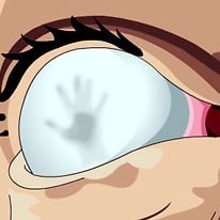
Sleep is safety until it isn’t. With eyes shut, your fear meter softens, your thoughts drift into the warm blur that promises morning. But muffled footsteps, a scrape of fingernail against wood, a sigh that belongs to no one—each sound is a hook tugging you back to the surface. Open your eyes to verify the room’s geometry: the wardrobe angle hasn’t changed, the curtain still hangs like a stubborn shadow, the chair near the window is only a chair. Except sometimes it isn’t. The design keeps the stakes clean. Calm equals rest. Curiosity equals risk. What kind of survivor are you when the entire plan is just… keep it together.
👻 House Guests You Didn’t Invite
The ghosts here aren’t jump-scare vending machines; they are habits of the room made visible. A pale blur that lingers where your mirror used to be. A child-sized silhouette that remains half a second longer than it should when you shut your eyes. A figure outside the windowpane, fogging the glass from the wrong side. They don’t chase—you do that to yourself by seeking them out. Listen first. Figure out what’s signal and what’s the architecture settling. If you get it wrong and stare too long, the fear meter answers with a cruel climb that feels like a hand on your chest. Breathe. Look away. Pull the blanket up like a shield you almost believe in.
🔊 The Grammar of Night Noises
Maere teaches with sound, not subtitles. Floorboards speak in vowels—long, groaning o’s for heat, short, urgent e’s for footsteps too close. Pipes rattle consonants. The wind mutters. Every pattern becomes a sentence. When that sentence breaks—when the rhythm stutters into a hush that feels held—you open your eyes, slowly, like you’re lifting a veil at a funeral. If nothing’s there, you close them again and harvest a few seconds of calm. If something is, you do not meet its gaze; you mark it, memorize the distance, scan the room in slices, then let darkness cover your eyes again like a lid on a pot about to boil over.
🛏️ Bed Is Base, Bed Is Battlefield
You are pinned by your own comfort. The mattress gives you rest and takes your options. You can tilt your head, slide your feet, tug covers, check the edges for intrusions. The nightstand is a staging area for tiny hopes—a clock with a bleeding minute hand, a lamp you don’t dare use because brightness would make the room too honest. The door is never as far as it looks, and the window is never as closed as it sounds. The game’s best trick is how still it keeps you while your mind sprints laps, planning escapes you’ll never attempt because the rules say stay, listen, last.
💓 Fear Meter: The Temperature of Your Soul
Watch it when you must, ignore it when you can. Panic feeds it like sugar; ritual starves it. Count your breaths: in for four, hold for two, out for six. Touch the blanket seam like a rosary. Repeat lies that work: it’s the wind; it’s the house; it’s my imagination doing its taxes. The meter listens. If you let your thoughts accelerate—What if it’s at the foot of the bed what if it’s in the wardrobe what if it’s already inside the bed—the bar rises as if your skull is a glass filling with cold water. You’re not banishing anything out there. You’re negotiating with something in you.
🕰️ Night as a Timeline of Mistakes
Every hour has a temperament. Early night is polite: whispers, testing creaks, a curtain that breathes wrong. Midnight flexes: a shadow that leans, a reflection that fails, a voice that sounds like yours but backwards. Pre-dawn is cruelly hopeful. Birds threaten to start, the blue outside looks trustworthy, and that’s when the house tries the loudest to make you look. You will manage it sometimes—eyes closed through the worst of it, a little smile when the fear drops and the edges of sleep soften the corners of the room. Then something new will arrive, and you will have to decide whether to welcome knowledge or protect peace.
🧠 Tactics That Feel Like Superstitions
Set rules you never tell the ghosts. Only open your eyes when the sound repeats exactly. Only scan left to right, never backtrack. Don’t stare at mirrors. Never count beyond seven. Turn the pillow when it heats up, not because it cools anxiety but because repetition becomes a rope you can hold. If the wardrobe door is open a crack, don’t close it—that’s a contract you can’t keep. If the chair moves a centimeter, mark it with a mental pin and move on; obsession is accelerant. You learn these tricks the way sailors learn the ocean: by little bruises that don’t show until morning.
🪟 Things Outside Want In
There’s a ritual at the window. Frost spreads from a breath you didn’t take; you trace it with your eyes and hope it erases itself. Streetlight does strange arithmetic with branches, adding a finger where no tree should be. Passing headlights press silhouettes into the room and pull them out again, but one lingers like dried wax. Outside is a promise of space and a rumor of worse. Don’t flee. The latch is a trap. The only victory Maere offers is endurance. You’ll see dawn eventually—if you save enough courage to keep still.
🎮 How It Feels in Your Hands
The controls respect the premise. Closing your eyes is instant relief and a leap of faith. Opening them is a deliberate choice with weight. Head turns are slow by design, like you’re dragging a heavy camera through syrup. Every action has a soft thud, a tiny sonic footprint that tells the room where you are. The feedback is tactile without being showy; a slight tremor when the fear spikes, a hush that invades the audio when you’re seconds from sleep, then a pinprick sound—tick, scrape, breath—that punctures it. You’re steering a body as much as a viewpoint, and the body has opinions.
📜 A Name in the Dark
Somewhere in the pause between noises, you remember a credit you read before the lights went out. Created by Chris Gray. The knowledge doesn’t save you, but it explains the restraint. Someone designed this as a study in small dreads—no chase scenes, no shotgun under the bed, just you and the etiquette of a haunted room. The craft is in the limits: see less, feel more; move less, notice more; know less, survive longer.
🧩 Why It Works, Why It Sticks
Because fear is a rhythm, not a jump. Because the scariest thing in the room is your own imagination doing push-ups in the dark. Because choosing to close your eyes feels like heroism when everything in you screams open them now. Maere turns a bedroom into a boss fight against habits—staring, catastrophizing, counting footsteps that don’t belong to you. When morning finally threads pale light through the curtains and everything collapses back into furniture, you exhale a laugh that sounds like you borrowed it. You didn’t conquer anything. You outlasted it, and that’s enough for tonight.
🌅 One Last Look, Then Sleep
The house is quiet. The meter is low. The window offers an honest blue. You let your eyes close and do not bargain with the dark. No more checking. No more quick peeks for science. Your breathing draws long lines, each one a bridge to morning. The last thing you feel is the bed letting you go, as if the room has decided you aren’t interesting anymore. That’s the victory Maere allows: not a cutscene, but a sunrise you earned with discipline. If you want to try again—different noises, different nerves—the room will be waiting on Kiz10. Bring a steady heart, and whatever you do, don’t look longer than you can afford.





 4.5 (150 votes)
 Share
Share
 Embed
Embed


