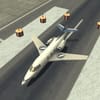
✈️🅿️ The runway is easy. The ground is the nightmare.
Park It 3D Airplanes has a simple little punchline that lands the moment you touch the controls: flying sounds glamorous, but parking is where your pride goes to die. You’re not soaring through clouds with dramatic music. You’re down on the airport pavement, steering a big aircraft like it’s a shopping cart the size of a building, trying to slide into a marked spot without scraping anything. And because it’s a 3D parking challenge, every mistake is loud in the way your brain feels it. You turn too late, the tail swings wide, you clip a cone, and suddenly you’re thinking, wow… I should respect ground handling more than I respect my own confidence.
On Kiz10, this game hits that perfect “quick to understand, brutal to master” loop. You pick a plane, pick a difficulty, pick a level, and the airport immediately becomes a puzzle made of space. Not a puzzle made of numbers. A puzzle made of angles, turning radius, and the sneaky truth that your aircraft doesn’t pivot like a toy. It drifts. It needs room. It punishes panic steering. And it has no sympathy for last-second corrections.
🛬🧠 Taxiing is basically chess with wheels
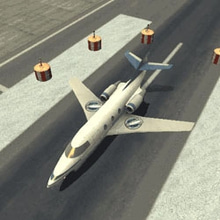
The big challenge in Park It 3D Airplanes isn’t speed, it’s discipline. You’re guiding a plane across the ground, following a path through cones, barriers, tight turns, and airport clutter that exists solely to test your patience. It’s the kind of driving game where the camera is your best friend and your worst enemy. Sometimes you feel like you’ve lined up perfectly, then the camera angle shifts and you realize you’re about to swing the wing into a barrier like you’re trying to sign your name in damage.
You learn fast that “just turn harder” is not a plan. The plane responds slowly, like it needs to think about your request. So you start planning turns earlier. You approach corners wider. You slow down before the bend instead of during it. And once you begin treating every taxiway like a narrow hallway, the game becomes weirdly satisfying. Each clean turn feels like you solved a small mechanical riddle with your hands.
🎥👀 Camera angles and the art of not lying to yourself
One of the most fun parts of airplane parking games is how they force you to read space from different perspectives. A single camera view can fool you. You can feel aligned, but you’re not. You can feel centered, but your tail is drifting off-line. So you end up switching angles like a nervous director filming a scene where the actor is a plane and the stunt is “don’t touch anything.”
When you get used to it, it becomes a skill all on its own. You start using the camera like a tool instead of a comfort blanket. You check the wing clearance. You glance at the tail. You confirm the nose is pointed where you think it’s pointed. You stop trusting vibes and start trusting geometry, which sounds dramatic, but this game will absolutely make you dramatic if you care about parking clean.
🚧🟠 Cones are tiny, your plane is not, and that’s the whole joke
The obstacles in Park It 3D Airplanes are often small compared to the aircraft, and that contrast is where the tension comes from. Cones feel harmless until you realize they represent the boundaries of “you failed.” Barriers look simple until you clip them with a wingtip you forgot was there. The game loves catching you with the part of the plane you’re not watching. Your nose clears easily, you relax, and the back end swings into trouble like it had its own agenda.
So you develop habits. Slow turns. Gentle steering inputs. Little adjustments instead of big swings. You stop overcorrecting, because overcorrecting is how you turn a minor drift into a full mess. The best runs feel calm, almost boring, and that’s the compliment. Calm means you’re in control. Calm means you’re not fighting the plane.
⏱️😮💨 Pressure without chaos: the timer that makes you overthink
Parking games often add a time element, and it changes everything. It doesn’t mean “go fast,” it means “stop wasting moves.” Every extra correction is time. Every wrong approach is time. Every panic wiggle is time. The timer doesn’t just measure your speed, it measures your decision-making. That’s why the game gets inside your head. You’ll start a level confident, then you’ll notice the time, then your hands get jittery, then you do something you wouldn’t do if nobody was watching, like turning too early because you wanted to feel progress.
The trick is understanding that smooth is fast. Smooth paths reduce corrections. Clean approaches make parking easier. And once you accept that, the timer becomes less of a bully and more of a coach that’s annoyingly correct. You don’t beat time by rushing. You beat it by driving like you’re already a pro.
✈️🧩 Difficulty modes and the slow growth of skill
What makes Park It 3D Airplanes stick is that it gives you room to learn without turning it into a lecture. Different difficulty settings change how forgiving the game is, how tight the routes feel, and how much patience you need. Early on, you’ll focus on simply reaching the parking bay without hitting anything. Then you start caring about alignment. Then you start caring about how cleanly you arrived. Then you start replaying levels because you know you can shave off a few seconds and cut the correction count down like you’re trying to impress an imaginary flight instructor.
And you do improve. That’s the addictive part. At first, taxiing feels awkward. Later, you start anticipating the plane’s movement. You turn before you think you need to. You straighten earlier. You approach the bay with a setup line that makes the final park feel effortless. It’s not effortless, of course, but it looks effortless, and that’s the goal. 😄
🅿️🎯 The final parking bay is always a tiny boss fight
The finish zone is where your confidence gets tested. Getting near the bay feels like you’ve won, but the game doesn’t count “near.” It counts “parked.” And parking means you have to align the aircraft properly inside the marked area, often with little room for sloppy angles. This is where you learn the difference between arriving and finishing. You can reach the spot with a crooked approach and still fail because you can’t straighten in time. Or you can take a slightly slower, wider setup and glide into the bay like you planned it from the start.
That’s the moment the game becomes a patience simulator. You’ll do tiny corrections. You’ll inch forward. You’ll hesitate, then commit. You’ll realize you’re slightly off-center, then fix it. And when it finally locks in, you get that quiet satisfaction that feels way bigger than it should. Parking a plane shouldn’t feel heroic, but here we are.
🛫😅 Why it’s so easy to replay “just once more” on Kiz10
This is a classic Kiz10-style skill game because each attempt teaches you something immediate. You don’t feel lost. You know exactly what went wrong. You turned too tight. You approached too narrow. You got greedy with speed. You trusted the wrong camera angle. The feedback is clear, the retry is fast, and your brain instantly imagines a better run. That’s the hook. Not grinding. Not luck. Just the pure stubborn desire to do it cleaner.
Park It 3D Airplanes is a 3D parking game that turns airport ground handling into a tense little challenge you can actually master. It’s about steering with restraint, reading space, using the camera smartly, and parking like you respect the size of the vehicles you’re controlling. If you like parking games, vehicle simulation challenges, and that sweet feeling of precision done right, this one delivers. Just remember: the plane is big, the cones are unforgiving, and your confidence is always one bad turn away from becoming comedy. ✈️🅿️🔥











 2.5 (34 votes)
 Share
Share
 Embed
Embed