🌈 Cold Open: A Door That Only Likes Blue
You spawn on a tiny island of pixels under a sky the color of bubblegum, and there it is—a door, humming quietly, refusing to open unless you are very specifically blue. You aren’t. Not yet. The camera breathes out, a prism winks in the corner, and suddenly the whole room is a logic toy. Tap the palette key, your cloak slips from red to blue like a sigh, and the door blinks—interested but not convinced. Fine. You nudge a mirror, catch the beam, and paint the switch with the right hue. Click. It’s not just “go right.” It’s “think in color, then move.” The first thirty seconds are a handshake: Prismatica sets the rules with a smirk and dares you to keep up.
🧠 Chromatic Tactics in Midair
Platforming here is not a race; it’s chess played while sprinting. Platforms exist, disappear, or turn hostile depending on what color you’re wearing. Red rails are solid to red, ghostly to everything else. Green gel bounces only if your boots match; otherwise it’s just… moss. You start timing costume swaps mid-jump—tap to blue for the ledge, flick to yellow for the spring, back to red before the saw decides you’re a snack. It sounds chaotic. It feels surgical. One clean sequence turns a hallway of nonsense into a ribbon you can surf, and the moment you nail it, you’ll grin so hard you forget to breathe. Then a curator drone floats in and politely ruins your confidence. Good. Learn faster. 😼
🎮 Fingers, Keys, and Color Rhythm
Controls are crisp enough to taste. WASD or arrows to move, Space to jump with a gentle hang time that forgives? sometimes. J toggles palette forward, K toggles back; hold L to siphon light from a beam into a pocket battery. On gamepad, bumpers cycle colors with a tactile “click” while A handles jumps and X releases stored light like a flashbang for puzzles. There’s a dash—but it’s honest. No teleport miracles, just momentum you earn. After two levels you stop looking at the HUD. Your thumbs learn the song: jump, swap, land, swap, dash, breathe. Miss a note and the game doesn’t scold; it just lets gravity have an opinion.
🔦 Beams, Mirrors, and Mischief
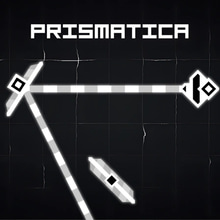
The headline gadget is light, but not in a sleepy “shine here” way. Beams carry color data. Mirrors don’t just reflect—they split, rotate, and sometimes gossip behind your back. You’ll drag a prism onto a lazy conveyor, wait three beats, and rotate at the last second so a violet stream kisses a sensor through a grate you couldn’t touch. Light bridges exist, of course, except they only support the wavelength you’re wearing, so mixed routes become tiny heists. Later you unlock shunts that store hue like batteries; chain them and you’ve got a timing puzzle that feels like juggling neon bowling pins while somehow remaining dignified. When it works, the room lights up as if it’s clapping with its whole face. ✨
👾 Enemies Who Read Your Palette
Prism-scouts patrol in polite squares, mask-wearing guardians track your last color, and the worst little gremlin—Chromalurk—pretends to be background until your palette matches its favorite snack. You can’t brute force any of them. Wear blue and the scouts ignore you but lasers won’t. Swap to red and lasers go sleepy while scouts get nosy. Bosses escalate the joke. A stained-glass knight copies your hue one beat late; you bait it into the wrong platform and it falls with a melodramatic “oof.” A kaleidoscope serpent eats beams and burps them back shifted; you turn its indigestion into bridges. Nothing has a bloated health bar. Everything has a tell.
🗺️ Worlds That Fold Like Origami
Each chapter dresses the color rules in new clothes. Sunken Basilica layers reflections over water so every mirror has a twin you can only align by timing your ripples. Rust Arcade rattles with conveyor noise and carnival lights—great for charging batteries, terrible for nerves. The Glass Orchard looks friendly until wind turns light into bent noodles; you angle mirrors by listening rather than staring, which is a weirdly lovely skill to learn. The final world, Parallax City, lets backgrounds become foregrounds when you match their palette. Step into a mural, swap once, and now you’re running along a skyline you were admiring five seconds ago. It’s a cool party trick that becomes a brain habit.
🧩 Micro-Strategies You Swear You Invented
Feather the jump button to widen a color window midair. Approach red rails diagonally so a late swap still catches. Buffer a palette change during cutscenes (the game allows it because it’s nice) and steal a beat when control returns. Use “color stutter”—tapping through an unsafe hue so fast its hazard doesn’t register—to thread spinners without losing momentum. Stand in beam spill to trick a door that listens for “any light” while saving your battery for the real diva switch. Write a little note to yourself: don’t land yellow on yellow gel unless you like ricocheting into the sun. Then do it anyway because it’s funny. 😅
🎵 Chiptune That Listens, Not Lectures
The soundtrack shifts with your decisions. Swap to blue and the bass tightens; red adds crunchy snare; yellow pulls in a high glassy synth that sits like frost on the top edge. The effect is subtle and constant—music as HUD. Hazards announce themselves with tiny motifs: seekers chirp in minor thirds before they commit, light elevators hum one semitone higher when charged, mirrors “ting” in stereo when aligned. Miss a swap and the high end ducks for a blink, like the track did a sympathetic wince. Headphones are recommended; the game speaks fluent rhythm.
🧰 Trinkets with Bite, Not Bloat
Progression is playful. Prism boots extend your “safe swap” window by a quarter-beat, just enough to make a scary chain feel fair. A pocket diffractor lets you split one beam into two half-strength rays—useless on doors that want full power, invaluable when you need several weak sensors humming at once. A cloak charm stores one emergency hue that auto-triggers on hazard touch, saving your life exactly once per room and then going quiet with a gentle shame bell. Cosmetics carry tiny utility: a comet trail on dash that helps read arcs; a color-blind assist pattern on your cloak that echoes current hue for peripheral awareness. Nothing turns the game into autopilot. Everything turns your mistakes into plans.
🧗 Challenge Routes, Cozy Options
Main paths teach; side doors tease. Time Trials replace enemies with stricter cycles and say “prove it.” Puzzle Rooms ban jumping (rude) and demand pure mirror tactics. A Speed-Flow toggle increases dash recovery and removes a few safety rails for players who want to surf rather than tiptoe. Accessibility matters: high-contrast palettes, pattern-coded hazards, remappable color keys, a “slow world” assist that stretches timing windows without touching gravity. You can make the game louder or kinder without it losing its clever.
📖 A Story Told Through Windows
Nobody monologues. Notes are scrawled on light-leaking postcards: “The city burns neon to keep the nights honest.” NPCs speak in dioramas—two silhouettes arguing across a stained-glass platform, swapping colors like they’re passing points in a debate. Your cloak begins to retain tiny tints from places you loved; the lobbies mirror your current palette, a quiet nod that you and the world are mutually editable. The title isn’t just pretty; it’s geography. You’re chasing prisms that once powered streetlamps and now unlock memories of a place that went grayscale out of fear. Bring the color back. Walk home brighter.
🏁 Why You’ll Chase One More Glow
Because every solved room feels like a thought that finally clicked. Because a perfect swap chain sounds like applause you made with your own fingers. Because the platforming respects your timing, and the strategy respects your curiosity. You’ll close a browser tab and still see beams on your ceiling fan, plotting routes from lamp to picture frame. You’ll wake up thinking “red, yellow, blue, dash” and smile because your hands already know. Prismatica is that rare pixel game where clever is kinetic and cute is cunning. Play it on Kiz10, swap midair, bend a beam, and watch the door you couldn’t touch a minute ago swing open like it was always waiting for your better idea.





 4.5 (150 votes)
 Share
Share
 Embed
Embed