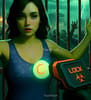
🧟 The last gate before everything falls apart
The city behind you is gone. Not in a single explosion, not in one big headline, but in a thousand small collapses. Lights going out. Sirens that never stopped. Streets slowly filling with people who do not walk right anymore. Now all of that horror is squeezed into a single line in front of your checkpoint. One by one they step up to the barrier, hoping you will wave them through.
Quarantine Simulator drops you right into that chair at the edge of the safe zone. You are not a hero with infinite bullets. You are the person with a clipboard, a handful of strange medical gadgets and a wall full of survivors who trust you to keep infection out. Every face in front of you has a story. Every face might also be hiding a virus that will burn through your camp if you let it in.
The job sounds simple when someone explains it on paper. Scan each visitor. Check their documents. Look at their eyes, their skin, the way they stand. Decide yes or no. But after the fifth person, after the twentieth, after an entire day of seeing shaking hands and desperate families, the line between “healthy” and “maybe not” starts to blur. That is where the real game begins.
🔍 Reading bodies like crime scenes
You are not just staring at models on a screen. You are hunting for tiny signals in each stranger who steps up to your window. A subtle twitch in the neck. A wet cough they try to swallow. Eyes that refuse to meet yours. Someone who flinches when you mention the word quarantine.
Your tools help, but they are not magic. The ultraviolet lamp reveals hidden stains and odd markings on skin and clothes. Other devices pick up temperature spikes or unusual readings inside the body. None of them shout “this is a zombie” in big red letters. They just give you fragments of the puzzle. You still have to put the pieces together.
Sometimes the test results look clean, but your gut is screaming that something is wrong. Maybe their story does not match their wounds. Maybe they smell like the wrong part of town. Maybe you have seen those same dark veins under the skin once before and you remember exactly how that turned out. The game pushes you to trust both evidence and instinct, then punishes you gently or brutally depending on how those choices play out.
Say yes to the wrong person and infection sneaks past the barrier. Say no to someone who really is clean and you send an innocent survivor back into a city that eats people alive. There is no way to do this job without getting your hands dirty.
🏕️ A camp held together with hope and duct tape
Behind the checkpoint is not some perfect shiny base. It is a camp that feels one bad day away from collapsing. Tents, patched fences, stacked crates of food and medicine that never look like enough. Every time you allow a survivor through, you are not just saving a life. You are also adding one more mouth to feed, one more body to protect when night falls, one more bed to find in a place that already feels cramped.
You manage resources the way a nervous cook manages ingredients for a long week. Food stocks slowly drain with each passing day. Medical supplies shrink faster than you would like, especially after big attacks. You can send people out for scavenging runs, trade with shady visitors, or risk stretching rations thinner than seems wise. Each path carries its own dangers.
Upgrading the camp becomes a quiet obsession. Better walls mean fewer zombies breaking through. Extra beds and shelters let you accept more survivors without turning the place into chaos. Medical tents improve recovery and reduce the chances that a mild infection turns into a crisis. None of these upgrades are free. You pay for them with the same limited resources that also keep people alive today. It is a constant balancing act between present survival and future strength.
When the camp feels safe, you breathe easier. When the food counter drops low or the infirmary fills up, every knock on the checkpoint door sounds like a problem.
🔫 When the line turns into a battlefield
Of course, the infected do not always stay politely outside the fence. Some days the line of hopeful survivors is replaced by a wave of bodies that do not speak, do not think, and definitely do not respect clipboards. Zombie hordes test your defenses, and sometimes raiders show up too, more interested in stealing your supplies than in any cure.
That is when you stop being a quiet inspector and start being a frontline defender. A full arsenal of weapons sits ready for those moments. Pistols, rifles, shotguns, heavier hardware once you unlock it. Each gun has its own personality recoil, reload time, sweet spot where it feels perfect in your hands.
There is no time for slow bureaucracy when a boss creature smashes through the fog, dragging lesser infected behind it. You move with WASD, keep your sight on threats with your mouse, switch weapons with a quick number tap and pull the trigger with the same finger you were using for paperwork five minutes earlier. One moment you are checking documents, the next you are leaning out from behind cover, counting headshots and praying you remembered to restock ammo after the last raid.
Those fights do not feel disconnected from the desk work. They are the bill coming due for every decision you made earlier. If you invested in better defenses and weapons, the battle is brutal but survivable. If you focused only on expanding the camp and forgot to prepare for ugly nights, the price is paid in blood.
⚖️ Decisions that follow you to the next day
Quarantine Simulator loves putting you in positions where there is no perfect answer. A mother with a small child, both exhausted, both with slightly suspicious scans. A wounded soldier who has medicine, weapons and a history of “following orders” that might not align with your idea of kindness. A trader with enough supplies to save your camp for a week… if you are willing to ignore that bite mark he swears is from a dog.
Every choice moves invisible sliders in the background. Morale shifts. Infection risk climbs or falls. Your own conscience keeps score in ways the game never needs to spell out. Did you turn away someone who begged you to reconsider Are you really sure about that guy you let into the camp because he reminded you of your brother The simulator never jumps out and shouts at you, but it quietly echoes those moments later.
When things go wrong, it is rarely out of nowhere. A small outbreak traces back to that one day when you were tired and let your standards drop. A shortage of medicine comes from too many times where you chose comfort over efficiency. The longer you play, the more you catch yourself whispering “this is my fault” under your breath, then trying to do better tomorrow.
That ongoing moral pressure is what makes every new day at the checkpoint feel heavy and real.
🧪 Tools that evolve as you learn
At the beginning, your screening tools feel crude. A basic thermometer, a worn lamp, a scanner that needs time to warm up. You do what you can with them, filling the gaps with gut feelings and quick interviews. As days pass and resources roll in, you unlock and upgrade better tech.
New devices give you more angles on the same problem. A more precise scanner reveals hidden internal changes that early gear would have missed. Enhanced UV lamps show deeper layers of contamination. Extra gadgets unlock special checks that might give you an edge when you are not quite sure whether someone belongs inside the camp or six meters away from the fence.
The upgrades are not just numbers on a screen. You start building a small ritual around them. Shine the lamp. Run the scanner. Watch the readings. Cross reference what you see with how the person stands and speaks. Over time, this routine becomes second nature, and you can feel the difference in the quality of your decisions.
Tools also change combat. Better weapons, stronger barricades and upgraded guard positions turn desperate last stands into controlled defenses. You still have to aim and move smartly, but you are no longer fighting waves of undead with just a rusty pistol and a shaky hand.
⌨️ Controls designed for split second switches
Quarantine Simulator gives you a lot to do, but it keeps the controls clear so you do not get lost in your own keyboard. Movement sticks to the familiar WASD layout, letting you walk the checkpoint, patrol the fence or strafe during attacks without thinking about which key does what.
Interacting with survivors and objects is handled by your main mouse button, making conversations, scans and item pickups feel natural. Shooting sits on a dedicated key, so you can snap between “talking to visitors” and “firing at a charging infected” without fumbling. You press F when you are ready to call the next person to the barrier, giving you a tiny breath between cases to check supplies, reload or just brace yourself.
Special tools live on comfortable number keys, letting you swap between scanning gear with a quick tap. The ultraviolet lamp toggles with its own shortcut, so you can flick it on when you suspect someone is hiding something on their skin or clothes. Sitting down, pausing, closing windows and activating the cursor are all mapped in ways that make sense after a few minutes, leaving your brain free to worry about the actual threat instead of the interface.
It is a lot, but it never feels like too much. Once the layout settles into your muscles, you can glide from desk work to gunfight to resource check in a few smooth motions.
🧟 Why this checkpoint is hard to leave behind
When you finally step away from Quarantine Simulator, the feeling of standing at that gate follows you. You catch yourself analyzing strangers on the street, wondering what you would decide if they walked up to your barrier. You replay conversations from the game in your head, questioning whether you were too harsh, too trusting, too tired.
That is the power of the simulator. It is not just about shooting zombies or clicking through menus. It is about living with the weight of being the last filter between chaos and the fragile pocket of humanity behind you. Every day is a fresh stack of unknown faces and impossible decisions, framed by the simple, brutal rule that you cannot save everyone.
On Kiz10, Quarantine Simulator lands as a tense mix of attention test, management game and moral drama. If you like titles where your choices matter more than your trigger finger, this checkpoint on the edge of the apocalypse will pull you in and make you ask the same quiet question again and again. Who gets to live on the safe side of the fence when you are the one holding the door





 Share
Share
 Embed
Embed