🤖🧟♂️ The apocalypse didn’t need a hero, it built one
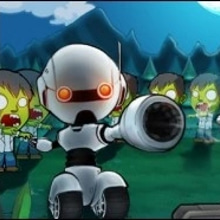
Robot vs Zombies begins with a simple, ugly idea: the world tried humans, humans got overwhelmed, so someone finally said “fine” and welded hope into metal. You’re not a survivor with a shaky pistol. You’re a machine designed for one job—push forward and erase the undead problem from the map. On Kiz10, it plays like a classic action shooter with that arcade “keep moving or get buried” energy. The streets aren’t cinematic. They’re functional. Narrow lanes, sudden threats, and that constant sense that the next corner is going to be worse than the last. You step into the robot and the game instantly feels like a pressure test. Can you aim while moving? Can you manage space? Can you stop the zombies before they decide you’re just another obstacle? 😅
There’s a satisfying bluntness to controlling a robot in a zombie outbreak. You don’t negotiate with fear the same way. You still have to play smart, obviously, but the fantasy is different: you’re heavier, tougher, and louder than the chaos around you. Every shot feels like a decision with weight. Every step forward feels earned. And when the undead start stacking up, it becomes a messy little puzzle made of timing and nerve: clear the lane, create room, don’t let the swarm close in.
🔫⚙️ Shooting is easy, keeping control is the real mission
At first you’ll think, okay, I shoot zombies, I win. Then you meet the game’s real personality: it’s not about killing one zombie, it’s about managing many at once. The robot can handle pressure, but only if you’re reading the situation instead of flailing. When zombies come from multiple angles, you start learning micro-priorities. Which ones are about to reach you? Which ones are blocking your escape path? Which ones can you ignore for half a second while you fix a bigger threat?
That half-second is everything. Robot vs Zombies lives in those tiny moments where you almost panic, then you don’t. You reposition, you keep your aim clean, you stop the closest danger first, and you keep moving like you own the street. When you play like that, the game feels smooth, almost confident. When you don’t, the swarm becomes sticky, and sticky is how runs end. 😭
🧠🛣️ The battlefield is space management, not just firepower
Good zombie shooters always teach the same lesson in different costumes: space is life. In Robot vs Zombies, space is your oxygen. You’re constantly trying to keep a buffer between you and the swarm. The moment the zombies get too close, the whole tone changes. Your shooting becomes reactive instead of planned. Your movement becomes frantic. Your mistakes multiply. So you learn to build space before you need it.
That can mean backing up slightly to line up cleaner shots. It can mean shifting lanes to avoid getting cornered. It can mean clearing a cluster early so it doesn’t turn into a wall later. None of that feels dramatic, but it feels skilled. The robot is powerful, but the player is the real engine. The game rewards you for thinking like a controller, not like a button-masher. 🤖✨
💥🧟♀️ Waves don’t just arrive, they try to trap you emotionally
There’s a specific kind of tension in zombie games: the swarm is designed to make you feel rushed. Robot vs Zombies uses that same psychological trick. You see more enemies, you start firing faster, you start taking riskier angles, and suddenly your clean plan turns into “please let me survive this.” The funny part is that the best response is the opposite of what your nerves want. The best response is calm, deliberate clearing.
When you’re under pressure, aim matters more, not less. Movement matters more, not less. It’s like the game is asking, “Can you stay smart while the screen gets loud?” And when you manage it, when you stabilize a chaotic moment and push back the tide, it feels genuinely good. Not because of a cutscene, but because you just took control away from the swarm. 😤
🔩🧨 The robot isn’t just a skin, it’s a vibe
Playing as a robot changes the emotional flavor. You’re not fragile. You’re not sprinting in fear. You’re advancing like a tool someone built to solve a problem. That creates a satisfying contrast with the zombies, who are all instinct and hunger. You’re the opposite: a machine with purpose. Your job is to be efficient.
That efficiency is what you start chasing. You’ll want cleaner kills, faster clears, safer pushes. You’ll develop habits that feel like a pilot’s routine. Scan forward. Clear the nearest threats. Don’t drift into corners without an exit. Don’t tunnel-vision one target while a cluster forms behind you. Those habits turn the game from chaotic to controlled, and that shift is the real progression.
😈🧟 Greed is still a threat, even in metal
Even with a robot, you’ll get tempted into bad decisions. “I can push through this group.” “I can take one more second to finish that target.” “I can stand here and clean everything.” That’s how the undead wins: not by being smarter, but by waiting for you to overcommit.
Robot vs Zombies rewards aggressive play, but only when your aggression is disciplined. Push forward when you’ve cleared a lane. Commit when you have an exit route. Don’t commit when you’re surrounded. It sounds obvious, but in the moment it’s hard, because the action feels fast and your brain wants to prove you’re in control. The game’s response is always the same: prove it with positioning, not bravado. 😅
🎮🕹️ The loop that keeps you clicking “try again”
This is the kind of Kiz10 shooter that stays sticky because failure feels specific. You don’t lose and think “random.” You lose and think “I let them close in,” or “I got cornered,” or “I chased one zombie and ignored the swarm.” Those are fixable mistakes, and fixable mistakes are addictive. You restart because you can already imagine the cleaner version of that moment.
You’ll also notice how your runs start becoming smoothers. At first, you react late. Later, you anticipate early. You shoot where the swarm will be, not where it is. You move before danger becomes danger. That improvement feels real because it’s not a skill tree on paper. It’s you getting sharper.
🌑🔥 The best moments feel like a corridor of noise you survive anyway
Robot vs Zombies shines when the screen gets crowded and you still keep your line. You’re firing, moving, adjusting, clearing pockets of safety, and it feels like you’re carving a path through a living wall. The sound and movement become a kind of rhythm. It’s chaotic, but it’s readable if you stay calm. Those are the moments that make the game feel bigger than its simple setup. A robot, a street, an outbreak… and you turning the outbreak into empty space one step at a time. 🤖💥
🏁🧟♂️ Why it works so well on Kiz10
Robot vs Zombies is a clean, direct zombie shooter: easy to understand, quick to jump into, and built around the most satisfying kind of pressure—pressure you can overcome by playing smarter. It’s not about complicated systems. It’s about rhythm, aim, and movement. It’s about space management and staying composed while the undead tries to turn you into a mistake. If you like action games where improvement is visible in how you move, how you aim, and how you handle chaos, this one delivers that sharp “one more run” feeling every time. ⚙️🧟♂️✨





 4.9 (37 votes)
 Share
Share
 Embed
Embed