🚗💥 Welcome to the Arena Where “Careful” Means “Dead”
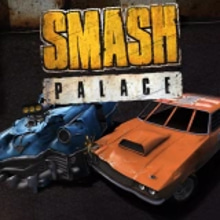
Smash Palace doesn’t ease you in with polite driving lessons. It throws you into a demolition derby where every other driver wants your car to stop existing, and the arena itself is basically a booby-trapped mood. On Kiz10, the game’s hook is clear: customize your vehicle to survive, fight off drivers trying to destroy you, and watch out for mines, traps, and air strikes while you try to last as long as you can.
🛠️🔥 Customization That Actually Feels Like a Survival Decision
The word “customize” can mean anything in racing games, but here it lands with a survival flavor. You’re not picking paint just to look cool. You’re shaping the kind of car you want to gamble your life with. Smash Palace feels like one of those derbies where every build choice is an argument: do you want something that can take a hit, something that can move fast enough to avoid the hit, or something that can do both until the arena decides you’ve had enough fun? That’s what makes the setup addictive. It’s not only “drive and crash.” It’s “choose what kind of crash you can afford.”
There’s a specific tension that comes from driving a car you’ve customized. When you get clipped, it feels personal. When you survive a nasty situation, it feels earned. And when you lose, you immediately start thinking about what you should change next time, because the game plants that thought in your head on purpose.
💣🧨 Mines, Traps, and the Arena’s Bad Personality
Most demolition games already have enough chaos with cars alone. Smash Palace adds environmental threats that make the arena feel alive, and not in a friendly way. Mines punish lazy lines. Traps punish predictable movement. Air strikes punish that one terrible habit you’ll develop where you stop looking at the bigger picture and fixate on a single target. The game basically says: yes, you must survive the drivers, but also don’t forget the arena itself is trying to erase you.
And this changes the way you drive. You can’t just circle forever and hope. You can’t park yourself somewhere safe, because “safe” is temporary. The moment you start treating the map like a living hazard field, you get better. You start scanning for danger the way you’d scan for traffic in a city, except the traffic is angry and the road occasionally explodes.
🏁😵💫 The Survival Timer You Can Feel Without Seeing
Smash Palace is built around one question: how long can you survive?
That sounds simple, but it creates a special kind of pressure. Survival modes don’t reward you for one perfect moment, they reward you for consistency under stress. One bad decision can end a run that was going great. One lapse in attention can turn your car into a spinning problem. So your brain starts playing in layers. You’re driving, but you’re also predicting. You’re dodging the car in front of you, but you’re also wondering what’s about to hit from the side. You’re hunting openings, but you’re also making sure the opening isn’t a trap waiting for you to commit.
That layered thinking is where the game becomes satisfying. You stop feeling like a random participant and start feeling like a survivor who’s learning the arena’s logic.
🚙💥 Other Drivers Aren’t Enemies, They’re Moving Physics Problems
The derby opponents do something important: they turn the arena into a shifting puzzle. If the environment wasn’t enough, the other drivers add unpredictability, forcing you to adapt constantly. Sometimes the smartest move is to avoid contact entirely and let rivals collide with traps. Sometimes the smartest move is to strike when someone is already damaged, then escape before a third car turns you into the next target. You’re not just “fighting.” You’re managing momentum, space, and timing while chaos keeps changing the board.
And that’s why the best runs feel weirdly cinematic. You slip between two threats, a mine goes off behind you, a rival gets tagged by something you avoided, and for half a second you feel like the arena tried to kill you and failed. Then you remember it will try again immediately.
🧠⚙️ The Real Skill: Calm Decisions in a Loud Game
Smash Palace looks like pure destruction, but the skill ceiling is about calm. Panic driving is the fastest way to die, because panic makes you oversteer, commit too early, and stop reading the arena. Clean survival comes from small adjustments. Tiny changes in direction. Choosing when to engage and when to disengage. Keeping your car moving so you’re never an easy target, but not moving so wildly that you drive into the arena’s hazards like you’re chasing them.
A good mindset is treating every second like a rotation. Clear danger, reposition, reset your angle, then re-enter the mess on your terms. If you stay in the middle of chaos too long, you become the easiest story for the arena to finish.
🎮💣 Why It’s So Replayable on Kiz10
Because the goal is survival and not a single scripted win, every run becomes its own little story. Sometimes you lose fast and it’s your fault. Sometimes you lose fast and you blame the air strike even though you know you were out of position. Sometimes you survive longer than expected and your hands get tense because you don’t want to throw it away with a stupid mistake. That emotional curve makes it hard to quit, because the game always feels like it’s one better run away. One smarter build. One cleaner route. One less greedy chase.
Smash Palace works as a demolition derby game because it doesn’t rely on one trick. It combines player threats with environmental threats, then asks you to survive the full mess. Customize your car, respect mines and traps, watch for air strikes, and prove you can keep a battered vehicle alive longer than the arena thinks you deserves.











 4.6 (36 votes)
 Share
Share
 Embed
Embed