🌃🏎️ Neon Asphalt, No Mercy
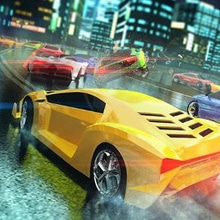
Speed Street Tokyo throws you straight into that late-night driving fantasy where the city never sleeps, the road never stays calm, and your speedometer becomes your personality. It’s not trying to be a quiet simulator. It’s a street racing game that wants you moving now, not later. The moment you hit the road on Kiz10, Tokyo feels like a glowing maze of lanes, lights, and split-second decisions. You’re not sightseeing. You’re hunting clean lines through traffic, chasing checkpoints, and trying to keep control while the city tempts you into doing something stupid because it looks cool. And yeah… you’ll do it. Everyone does.
The first thing you notice is the vibe: bright signs, dark roads, the kind of atmosphere that makes you think, “okay, I’m the main character in a racing montage.” Then you take your first corner too hot and reality arrives like a slap. Tokyo doesn’t care about your montage. The corners still exist. The traffic still exists. Your reflexes still have to show up. That contrast is the whole charm: cinematic energy with arcade consequences.
🛣️⚡ The Highway Is a Puzzle Made of Speed
The best way to understand Speed Street Tokyo is to stop thinking of it as “drive fast” and start thinking of it as “drive smart at fast.” The city roads feel like a shifting puzzle where lanes are your pieces and timing is your only tool. You’ll weave, sure, but the weaving isn’t random. Good runs come from reading the road a little ahead, predicting where the gaps will open, and placing your car like you’re drawing a line through chaos.
There’s a moment every player hits where your eyes learn to scan differently. Instead of staring at the car directly in front of you, you start watching the space around it. The empty lane two steps ahead. The cluster that’s about to tighten. The moment a safe pass becomes a trap because another vehicle slides into the exact spot you were aiming for. It feels like the road is alive, like Tokyo is testing whether you’re actually paying attention or just pretending.
And when you’re in the flow? It’s weirdly satisfying. You hit a clean overtake, then another, then another, and you start feeling unstoppable. The city blurs, your hands stop panicking, and your brain gets quiet. That quiet is dangerous, because it makes you greedy. You’ll try a pass you shouldn’t. You’ll squeeze a gap that was never yours. And the game will remind you, gently, violently, that street racing is mostly confidence management.
🗼🚦 Tokyo Traffic: The Real Boss
In a lot of racing games, the “enemy” is a rival car. In Speed Street Tokyo, traffic is the rival, the obstacle, and the comedian that sets you up for failure at the worst time. It doesn’t have to be unfair to feel threatening. It just has to exist. A slow vehicle in the wrong lane turns a straight road into a sudden plan change. A tight cluster forces you to brake when you were mentally committed to accelerating. And the game loves placing these moments right when you’re feeling brave.
You learn quickly that overtakes aren’t about aggression, they’re about preparation. If you slam into lane changes without a plan, you’ll lose control or clip something. If you set up your move early, shift into the right lane before the pressure hits, and keep an escape route ready, you’ll survive longer and keep speed higher. It’s basically street racing etiquette, except the etiquette is “don’t crash.”
There’s also that classic near-miss joy, the thing that makes your stomach drop and your mouth grin at the same time. You thread between two vehicles with barely any space and you’re like, I absolutely should not have survived that. But you did. And now you want to do it again, just a little cleaner, just a little faster, like your brain is chasing a better version of your own mistake.
🧠💨 Cornering, Control, and the Art of Not Overreacting
Corners in Speed Street Tokyo are where your instincts either evolve or betray you. The city roads don’t let you treat every turn the same. Some corners invite a smooth sweep. Others punish late steering. Some demand you ease off and respect the angle, even when you don’t want to. The difference between a good corner and a bad corner usually isn’t speed alone, it’s the quality of your entry. If you enter messy, you exit messy, and then the next traffic pack eats you alive.
The funniest thing is how human your mistakes feel. You’ll turn too hard, then overcorrect, then drift into the lane you were trying to avoid, like your hands are arguing with each other. The fix is almost boring: smaller inputs, earlier decisions, and less ego. But when you apply that boring fix, the game suddenly feels smoother, like you upgraded your car just by upgrading your patience.
And yes, your brain will try to sabotage you. You’ll see a clean line and you’ll rush it. You’ll see a gap and you’ll commit too late. So you learn a small mental trick: drive one second ahead of yourself. Not five seconds, that’s too much. Just one. One second of prediction is enough to turn panic into control.
🔥🏁 Speed, Progress, and That “One More Run” Curse
Speed Street Tokyo has that addictive loop where every run teaches you something tiny, then dares you to apply it immediately. You crash, but you know why. You slow down, but you know where you lost time. You make it through a rough section and you think, if I just take that corner cleaner, I’ll be flying. The game thrives on that feeling. Not perfection, but “close.”
It’s also the kind of racing game where confidence is a resource. Spend it wisely. When you’re confident, you take better lines. When you’re overconfident, you take dumb lines. The best runs feel bold but controlled, like you’re pushing the edge without falling off it. That balance is the sweet spot. That’s when Tokyo stops feeling like a threat and starts feeling like your playground.
And even if you’re not chasing a perfect score, the atmosphere alone keeps it fun. The night city glow, the fast pace, the sense that you’re racing through a living neon corridor. It turns simple driving into a vibe. The kind you’ll remember the next day, weirdly. You’ll be walking around thinking about a lane change you almost nailed. That’s how you know a racing game got under your skin.
🎮🗺️ A Quick Tip That Actually Works
If you’re getting clipped in traffic or losing control after lane changes, stop reacting at the last moment. Pick your lane earlier than you think you need to, then drive smoothly inside it. Late moves create chaos. Early moves create options. And options are everything in street racing. When you always have an escape lane, you can stay fast without gambling every second.
Speed Street Tokyo on Kiz10 is neon street racing at its most satisfying: quick starts, sharp decisions, and that constants feeling that the perfect run is right there, just one cleaner corner away 🏎️🌃💥



 4 (30 votes)
 Share
Share
 Embed
Embed


