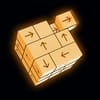
🪵 Tiny taps, big chain reactions
The board looks calm—beige blocks, tidy grain, nothing dramatic—until your first tap sends a tidy shiver through the grid and half the row decides to retire. Tap Wood Blocks Away is a puzzle about restraint disguised as wreckage. You don’t mash; you nudge. You don’t pray; you plan. One tap compresses a column, two taps line up a bonus, and suddenly a sleepy board becomes a Rube Goldberg daydream where wood clacks, numbers climb, and you pretend you predicted all of it. Maybe you did. Maybe you’ll learn to.
🧩 What a tap really does
Every group of matching blocks is a choice waiting to happen. Touch a cluster and it doesn’t just vanish; it pulls the world around it inward. Gravity takes the wheel, gaps invite neighbors, and the new shape of the board whispers fresh plots. The game keeps the rules honest: groups of two are timid, groups of three feel promising, and anything larger starts to purr like free points. Corners are spicy because collapse angles behave like physics with a sense of humor. Leave single stragglers and they’ll mock you; shepherd them into a herd and they’ll become a headline.
🎯 Goals that change the rules
Not every level asks you to wipe the slate. Some want you to drop tokens to the bottom, escort little gears through a wooden maze, or uncover stamped tiles hiding under planks like shy treasure. You’ll meet rope-tied blocks that only move when linked, varnished pieces that refuse to break unless you pair them, and tiny nails pinning boards in place until a neighbor shoves them free. There are move caps when the puzzle wants elegance, time caps when it wants jazz, and cozy unlimited modes where it just wants you to breathe.
🧠 The thinking that sneaks in
You’ll start by clearing the biggest group because it glows like a dare. Then you’ll realize clearing the second-biggest group first pulls the biggest into a perfect rectangle that hits a score threshold and spawns a bonus. Later you’ll delay obvious pops to build ladders for tokens you haven’t met yet. The good moves hide in diagonals, in the way a left collapse nudges a right column two tiles lower, in the way a single patience tap turns three orphans into a choir. When your brain flips from “what can I remove” to “what shape do I want to create,” you’re playing the real game.
⚙️ Tools that feel like cleverness
Boosts exist, but they behave like punctuation, not plot. The Chisel deletes one stubborn block so a group can finally be a group. The Mallet cracks a varnished piece and opens a lane. The Crosscut Saw clears a plus shape for when you need air. A humble Rope Wrap ties two blocks so your next collapse drags both. Undo gives you one step back because the game respects experiments. None of these win alone; they simply reward good setup. Use them late, not early, and you’ll swear you invented strategy on a Tuesday.
⏱️ Modes for every mood
Classic is unflappable—move-limited puzzles with fair goals and that quiet thrill when the last token drops. Zen removes timers, adds soft music, and lets you chase “board zero” without the pressure of a clock. Sprint chases big clears under a ticking bar that grows when you make smart chains. Daily Grain serves one hand-crafted board that’s clever without being cruel and stamps your calendar when you solve it. Challenge Nights remix rules—no chisels allowed, rope-only maneuvers, mirrored gravity—so you return to Classic with new muscles.
🗺️ Boards that feel handmade
Early grids teach, midgame grids tease, and late boards pull off little magic tricks. One level arranges stair-steps so you can slide tokens in a gentle cascade if you ignore the flashy pop in the center. Another disguises a clean double-collapse path under a layer of nails; remove three pins, do nothing flashy, and you’ll watch the board solve itself like it owed you a favor. Secrets pop up: an L-shaped clear spawning a bonus if you leave exactly one corner; a tucked-away stripe that turns into a bridge for two distant tokens you thought were enemies.
🔊 Sound that teaches without lectures
Wood clacks in tones that tell the truth. Small groups go tick, medium groups go tok, big groups go a satisfying tock-tock that tastes like victory. When gravity compacts a column just right, a soft thunk confirms the plan worked. The timer never barks; it taps a rim lightly to remind you that ideas love deadlines. Trigger a perfect chain and a shy shaker sneaks into the song, the audio equivalent of a high-five you didn’t have to ask for.
😅 Bloopers you’ll claim were tests
You will proudly pop a twelve-block combo and realize you’ve marooned a single square in the rafters like a bored pigeon. You will chisel the wrong piece and try to style it out by tapping aggressively at nothing while whispering “it’s fine.” You will ignore an obvious ladder, do three elaborate moves, then find yourself back at the ladder, chastened but stronger. The reset is fast, the lesson is gentle, and the next attempt carries that sneaky confidence that feels like luck until it isn’t.
📈 Stars and scores without pressure
Each board tracks three gentle goals—finish under the move cap, save a boost, clear the last row clean—and awards stars like stickers on a tidy notebook. Combos fill a meter that spawns a special block, and special blocks chain into fireworks you swear you didn’t plan even though you did. Leaderboards exist for bragging rights, but the game loves personal bests more than raw speed. If you’re the screenshot type, you’ll start saving grids that ended on a perfect zero because there’s something soothing about total tidy.
🧪 Micro-habits that win boards
Look two collapses ahead. Clear from the bottom when you need gravity to do the heavy lifting; clear from the top when you’re arranging ladders. If a token is three columns away, nudge the middle column first; your next move will do more than one job. When you see two medium groups side by side, pop the one that lowers the other into a square. Reserve the chisel for before the surprise, not after the mess. And when the timer appears, tap slower for three seconds; panic makes small groups, patience makes parades.
♿ Clarity and comfort baked in
High-contrast outlines make shapes readable even when the wood grain’s doing a pretty dance. A symbol-assist option mirrors color with icons, so you can solve by shape if hues aren’t your thing. Haptic pips echo key beats—combo spawn, move cap near, token path clear—so late-night sessions can be quiet. The camera never yanks; it leans just enough to highlight action, then returns the board to you like a courteous dealer. Inputs remap if you prefer one-handed play; lefties get love out of the box.
🧰 Progress that feels like craft
Unlocks are about options, not power creep. New block types introduce fresh logic, extra tools broaden vocabulary, and late-game boards let you express a preferred style—ladder artisan, combo maximalist, monk of zero. Cosmetic skins change the vibe without touching the math: walnut for warm nights, birch for crisp mornings, painted toys for when you want the board to feel like a childhood desk you never stopped loving.
🏁 Why “one more board” keeps happening
Because your improvement is visible in the shapes you start seeing. Yesterday you cleared whatever was biggest; today you build what will be biggest one move from now. Because a perfect zero-board feels like tidying a drawer you were afraid of, and the game lets you chase that feeling without scolding. Mostly because there’s a breath—combo meter bright, last token perched, your thumb hovering—when you pop a group that collapses another that aligns a third, and the whole grid quietly applauds your restraint. The wood clicks, the stars land, and you’re already peeking at the next puzzle, wondering what quiet trick it’s trying to teach and how loudly it’s going to celebrate when you learn it.
Tap lightly, think curiously, and enjoy the tidy chaos. Tap Wood Blocks Away on Kiz10 turns careful planning, honest physics, and those delicious collapse sounds into a puzzle loop where every board can end in that rare perfect hush.





 4.5 (150 votes)
 Share
Share
 Embed
Embed