🚕 Sand, traffic, and a meter that never forgives
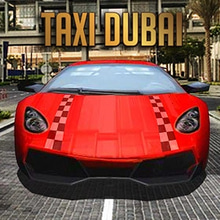
Taxi Dubai is the kind of driving game that sounds calm for maybe two seconds. You hear the word taxi and your brain imagines a casual ride, a quiet city, maybe a polite passenger, maybe some gentle cruising with light stress and decent tips. Absolutely not. On Kiz10, Taxi Dubai is built around a much busier fantasy: you are a cab driver in Dubai, you need to pick up passengers and drop them off across the city, and the faster you do it, the bigger your reward. That single idea already gives the whole game a sharp little pulse. You are not just driving. You are racing the clock with customers in the back seat and traffic waiting to ruin your plans.
That is what makes games like this work so well. They take an ordinary job and inject just enough arcade pressure to make it feel dramatic. A taxi ride becomes a mission. A turn becomes a gamble. A bonus based on time stops being a small extra and becomes the entire reason you suddenly care way too much about one clean corner. Taxi Dubai lives in that space between simulation and arcade driving. It wants you to feel like a driver, yes, but also like a driver whose whole day depends on staying quick, clean, and just slightly reckless without turning the cab into scrap metal.
And that is a very good lane for this kind of game. Because taxi games are always at their best when they make the city feel alive and mildly hostile at the same time. The passenger needs to get somewhere. The timer wants results. The road has other ideas. Perfect.
🌆 Dubai is beautiful right up until somebody cuts you off
A big part of Taxi Dubai’s appeal is the setting. Kiz10 describes it simply as driving a taxi in Dubai, picking up passengers and leaving them around the city, and that alone gives the game more identity than a generic driving map ever could. Dubai has a built-in mood for a game like this. Big roads. Busy movement. Urban energy. The kind of city backdrop that makes every delivery feel a little more cinematic than it technically needs to be.
That matters. Driving games need atmosphere, even when they are simple. A passenger pickup game without personality can start feeling like a moving checklist. Here, the Dubai theme gives the rides more flavor. You are not simply going from point A to point B in some nameless traffic grid. You are navigating a city that feels a little larger, brighter, and more ambitious. That makes every trip feel more like an urban challenge and less like a chore.
It also fits the pace beautifully. Taxi Dubai is not trying to be a slow, sleepy transport simulator. The city theme supports the pressure. There are places to reach, routes to read, traffic to respect or ignore at your own peril, and bonuses waiting for drivers who can deliver fast. The location helps sell all of that. It gives the game a more specific pulse.
⏱️ Every ride is secretly a countdown
The most important mechanic in Taxi Dubai is not really the steering. It is urgency. Kiz10’s page says each passenger gives you a bonus based on how quickly you reach the destination, and suddenly the entire game starts feeling different. Now speed matters in a very personal way. Not just because fast driving feels fun, but because every second has money attached to it. That is dangerous design in the best possible way. The moment players know time equals reward, common sense starts slipping out the window.
You start looking at roads differently. A safe route becomes “maybe too slow.” A risky cut through traffic becomes “possibly genius.” One extra second waiting for a clean lane starts feeling offensive. That is where the game gets its edge. Taxi Dubai is not a pure racer, but it borrows racing psychology. Finish the job faster. Keep the momentum. Do not waste movement. One good run can feel incredibly smooth. One bad corner can cost enough time to make the whole trip feel messy.
And the beauty is that the game still keeps you honest. Kiz10 also notes that you should try not to crash into other cars or damage your cab. So the design never fully lets you go wild. You want the bonus, but you also need control. That balance is where the real fun begins. The best taxi run is not full speed all the time. It is controlled urgency. Fast when the road allows it, careful when the city starts behaving like a trap.
🛞 Good drivers stay smooth, bad drivers meet the scenery
Taxi Dubai works because it rewards a style of play that feels skillful without becoming exhausting. You do not need absurd stunt reflexes or impossible drifting talent. You need rhythm. Awareness. A good sense of when to accelerate and when to calm down before a turn turns your whole route into a public embarrassment. That kind of driving is satisfying because it feels earned. You are not brute-forcing the city. You are reading it.
And that is what makes taxi games oddly addictive. Every trip becomes its own little test. Can you keep momentum without clipping traffic. Can you reach the drop-off fast enough to earn the better bonus. Can you keep the cab in one piece. Those are simple questions, but they create a strong loop. Especially in browser games, that clarity matters. The mission is immediate. The feedback is immediate. You always know what went right or wrong.
One clean ride feels fantastic. The turns line up, the traffic opens just enough, the passenger gets delivered quickly, and you finish the trip feeling like the smartest driver in the city. Then the next route begins and reminds you that confidence is fragile. That is good. That is exactly the kind of tension these games need.
💥 Why taxi games always become strangely personal
There is something funny about how quickly a game like Taxi Dubai becomes emotional. You start out thinking you are casually transporting people. Ten minutes later, another car slows you down at the worst possible moment and suddenly you are taking it as a personal attack on your professional legacy. That is the secret charm of the genre. The goals are small, but the frustration and satisfaction arrive at full volume.
Taxi Dubai has the right ingredients for that. Clear objectives. A lively city setting. Time bonuses. The danger of crashes. Everything pushes the same fantasy: be the fastest useful person on the road without destroying your own vehicle in the process. That is a great arcade-simulation blend. It gives the driving purpose beyond just movement, but it never gets buried in complexity.
It also means retrying feels natural. A slow ride makes you want a cleaner one. A crash makes you want revenge on the route. A messy trip makes you imagine the perfect version immediately. That “one more fare” energy is strong in games like this, because improvement is so easy to picture. Drive smoother. Cut less. Commit better. The city keeps offering another shot.
🌇 A strong pick for players who like city driving with pressure
Taxi Dubai on Kiz10 is a very good match for players who enjoy taxi simulators, passenger pickup games, city driving, and mission-based car games where speed and control matter equally. Kiz10’s description is straightforward: drive a taxi in Dubai, pick up passengers, drop them around the city, earn time-based bonuses, and avoid crashing into other cars. That is a clean pitch, and it works because the loop is naturally addictive.
If you like browser driving games with a clear objective and constant movement, this one lands nicely. If you enjoy reading traffic, optimizing routes, and trying to stay quick without turning the whole mission into twisted metal, even better. It has the right kind of pressure: enough to keep you focused, not so much that it loses its fun.
So yes, pick up the passenger, push through Dubai traffic, keep the cab alive, and chase that bonus before the city changes its mind. Taxi Dubai is simple, fast, and just stressful enough to make one successful ride feel way more heroics than a taxi job has any right to feel.





 2.5 (66 votes)
 Share
Share
 Embed
Embed