🏰 A castle that breathes… and it’s not being polite 👂
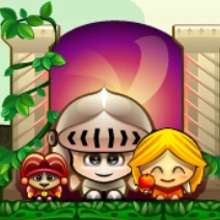
The Castle’s Legend drops you into the kind of place that looks impressive from far away and immediately suspicious up close. You know the vibe: tall towers, cold stone, windows like watching eyes, and a gate that creaks like it has opinions about your survival. On Kiz10, this adventure game feels like stepping into a story that someone started writing centuries ago, then forgot to finish, then locked in a dungeon out of embarrassment. And now you’re here to finish it. Or to get absolutely humbled by a hallway with traps. Either outcome is possible. 😅
From the first moments, the game leans into that classic “mystery inside a fortress” energy. It’s not just wandering around; it’s searching, reacting, improvising. The castle isn’t a backdrop, it’s the enemy wearing architecture as armor.
🗝️ The legend isn’t a cutscene, it’s a trail of mistakes you survive 🔥
What makes a castle adventure work is the sense that every room is a question. Why is that corridor blocked? Why does that torch flicker like it’s nervous? Why is there a lever in a place where levers should not exist? The Castle’s Legend plays with that curiosity. You explore, you test things, you take a step forward, then you take half a step back because your brain whispers, “That floor tile looks… too clean.” 😐
Progress feels earned. Not in a slow, lecture-y way, but in that gamer way where you learn by doing the wrong thing once. You’ll open a door expecting loot and get a problem instead. You’ll pick up an item and realize it’s not “just a key,” it’s a promise that you now have to find the lock that deserves it. The castle becomes a loop of discovery: see something odd, try something bold, get rewarded or punished, then adapt.
🧩 Puzzles that feel like the castle is trolling you (lovingly) 🌀
The puzzle side of this fantasy quest is the glue that keeps you moving. It’s the reason you don’t just sprint forward like a reckless hero in a movie trailer. The Castle’s Legend asks you to pay attention. A symbol here. A pattern there. A tiny clue that feels meaningless until five minutes later when it suddenly clicks and you go, “Ohhh. You sneaky stone box.” 😤
And the best puzzles aren’t the ones that are complicated on paper, they’re the ones that hit your timing, your awareness, your willingness to experiment. You’ll find yourself doing little rituals: checking corners, revisiting rooms, looking at objects like they might confess if you stare long enough. It’s oddly satisfying, because the game makes you feel like you’re unraveling the place, piece by piece.
⚔️ When the castle stops being quiet, you learn to move different 😈
Then comes the part where exploration turns into danger. Maybe it’s enemies, maybe it’s traps, maybe it’s the environment deciding it’s done watching you and wants to actively participate. Either way, The Castle’s Legend has that switch-flip moment: the place stops feeling like a museum and starts feeling like a test.
Combat and hazards in a castle adventure usually aren’t about brute strength. They’re about timing and positioning, about staying calm when a simple hallway becomes a mess of pressure plates, moving blades, or sudden threats. You’ll have runs where you feel smooth, like you’re reading the castle’s rhythm. Then you’ll have that one moment where you get greedy, rush forward, and the game politely reminds you that legends are made of patience, not panic. 😅
🕯️ Atmosphere you can almost smell, like dust and bad decisions 🌫️
A big reason this kind of game works on Kiz10 is mood. The Castle’s Legend doesn’t need a novel of dialogue to create tension. The setting does the talking. Dim corridors, hidden chambers, ominous staircases that definitely lead to something that definitely wants to ruin your day.
And your imagination fills the gaps in a way that makes the experience feel personal. One player sees a “mysterious hallway.” Another sees a “trap corridor designed by a medieval villain who had too much free time.” You’ll start narrating your own journey without meaning to. “Okay, open the chest… please be gold… please don’t be a curse…” and then the chest is exactly what you feared, and you laugh because you basically summoned it. 🤦♂️
🧠 The real progression is you getting smarter, not just stronger 📜
Here’s the sneaky truth: the most powerful upgrade in a puzzle adventure isn’t a weapon, it’s your own memory. After a while, you start learning the castle’s habits. You recognize the suspicious placement of items. You understand how the game likes to hide clues in plain sight. You stop wasting time.
That’s when the pace changes. The first part feels like cautious exploration. Later, you’re moving with purpose. You know which rooms you need, which doors matter, what kind of puzzle logic is coming next. And that creates a satisfying arc: you go from “lost visitor” to “castle problem-solver,” and it feels earned because you remember all the tiny failures that taught you. 😌
🏹 Little choices that feel huge when you’re one step from disaster 😬
A castle game lives in small decisions. Do you push forward or backtrack? Do you use the item now or save it? Do you chase the shiny reward or prioritize survival? The Castle’s Legend thrives on that tension. You’re constantly balancing curiosity and caution.
And when you make the wrong call, it doesn’t just feel like losing. It feels like losing because you got tempted. Which is way funnier, honestly. Because you know exactly why it happened. You saw the obvious risk, ignored it anyway, and then acted surprised when the castle punished you. Classic. 😭
👑 The payoff: stepping into the “legend” part of the title ✨
Eventually, the adventure clicks into that satisfying narrative feeling: you’re not just clearing rooms, you’re uncovering what happened here. The curse, the mystery, the forgotten story stitched into the architecture. Whether you’re dodging traps, solving riddles, or dealing with enemies, everything points toward one thing: the heart of the castle, where the legend stops being rumor and becomes reality.
And that’s the magic of this kind of fantasy adventure on Kiz10. It doesn’t need to be complicated to feel cinematic. A torch, a locked door, a hidden clue, a final chamber that feels heavier than the others… and suddenly you’re leaning forward in your chair like it’s personal. Because it is. The castle has been messing with you for the entire run, and now you want answers. 🏰⚡
🎮 Why you’ll replay it even after the castle embarrasses you 🙃
The Castle’s Legend is built for that classic loop: explore, learn, improve, push deeper. Even when you fail, it’s the kind of failure that teaches you something. You missed a clue. You rushed a trap. You forgot to check the obvious corner. And you’ll want another run, not because the game begged you, but because your brain is already rewriting the plan like, “Okay, next time we do it clean.” 😤
If you love castle games, fantasy quests, puzzle explorations, and that sweet feeling of turning confusion into mastery, this one fits perfectly on Kiz10. Just remember: the castle doesn’t care that you’re the hero. It cares whether you watched the floor. 😅🗝️





 Share
Share
 Embed
Embed


