Cowboy cactus, cursed and still stubborn 🌵🤠
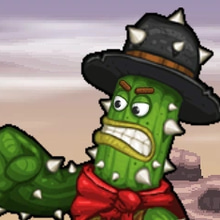
The story of The cowboy cactus does not start with a sunset, a saloon and a quiet drink. It starts with a spell gone wrong, a flash of strange light in the dust, and a cowboy who suddenly realises his hands are covered in spines instead of skin. One moment he is just another gunslinger with a bad attitude, the next he is a living cactus standing in the same boots, hat tilted low, eyes still human but body turned into something the desert usually eats for breakfast. The curse is real, the magic is cruel, and the only way out is to keep moving across the lands and fight every enemy the spell throws in his path until he reaches his final goal.
A wild west that bites back 🤠🌵
The world around him is still the wild west, just a little stranger now. Wooden towns lean under the sun, canyons cut deep into the earth, trains rattle past in the distance, and every horizon looks like trouble. The cowboy cactus travels through dusty plains, rocky platforms and dangerous frontier outposts where every ledge hides a threat. Instead of quietly riding into the sunset, he is jumping from platform to platform, dodging traps, smashing crates, and dealing with enemies that really do not care he has had a bad magical day.
Every level acts like a small chapter in his cursed journey. Early stages feel manageable, almost like a warm-up for a cactus who is still learning how not to poke himself while moving. Gaps are simple, enemies are few, and hazards introduce themselves politely. As you push deeper into the frontier, the layouts become sharper, jumps get tighter, and enemies hit harder. Platforms are placed to test your timing, not to decorate the background. The further you go, the more it feels like the spell itself is shaping the land to stop this stubborn cowboy from breaking free.
Spines instead of skin, fists instead of fear 💥🌵
Being made of cactus does have its advantages. The cowboy cactus is tougher than he looks, and he uses that to his advantage in every fight. He can bash enemies with surprising force, turning his spiny arms into improvised weapons. When you leap into battle, you feel the weight behind each hit as foes are knocked back, defeated or knocked off platforms entirely. You may not be pulling a classic revolver, but you still have that cowboy energy: get in close, hit fast, refuse to back down.
The combat is simple to understand and satisfying to repeat. You move, you jump, you strike, you retreat when things get too crowded. Enemies come in different shapes and patterns, some charging straight at you, others hanging back or guarding tight spaces that force you to time your approach carefully. You cannot just rush forward and mash attack forever; you learn which foe to remove first, which one to bait into a bad position, and when to pause just long enough to avoid a nasty hit.
Enemies, bandits and things that really hate cacti 👺🌵
The cowboy cactus does not travel alone, even if he wishes he did. Bandits, desert monsters and other dangers fill the path, all too happy to stop a walking cactus from reaching his destination. Some enemies block bridges, forcing you to fight on narrow ground. Others patrol ledges, ready to knock you into pits if you misjudge a jump. There may be ranged foes taking shots from safe perches, pushing you to move fast and close the distance before the screen turns into a hail of damage.
The game keeps mixing those enemy types in new ways, creating small combat puzzles where position matters as much as courage. A lone bandit is no problem. A bandit standing near a gap, with another enemy above and a trap beneath, becomes a real question: do you charge straight in, or lure them out into safer ground first. Every combination of foes feels different enough that you cannot sleepwalk through fights, even when you have already cleared several stages in a row.
Platforming, timing and cactus footwork 🪵🎯
At its core, The cowboy cactus is a western platformer, so movement has to feel right. Jumps are tight enough that you pay attention, but generous enough that successful timing feels earned, not lucky. You hop across moving platforms, dodge spikes, bounce over pits and thread your way through traps that demand both planning and instinct. When a jump goes wrong, you usually know why. You pressed too late, you rushed, you got greedy for a coin or an enemy. And when a chain of jumps goes perfectly, you feel it in your shoulders before you even reach the end of the screen.
Platforming and combat are glued together so that neither feels optional. Sometimes a fight happens in the middle of a precarious layout, forcing you to whack an enemy while standing on a narrow ledge. Sometimes you clear a group of foes only to realise the real challenge is the series of jumps that waits immediately after. That rhythm keeps you locked in: quick bursts of action, small pauses for movement, sudden spikes of danger when the two overlap.
A cursed quest that actually feels like a quest 🧭🌄
The cowboy cactus is not wandering for fun. He has a goal, even if the game lets you fill in details in your head. Maybe he is hunting the sorcerer who placed the spell on him. Maybe he is trying to reach a shrine hidden deep in the desert. Maybe he just wants to feel normal again, to take off his hat, look in the mirror and see a human face instead of spines. Whatever the exact story in your mind, the structure of the game supports it. You move from stage to stage, overcoming new layouts and tougher foes, always pressing forward toward something more than a simple high score.
There is a sense of journey as scenery shifts, hazards change and enemy placements grow wiser. What started as a strange accident begins to feel like a trial. By the time you close in on your final goals, you have earned every scar your cactus skin is hiding. The story is light, but the feeling is strong: this is not just a collection of random levels, it is a path through a cursed western world that only the most persistent players will complete.
Little wild west details that make it feel alive 🤠🌅
Even without walls of text, the western flavor of The cowboy cactus sneaks up on you. The backgrounds show distant mesas and rail lines. Wooden structures and fences hint at old settlements that gave up long ago. You might see hints of towns, abandoned carts, and other tiny props that tell quiet stories about who used to live here before curses and cactus cowboys became normal. Every new environment adds a subtle twist, whether it is different colours in the sky, new textures underfoot, or a shift in how platforms are arranged.
Sound and pacing support that atmosphere too. Attacks land with simple but satisfying effects, enemies make just enough noise to warn you they are near, and the desert quietly sits under everything like a patient, uncaring witness. It is not a huge cinematic epic, but it does not need to be. The cowboy cactus himself is the moving story: hat low, boots steady, spines bristling as he keeps walking forward.
Why this prickly adventure works so well on Kiz10 🌐🌵
On Kiz10, The cowboy cactus fits perfectly into that space between quick fun and a full adventure. You can jump in for a few stages during a break, push through some enemies, nail a few jumps and log off. Or you can sit down and ride the whole journey across multiple worlds in one long session, letting the difficulty slowly climb under your fingers. There is no complicated menu to memorise, no huge rule book to read. You press play, meet a cursed cowboy who refuses to quit, and start learning the language of jumps, hits and timing.
For players who love platform games with a bit of combat, a strange main character and a strong sense of progression, The cowboy cactus is exactly that kind of experience. It is simple to pick up, but sharp enough that clearing every challenge feels like something to be proud of. By the time you reach his ultimate goal, you will know every canyon edge and enemy trick the desert can offer, and you might even feel a little proud of this spiky hero who never once thought about giving up.





 2.5 (30 votes)
 Share
Share
 Embed
Embed