🧊 A Tiny Rule That Becomes a Whole World
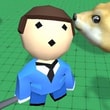
Three Moves looks friendly at first glance. Bright cartoon 3D shapes, an isometric view that feels clean and readable, a neat little path of blocks stretching forward like a toy diorama. Then the rule hits you: you only get three actions. Not three actions per minute, not three actions per phase. Three actions, forever. Move forward. Swing your sword. Raise your shield. That’s it. No inventory drama, no fifteen-button combos, no “hold to charge the mega-blast.” Just three verbs and the quiet pressure of knowing each one is a decision you can’t take back.
And the game doesn’t even need to shout to make that rule scary. It’s scary because it’s honest. Every turn you spend is a choice you’ll have to live with. The lane is endless, but your mistakes are immediate. You can feel it in your hands on Kiz10: you press an action, the world shifts, old blocks vanish behind you, new ones appear ahead, and suddenly your brain is playing chess with a treadmill.
🧭 The Lane That Rewrites Itself Behind Your Back
The battlefield is basically a moving strip of blocks, like the world is being generated by a mischievous architect who hates comfort. You step forward and the board slides. The past evaporates. The future spawns. It’s a simple concept that causes a weird kind of tension because it removes a common safety blanket: you can’t “go back and fix it.” There is no back. Back is gone. Back has been deleted. Back is a myth your character used to believe in before this lane taught them humility.
That shifting lane creates a rhythm that feels almost hypnotic until you realize it’s also a trap. When you move, you’re not just repositioning yourself, you’re advancing the whole timeline. You’re bringing fresh blocks into existence, which means you’re also inviting fresh problems. An enemy that wasn’t there a second ago suddenly is. A trap that wasn’t visible now sits in your next step like a smug little warning sign. The game isn’t asking you to react quickly. It’s asking you to predict, and that is a different kind of difficulty. Reaction games make you tense. Prediction games make you paranoid. 😅
⚔️ Attack Is a Promise You Might Not Be Able to Keep
Swinging your sword feels satisfying in a clean, crunchy way. It’s your one clear moment of aggression. But even that isn’t pure power, because an attack costs a turn and turns are precious here. You don’t attack because you feel like it. You attack because you’ve committed to a plan where that attack has a purpose. Maybe it clears a nearby enemy before you step forward. Maybe it prevents a hit that would otherwise ruin the run. Maybe it’s the only way to avoid getting cornered by something nasty the game just spawned two blocks ahead.
And because the lane is always moving, combat and movement become inseparable. If you choose to attack, you’re choosing not to advance the board. That means you’re freezing the world for a moment, which can be good if you need to clean up a threat, but risky if you’re stalling while hazards line up. There’s a funny moment that happens a lot: you see an enemy, you think “I’ll just hit it,” then you realize the timing is wrong because the next spawn will be worse, and suddenly you’re negotiating with your own instincts. Your sword is there, yes, but the real weapon is your restraint.
🛡️ The Shield Button That Feels Like Breathing
Blocking is the action that turns panic into control. It’s your way of saying “not today” to damage and traps, but it’s also a turn spent doing nothing flashy. No progress, no kill, no dramatic leap. Just defense. And yet, in Three Moves, defense is often the smartest thing you can do, because it buys you survival without forcing you into a messy exchange.
There’s a special kind of satisfaction in raising the shield at exactly the right moment. It’s not just safety, it’s elegance. It’s like catching a falling glass before it hits the floor. You didn’t gain anything visible, but you prevented disaster, and your future self silently thanks you. The game rewards that calm thinking. It makes you feel sharp for choosing patience over panic, which is rare in games that look this cute. The visuals are playful, but the decisions have teeth. 🦷
Blocking also changes how you read the lane. Instead of seeing traps as “avoid at all costs,” you start seeing them as “okay, if I block here, I can still move next turn.” That’s huge, because it turns the game from a pure avoidance puzzle into a timing puzzle. Timing is where skill shows up. Anyone can be cautious. Skilled players are cautious on purpose.
🎯 Three Buttons, Infinite Arguments With Yourself
The real gameplay loop is not the lane. It’s your internal monologue. Move forward now or wait? Attack now or later? Block because you’re sure, or block because you’re scared? And the game is so strict about turns that your brain starts calculating outcomes automatically. You’ll catch yourself thinking two turns ahead without meaning to. If I move, the board shifts, that enemy lines up, then I’ll need to block, then I can attack, but if the next tile spawns a trap I’ll be forced to… and suddenly you’re planning like a tactician over a board game, except the board game is actively trying to embarrass you.
The wild part is how quickly you learn to respect the lane’s rhythm. You start recognizing patterns in how threats appear. You begin to anticipate danger not because you saw it, but because the lane feels too calm. That’s a real thing. Calm becomes suspicious. You’ll look at a safe zone and think “this is nice, which means something awful is coming right after it.” And you’ll often be right. 😭
Because every action consumes a turn, the game doesn’t forgive “curiosity taps.” You can’t press attack just to see what happens. You can’t move forward just to check the next block. Curiosity costs. That turns the whole experience into concentrated decision-making. It’s like the game is saying: you may play, but you must pay attention while you do it.
🌈 Cute Colors, Mean Consequences
The art style is bright, bold, and almost cheerful, which makes the danger feel more surprising. A trap doesn’t look like doom. It looks like a simple shape with a loud color. Enemies don’t look grotesque. They look like they belong in a cartoon. And yet the consequences are real. One wrong move can end the run, and there’s something extra spicy about getting punished in a world that looks like it should be forgiving. It’s like losing at a board game with friends and everyone is smiling while you quietly melt inside. 🙃
That contrast is part of the charm. It keeps the game from feeling grim. It’s tense, yes, but in a playful way. You’re not trapped in horror. You’re trapped in a puzzle that happens to have swords and shields and an endless lane that refuses to remember your past.
🚀 The Moment It Clicks, You Start Playing Differently
At some point, you stop playing turn by turn and start playing in chunks. You begin to think in sequences. You’ll see an enemy and a trap and a safe zone and you’ll plan a little three-step dance. Move, block, attack. Or block, move, move. Or attack, move, block. The order matters, and the game feels incredible when you nail it.
That’s when Three Moves becomes addictive on Kiz10. Because you’re not just surviving, you’re solving. You’re reading the lane like a sentence and replying with the correct grammar. The game becomes less about fear of failure and more about the joy of choosing well. Even failures feel informative. You don’t think “I’m bad.” You think “I got greedy,” or “I spent a turn on the wrong verb,” or “I didn’t respect the spawn.” Failures turn into lessons, and lessons turn into better runs.
And then you hit a run where everything flows. You move at the right times. You attack only when it matters. You block like you’re predicting the future. The lane shifts, enemies fall, traps bounce off your shield, and for a moment you feel like the smartest person in the room. Then the game spawns something new and you immediately lose that confidence, which is honestly part of the fun. 😄
Three Moves is a small game idea executed with strict discipline. Three actions, endless blocks, and a constant demand for focus. It’s strategy without complicated systems, a puzzle without a giant ruleset, and a 3D isometric challenge that rewards calm thinking more than fast fingers. If you like games where every click matters and every turn feels like a tiny story you’re writing in real time, this one is a clean, mean little gem on Kiz10. ⚔️🛡️🧠






 4.5 (153 votes)
 Share
Share
 Embed
Embed


