⚔️😵💫 The first arrow arrives and your brain goes “oh… this is serious”
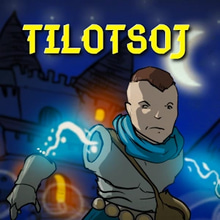
Tilotsoj looks simple in the most dangerous way. One warrior. One sword. A quiet little arena that feels like it’s waiting for something to happen. Then the enemy starts firing, and suddenly you’re playing a survival reflex game where the only “shield” you have is your own timing. You don’t win by being strong. You win by being sharp. You aim, you rotate, you angle the blade like a mirror for violence, and you pray your hand doesn’t hesitate on the exact moment it matters. On Kiz10 it feels instantly readable, which is exactly why it gets intense fast. The game doesn’t hide behind complexity. It stands there and says: can you react, consistently, under pressure? Because one sloppy deflect doesn’t just look bad… it ends the run.
🎯🛡️ A sword that behaves like a shield… if you treat it right
The whole trick in Tilotsoj is that your sword isn’t only for attacking, it’s for redirecting danger. You’re essentially playing a living angle puzzle in real time. Projectiles don’t care about your feelings. They travel in clean lines. Your job is to put steel in the correct place at the correct time, over and over, without slipping into autopilot. The aiming matters, but the rotation matters more than you expect. A sword turned a little too far becomes a mistake. A sword turned just right becomes this satisfying “clink” moment in your head where you feel clever, like you solved something without words. And the funniest part is how quickly you start trusting the blade. At first you flinch. Then you realize, no, I can meet the projectile. I can intercept it. I can control the lane. That confidence is real… until the tempo jumps and the game asks for a faster version of you.
⏱️🔥 Pressure builds in the quietest, meanest way
Tilotsoj doesn’t need loud explosions to feel stressful. It uses rhythm. The early shots teach you the pattern and let you breathe. Then the intervals tighten. The angles get nastier. The projectiles arrive when your sword is still finishing a rotation and you suddenly have to choose: do I commit to this block, or do I gamble on a reposition? That choice happens in half a second, which is where the game starts feeling like a test of composure, not just reaction speed. You’ll have runs where everything is smooth and you’re deflecting like a machine, calm, controlled, almost elegant. Then one projectile comes from a weird angle, you over-rotate, and for a moment your brain goes blank. That blank moment is the enemy. The game lives inside that tiny hesitation.
😈🌀 The real battle is against your own habits
Once you play a few rounds, you’ll notice you develop “favorite” sword angles. Maybe you keep the blade slightly tilted because it feels safe. Maybe you swing wide because it feels like you cover more space. Tilotsoj quietly punishes habits. It starts aiming where you’re comfortable. It tempts you to block early, then punishes early blocks with the next shot. It tempts you to rotate late, then punishes late blocks with a clean hit. So you start adapting. You become more fluid. You stop locking your wrist into one solution and start reading the projectile like it’s a sentence you have to finish correctly. That’s when the game gets addictive. Because improvement feels personal. You’re not leveling up a character. You’re leveling up your judgment. And yes, you’ll get cocky sometimes, and cockiness is basically the fastest way to get tagged.
⚡🧠 “Survive longer” becomes a weird little obsession
The goal sounds simple: survive. But surviving longer in Tilotsoj has layers. It’s not only about blocking what’s coming now, it’s about staying positioned for what’s coming next. If you rotate too far to save yourself from one shot, you might be out of place for the next one. If you keep your sword too tight and conservative, you might fail to cover a sudden angle. So you start playing with micro-adjustments. Small rotations, quick resets, clean aim corrections. The game starts feeling like a rhythm instrument. Your hands learn a beat. Your eyes learn to look slightly ahead. And when you get into that flow state, it’s honestly satisfying in a way that’s hard to explain. You’re just deflecting projectiles… but it feels like you’re holding a line against chaos with pure precision. Then you miss once and it’s like waking up from a dream, annoyed at yourself, instantly ready to retry.
🎭😅 The best moments are dramatic, the fails are funny
There’s a special comedy to how Tilotsoj ends runs. You’ll be doing great, blocking everything, feeling untouchable… then a projectile taps you because your sword was one degree off. One degree. And you’ll stare at the screen like it was a betrayal, even though it was absolutely your fault. That’s the beauty: the game’s feedback is brutally honest. If you fail, you can usually name why. You rotated too early. You tracked too late. You got greedy trying to cover two angles at once. The restart urge comes from that clarity. You don’t feel lost. You feel challenged. You feel like the correct run is sitting right there, waiting for you to show up with steadier hands. On Kiz10, that makes it the perfect quick-hit reflex game: short sessions that turn into “just one more” because the skill ceiling keeps teasing you.
🏁⚔️ Why Tilotsoj fits Kiz10 perfectly
Tilotsoj is clean, fast to understand, and built around pure mechanical skill: aim, rotate, deflect, survive. No long menus, no filler, no wasted time. It’s an action survival reflex game where every second you stay alive feels earned because you did the work with your hands and your timing. If you like games that reward calm control, sharp reactions, and that satisfying feeling of turning an incoming threat into a perfect block, Tilotsoj is a tight little challenge that keeps pulling you back. Not because it’s huge. Because it’s precise. ⚔️🎯✨





 4.1 (27 votes)
 Share
Share
 Embed
Embed