🏎️🧸 Tiny car, giant attitude
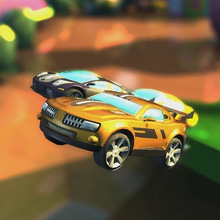
Toy Car Racing is one of those games that instantly understands how to make scale feel exciting. Kiz10’s own page describes it very simply: you race through different scenarios mounted on a small toy car, show your skills behind the wheel, and try to cross the finish line in first place. That sounds light and playful at first, and it is, but it also hints at the real appeal right away. This is not ordinary racing. This is miniature racing, which means the world feels bigger, stranger, and somehow more dramatic because your car is so ridiculously small inside it.
That shift in scale does a lot of work. A normal racing game asks you to think like a driver. A toy car racing game asks you to think like a tiny chaos engineer with wheels. The tracks stop feeling like roads and start feeling like obstacle courses designed by everyday objects that have decided they want to become part of the race. A surface is no longer just a surface. It is a whole weird landscape when your car is small enough. That gives the game personality before the first corner even arrives.
And that is exactly why Toy Car Racing fits Kiz10 so well. Kiz10 already hosts other live toy-sized car games like Desktop Racing 3, Toy Car Simulator, Mini Car Racing, and Car on the table, all built around the same delicious miniature fantasy of turning everyday spaces into absurd racing arenas. The audience for this style is clearly there, because the idea works. Small cars make everything feel more playful. Every jump looks riskier. Every desk, table, or improvised road feels like a giant world scaled down into pure arcade fun.
⚡🛞 Why miniature racing feels so alive
What makes Toy Car Racing more than just a cute concept is how miniature driving naturally changes the rhythm of a race. Full-size car games often chase realism, precision, and road discipline. Toy car racers can be messier in a much more entertaining way. The cars feel lighter, twitchier, a bit more ready to overreact, which means every turn has extra personality. A corner becomes something you attack rather than simply survive. A straight feels shorter, a bump feels bigger, and the whole course gains this toy-box energy that makes even a clean lap feel a little mischievous.
Kiz10’s page for the game frames it around different scenarios and crossing the finish line first, which suggests that environment variety matters as much as raw speed. That is a huge strength for this kind of racer. In miniature games, the setting is half the thrill. You are not only racing. You are racing somewhere that should not really be a racetrack at all, and that gives every surface its own flavor. One track might feel clean and fast. Another might feel cluttered and slightly hostile. That variety keeps the simple goal of “finish first” from ever feeling flat.
There is also something very browser-game perfect about toy car physics. They let the game feel expressive without demanding too much seriousness. If you slide a little too wide, it feels funny rather than punishing. If you bounce off a barrier, the run is still alive. That balance matters. It keeps the races energetic and replayable instead of making them feel like driving exams with emotional consequences.
🌍🚗 Small scale, big race tension
One of the best things about Toy Car Racing is how miniature racers make familiar racing emotions feel fresh again. Drafting, cutting corners, holding the inside line, recovering from a bad bump—those classic little moments still matter, but the toy theme gives them a different texture. It feels more improvisational, more playful, more willing to turn a near-miss into part of the show.
Kiz10’s Mini Car Racing page reinforces that same toy-car appeal, describing tiny toy cars tearing through tight tracks and turning every corner into a stopwatch fight. That makes it a very strong comparison point for Toy Car Racing. The shared fantasy is obvious: little vehicles, compact courses, constant pressure, and the sense that every small mistake gets magnified because the race is built around quick reactions and short distances.
And that short-distance style is a real advantage. Miniature racers often feel faster than they technically are because the world is scaled to make movement look explosive. A small jump feels dramatic. A tight lane feels dangerous. A modest drift looks like a full act of heroism. That is fantastic for arcade pacing. It means the game can generate excitement without needing extreme realism or huge maps.
It also makes the races much easier to replay. Toy car games are brilliant at creating that “just one more run” trap. The tracks are readable, the cars feel responsive, and the mistakes always seem correctable. You know where you lost speed. You know which corner went badly. You know the next lap could be cleaner. That tiny loop of confidence and correction is the whole fuel source of arcade racers.
🧩🏁 The world becomes the track
A big reason toy car racing remains so charming is that the environment stops being background and starts becoming the star. Kiz10’s Car on the table page is a perfect example, framing the experience around racing a funny desktop toy car, collecting coins, and dodging objects. That exact kind of environmental playfulness belongs right beside Toy Car Racing. When the car is tiny, every object becomes meaningful. Gaps matter more. Edges look sharper. Straightaways feel improvised. The track stops being a purpose-built road and starts feeling like a place you should not really be driving through, which makes it much more fun.
That also gives the game a visual identity that ordinary racing titles do not always have. You remember toy racers because the world around them is doing half the storytelling. The track feels handmade, oversized, and a little ridiculous. That gives every race a bit of narrative energy even if the mechanics stay simple. You are not just chasing the line. You are surviving a giant playful world that seems only slightly interested in letting you pass cleanly.
And because Kiz10’s search results show multiple toy or mini-sized racing pages actively live on the site, including Desktop Racing 3 and Toy Car Simulator, this is clearly a recognized sub-style within its racing catalog rather than a random one-off. That makes Toy Car Racing easy to position: it belongs to the branch of arcade racers that value quirky scale, accessible controls, and environment-driven charm as much as raw speed.
🏆✨ Why Toy Car Racing works so well on Kiz10
Toy Car Racing succeeds because it takes a very familiar fantasy—win the race—and puts it inside a much more playful frame. Kiz10’s live page confirms the core hook clearly: drive a small toy car through different scenarios and finish in first place. That is clean, readable, and exactly the kind of setup that browser racing players respond to immediately.
It also sits alongside a very strong set of similar live Kiz10 pages. Desktop Racing 3, Toy Car Simulator, Mini Car Racing, Car on the table, and Cartoon Mini Racing all reinforce the same miniature-driving appeal from slightly different angles, whether it is desk tracks, collectible free-roam, compact toy circuits, or cartoon-style mini races. That makes Toy Car Racing a natural recommendations for players who like colorful arcade racing, unusual environments, and toy-sized speed with just enough chaos to stay memorable.
So if you want a Kiz10 racer that feels lighter, funnier, and more imaginative than a standard car game, Toy Car Racing has exactly the right kind of energy. It turns tiny vehicles into real competitors, ordinary spaces into race arenas, and each lap into a little plastic sprint full of drifty optimism and very questionable corner decisions.



 4.3 (28 votes)
 Share
Share
 Embed
Embed


