🧩 Brain vs Chaos, One Block at a Time
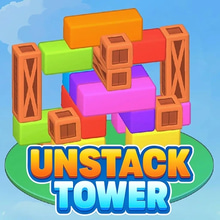
You start eye to eye with a tower that looks friendly until you touch it. Bright cubes, clean edges, nothing menacing—until you remove one piece and feel the whole stack shift in your hands like a creature waking up. Unstack Tower is a puzzle that pretends to be simple and then gently proves it is not. Every click or tap is a commitment. Pull a cube and you are not just clearing space, you are sculpting gravity for whatever comes next. It is a quiet, tense kind of fun, the kind that makes you lean closer to the screen without realizing it.
🎯 Precision Moves, No Second Guessing
Each level asks the same question with a different accent. Which cube goes first. Which cube can follow without turning the whole structure into a cautionary tale. Your cursor hovers, your thumb hesitates, and you breathe out before you act. When you nail the order, it feels like cracking a safe. When you do not, the wobble is instant and honest. Nothing is unfair; the tower tells the truth with tiny tilts and creaks of intention. You begin to read the stack the way a climber reads a wall, spotting holds, imagining stress lines, predicting what will swing when a key block disappears.
🧠 Planning in Color, Thinking in Layers
Color isn’t just decoration here; it is a logic you can learn. Matching three or more frees points and, more importantly, frees shape. Sometimes the smartest move is not the flashy clear right now but the quiet setup that plants two blues beside each other so the third can land in exactly the right pocket later. The board becomes a notebook of small promises you make to yourself. Park a red on the left to catch a future drop. Rotate a glass cube so its face lines up as a bridge. Leave a narrow chimney between columns because you suspect a chain is coming and you will need a channel for the last piece to slip through.
🪵 Material Matters, Even When It Looks Pretty
Wood feels reassuring until you stack it wrong and discover it carries memory like a grudge. Glass looks delicate and behaves like a wildcard, sliding with less friction and changing how the tower wears its weight. Stone is a friend until it becomes a bully. The mix keeps each stage from feeling like the last, and it forces you to adjust your assumptions. You will catch yourself treating glass like a fuse, pulling it only when you know the aftermath is contained. You will use wood as a brace you plan to remove five moves later. You will respect stone the way you respect a sleeping cat: with caution and a quiet plan to move around it.
🧮 Micro Strategy, Macro Calm
The best runs live in that small space between reflex and calculation. Your hands move, but only after your eyes have filed a plan. You rotate a cube half a turn because the new face aligns with a notch two rows down. You drop a piece that seems reckless until it slots against a color cluster and turns the board into a tidy grid again. When you find the rhythm, the tower stops feeling like a threat and starts feeling like a partner that rewards clear thinking. Misses still happen, but they stop rattling you because there is always a recovery line if you look for it.
🌀 Momentum Without a Stopwatch
There is no need to sprint, and yet momentum shows up anyway. A clean clear opens space, a second follows on instinct, and suddenly the tower is breathing easier. You feel mischievous enough to try something fancy—a late rotation, a risky drop—and it lands. Later a level throws a curve, stacking a heavy corner and daring you to touch it. You go wide, you sneak a match on the opposite side, and the pressure redistributes with a sigh. The game never shouts. It nudges. It trusts you to notice that the safest move is sometimes across the map from the problem.
🔁 Combos That Tell a Short Story
Good chains feel like a sentence you finish in one breath. Blue, blue, blue, a crisp pop, a glass slide, a wood shimmy into place, green, green, green. The sound design is a quiet applause that keeps you focused instead of hyped. You begin to crave the clean lines that set combos up without clutter, the way a chess player craves control of the center. Every match is both score and scaffolding, and the pleasure is in making those purposes coexist.
🧭 Rotations, Repositions, Little Miracles
Repositioning isn’t a gimmick here; it is the hinge that turns tricky layouts into solved ones. When a cube twists into a usable face with a simple flick, you feel like you just discovered a secret passage. You learn to rotate early instead of when you are desperate. You learn to reposition not because you must, but because it makes the next two moves kinder. The tower stops being a stack and becomes a shape you can edit, one careful nudge at a time.
😅 The Wobble You Survive
Let it be said plainly: you will cause disasters. A proud column will lurch like a tired giraffe. A perfect plan will reveal a blind spot you missed. The fall is quick and polite, the level resets, and all that remains is the memory of what almost worked. That memory is valuable. It teaches you why that one corner kept failing, why the glass didn’t like carrying that much duty, why the color you ignored was the key all along. Next attempt, your hands move a fraction slower and your score climbs a mile higher.
🎮 In Your Hands: Crisp, Direct, and Honest
On PC, clicks feel surgical. Your pointer becomes a pair of careful fingers that pry and place without fuss. On a phone or tablet, taps and drags translate the same precision without argument. The interface is spare on purpose—no clutter, no shouting—so your eyes stay on the only thing that matters: balance. A tiny outline shows where a piece will land, a subtle glow confirms a match, and the rest is up to your judgment.
🧘 Flow, But With Stakes
There is a mode of play where the room gets quiet and your shoulders drop. You are not rushing; you are exact. Matches happen because you engineered them, not because you got lucky. The tower looks clean, the colors make sense, and you can hear the little metronome that your thinking sets inside your head. If a scare arrives, you handle it without drama. Rotate, drop, settle, continue. When the level ends, you realize ten minutes passed and your brain feels both exercised and calmer than before.
📈 Improvement You Can Feel, Not Just Read
Scores rise, sure, but the real progress shows up in tiny behaviors. You stop yanking the obvious cube and look for the cube that will unjam the level. You rotate as a habit, not a panic button. You clear from the middle outward when the edges are risky. You accept one awkward drop now to avoid the catastrophic one later. These are small, human improvements, the kind you can sense even before the numbers agree.
🌟 Why This Fits Your Kiz10 Playlist
Because it respects patience without being slow, and rewards clever setups without punishing experimentation. Because the colors are bright, the physics are readable, and every move has a consequence you can learn from. Because a five minute session can reset your brain and a longer run can become a miniature saga of near collapses and elegant saves. Unstack Tower is the kind of puzzle you keep open in a tab and return to whenever you want that tidy feeling of turning a messy stack into something beautifully solved.
🏁 One Last Pull
Look at the tower like it is a riddle you have already halfway answered. Pick the cube that frees two others. Rotate the glass before you touch the wood. Nudge a color into place so the next match is inevitable. Then sit back for a half second and watch the structure settle, a small cathedral of cubes choosing not to fall. That pause is your reward. Then you make the next move, a little braver and a lot smarter than the last.



 4.5 (150 votes)
 Share
Share
 Embed
Embed


