🧟🌅 Morning Arrives in the Worst Possible Way
Zombie Day sounds almost casual at first, like maybe the apocalypse booked a time slot and decided to arrive politely after breakfast. That illusion should not last long. A title like this carries a very specific kind of energy. It suggests a world where the undead are not some distant threat hiding in the background of the story. They are the story. They are today’s problem, today’s noise, today’s reason you are gripping the mouse a little harder than expected.
That is what makes zombie games like this click so quickly on Kiz10. The premise does not need elaborate setup. You already understand the danger. The world is infected, the dead are moving, and whatever safety existed a moment ago is already collapsing. Public Kiz10 zombie game pages consistently frame this kind of experience around survival pressure, shooting, staying mobile, and dealing with relentless waves of undead enemies before they flood the screen or corner you. That broader Kiz10 zombie-action identity is exactly the atmosphere Zombie Day fits into.
And honestly, that immediacy is part of the fun. Zombie Day does not need to waste your time proving the world is dangerous. One look at the name is enough. You are here for tension, fast reactions, and that ugly little arcade truth zombie games know better than almost any genre: the horde only needs one opening.
🔫💥 A Day Built Out of Pressure
The best thing about a game like Zombie Day is how clean the fantasy is. Survive the day. That is such a simple objective, but it carries weight instantly. It tells you that time matters, that endurance matters, that you are not just fighting random enemies in a vacuum. You are lasting through a period of danger, pushing through a living nightmare one encounter at a time.
Kiz10’s zombie shooter pages repeatedly describe gameplay loops built around defending positions, surviving escalating waves, grabbing better weapons, and stopping the undead before they overrun your safe zone or close the gap. Some games lean into street-level chaos, some into sniper defense, some into all-out wave survival, but the common thread is always pressure that keeps climbing. That is the exact kind of heartbeat Zombie Day should have. It should feel like every moment of survival earns the next one.
That structure is dangerous in the best possible way because it creates instant investment. A zombie game becomes addictive when every run feels salvageable right up until it very much is not. You think the lane is clear, then two enemies appear where you did not want them. You think you have enough room, then the horde leans closer. You think one reload is safe, and that thought turns out to be a personal attack against your future.
☣️😵 The Undead Never Respect Distance
Zombie Day works best when the undead feel like a moving deadline. Not just targets. Not just scenery with terrible posture. A deadline. Every zombie that gets closer shrinks your options, and shrinking options are where good action games become memorable. Suddenly movement matters more. Aim matters more. The shape of the battlefield matters more. Your mistakes become visible in the space around you.
That is why zombie shooters hit differently from other action games. The enemies are not elegant. They are not subtle. They are there to overwhelm, to swarm, to turn a manageable situation into a sweaty, unpleasant argument. Kiz10’s current zombie titles describe this same survival logic again and again: stay alive, avoid getting trapped, use spacing smartly, and keep the wave under control before it turns into full panic.
There is something weirdly satisfying about that pressure. Not because being chased by the undead is pleasant, obviously, but because a zombie game gives every good decision immediate value. A clean shot is not just stylish. It buys time. A smart reposition is not just movement. It preserves your future. That makes the action feel heavier than simple target practice. The horde is always trying to turn your next ten seconds into a bad memory.
🪖🔥 Survival Is Half Aim, Half Nerve
What usually separates forgettable zombie shooters from the good ones is the feeling of control under pressure. Zombie Day should not feel like chaos for the sake of chaos. It should feel like chaos you can wrestle with. Messy, loud, unfair-looking at times, yes, but never empty. The player should always believe that a better decision could have saved the run.
That is where the replay value comes from. You lose, and the game does not feel impossible. It feels fixable. You should have moved sooner. You should have protected a better lane. You should not have tried to be a hero in a corner with half a second of breathing room and a zombie wave that clearly had plans for you. That kind of failure is painful, but productive. It invites the most dangerous thought in arcade survival games: one more try.
Kiz10’s recent zombie catalog leans heavily into that same loop. Pages for games like Zombie Strike Two, Crazy Zombie Shooter, and Zombie Sniper Hero all describe survival through weapon management, positioning, accuracy, and smart reactions as the undead pressure rises. That shared structure makes Zombie Day a very natural fit for players who want quick-start action with enough tension to keep every attempt meaningful.
🧠⚡ The Lovely Horror of “I Can Do Better”
A title like Zombie Day survives on rhythm. Shoot, move, breathe, panic, recover, repeat. If that rhythm lands properly, the game becomes extremely hard to leave alone. Not because it confuses you, but because it doesn’t. The threat is clear. The objective is clear. The failure is usually clear too. That transparency is pure fuel for replay.
You do not finish a bad run thinking the game wasted your time. You finish thinking you got sloppy. Or greedy. Or too comfortable for three fatal seconds. Zombie games are fantastic at producing that emotion because the punishment always feels close enough to understand. The undead won because you gave them a route. That is frustrating, yes, but also motivating. It means improvement feels real.
And there is always a special kind of tension in zombie games set around a “day” structure or survival stretch, because time itself becomes part of the fantasy. You are not just killing monsters. You are enduring a period of collapse. The daylight, the city, the road, the barricade, whatever setting the game uses, all of it becomes part of a longer fight against attrition. Kiz10’s zombie survival pages repeatedly emphasize this endurance fantasy: keep fighting, keep the safe zone intact, keep the run alive.
🌆🧟 Why Zombie Day Feels Right on Kiz10
Zombie Day fits Kiz10 because the platform already supports exactly the kind of undead action loop this title promises: direct shooting, readable survival stakes, and that irresistible browser-game pull toward short sessions that somehow become ten more attempts. Kiz10’s zombie category spans snipers, top-down survival, corridor shooters, defense games, and endless undead pressure, which gives Zombie Day a very comfortable home inside a strong zombie-action ecosystem.
For players, that means the hook is immediate. If you like zombie games where the threat keeps coming, where each shot matters, where movement and survival instinct matter as much as raw aggression, Zombie Day has the right kind of identity. It sounds lean, tense, and built around that beautiful apocalypse logic: things are bad now, and your job is to stop them from becoming worse.
So Zombie Day lands as the kind of game that should feel fast, grim, and stubbornly replayable. The undead are here, the day has already gone rotten, and the only reasonable response is to keep firing until the screen finally admits you earned a little more time. That is a strong promise for a Kiz10 zombie action game. And in this genre, a little more time is basically victory.





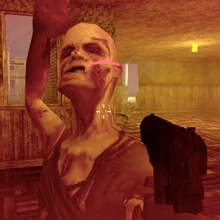
 4.2 (14 votes)
 Share
Share
 Embed
Embed