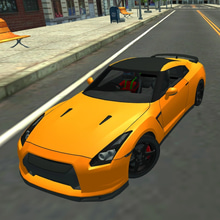
Cities change personality after midnight. Streetlights draw long golden lines on asphalt, the rumble of traffic fades to a hush, and the empty blocks feel like a private playground with your name painted on every corner. 3D City Racer 2 leans into that feeling from the first rev. You start in a wide avenue with a skyline that looks like a challenge more than a postcard. There are ramps tucked under overpasses, parking decks that spiral into launch pads, and boulevards that are just begging for a long, gentle drift that keeps the taillights scribbling neon in the dark. There’s no clock barking at you, no marshal waving flags. It’s you, a garage of different machines, and a city that quietly rewards anyone who learns how to read its lines.
🏙️ The city that invites you to improvise
Every district feels different. The financial core has mirror-glass straights where you can stretch sixth gear and listen to the turbo sing. The riverside cuts between warehouses with little gravel shoulders that turn braking zones into a game of bite and slide. The park loop is softer, all green and curves; it’s where you practice linking left-right transitions without tapping the brakes. And then there are the secrets: a service tunnel whose ventilation gusts can lift you half a meter if you hit it at the right speed, a tram yard with rails that demand feathered throttle, a construction site with two cranes that line up into a perfect launch if you trust the angle. The map isn’t a checklist—it’s a sketchbook. You keep adding moves.
🚗 Vehicles with different tempers and talents
Swapping rides doesn’t just change numbers; it changes the way your hands think. A rear-drive coupe writes lazy S-shaped drifts on wide avenues and begs you to keep throttle steady through the last few degrees of yaw. An all-wheel-drive hatch turns ramps into surgical tools—hit, rotate, correct, land like you meant every millimeter. A long sedan is about rhythm and patience; let the weight transfer carry you and it rewards you with poised exits and smug stability over broken pavement. A brutish muscle car makes city canyons sound like thunder and teaches hard lessons about braking in straight lines. You’ll find a favorite, and then the next day a different car will charm you into learning a new line through the same corner. That’s the magic.
🎯 Handling that respects small inputs
The physics speak human. Steering isn’t twitchy; it’s a pencil, not a marker. A one-degree nudge at 120 feels exactly like one degree, which means you can perch the car at the edge of grip and hold it there while the tires hum. Brakes scale from brush to bite with real nuance, so trail braking into a 90-degree turn becomes a little ballet of weight shifting and tire whispering. Throttle transitions are clean—no sudden lurches when you pick the pedal back up mid-corner—so you can fix a wobble with a feather instead of a panic stab. Hit a ramp and suspension travel compresses with a solid thump you can almost hear before it lands; nose angle at takeoff matters, and tapping the brake in the air will pull the front just enough to level a sketchy jump into a stylish one.
🛠️ Tuning that changes behavior, not just stats
You don’t drown in sliders, you make meaningful choices. Stiffen the rear a notch and the car rotates sooner, which feels incredible on the park loop but demands more respect downtown. Shorter final gearing turns alley sprints into slingshots; taller gearing lets the river road breathe. Tire compound is the quiet king: mediums keep calm heat across long cruises, softs grip like glue for short stunt sessions, and hard compounds shrug off a dozen aggressive drifts without going greasy. Aero isn’t drama—just a tidier landing off high ramps and a steadier nose at top speed. Little changes push you into new habits, and those habits unlock new routes through the same streets.
🗺️ Ramps, lines, and the art of the city trick
This is where the game’s personality really pops. A freeway on-ramp becomes a double jump if you preload the suspension before the seam. A loading dock lip turns into a mini-tabletop, perfect for a flat, level float that drops you right into a handbrake pivot. Median islands are timing exercises; clip them early and they’ll throw you wide, clip them late and you can use the bump to straighten the car on exit. The fun is in discovery: you’ll catch a glint off a rail, wonder “what if,” and five minutes later you’re linking an overpass-to-parking-deck transfer that feels like you invented it. The city rewards curiosity with lines that look impossible until you nail them and grin at how obvious they suddenly seem.
📈 Modes that teach different instincts
Free Drive is your canvas. No pressure, just exploration, rhythm, and a lot of “one more run across the bridges.” Checkpoint Sprint pushes consistency—hold pace, choose exits you can repeat, and protect speed on corner exit more than you chase risky entries. Stunt Sessions turn the place into a challenge park: clear a set of ramp chains, hold a drift for a measured distance, land level three times in a row without scrubbing more than a tiny slice of speed. Ghost Runs are quietly addictive; your best lap becomes a silver echo daring you to brake one heartbeat later, open steering one degree sooner, and keep that exit speed clean enough to feel smug at the next light. None of it feels punishing; it all feels like coaching from the city itself.
🎮 Phone or keyboard, it just feels right
On touch, short swipes map to micro-steers and long swipes to commitments; a light tap on the left edge makes an elegant lane shift, a longer press tells the car you mean a proper turn. On keyboard or controller, the steering curve is gentle at center and progressively firmer out wide, so you never feed more angle than you planned. The camera respects sightlines—eases back for jumps, tucks in for tight alley runs, and never whips so hard you lose the apex. UI keeps quiet: speed, gear, a neat little drift angle readout, and tiny gate icons peeking into the frame only when a challenge is live. Everything else is engine, tire, and road.
🔊 The city teaches with sound
Grip talks. Tires hiss when you’re skimming cleanly, whine when they’re on the edge, and stutter when you’ve asked for too much too quickly. Exhaust notes flatten when you’re lugging a gear and wake up when you’re in the torque. Wind builds under big bridges and gives jumps their own soundtrack. There’s even a softness to nighttime that you start to trust—the hum of streetlights and the low rush of air telling you how fast you’re really going when the speedo feels like a dare. Music stays out of the way until you want it, then nudges the tempo right as you link a perfect run so the final corner feels like a curtain call.
🧩 Micro-habits that make you look like a pro
Set the camera toward your exit before you brake; hands follow eyes. Brush the brakes to settle the nose before a ramp instead of relying on luck mid-air. If a drift starts to wash out, breathe off throttle for half a second instead of yanking more steering—grip returns faster than ego. Use painted arrows on bus lanes as visual metronomes for long slides. On multi-lane boulevards, start one lane wider than comfort and finish one lane tighter than habit; the car will feel lighter and exits will come out straight. Above all, lift early and roll back in—smooth beats heroic nine times out of ten.
🎖️ Why this loop sticks
Because the city keeps offering new ideas as your hands get smarter. Because every car changes the story without changing the rules. Because landing a flat, silent jump and flowing straight into a tidy drift feels like writing your signature across a skyline that doesn’t mind sharing the page. Because the best nights are the ones where you promise yourself “just one more ramp” and somehow the sun is thinking about showing up. 3D City Racer 2 is that easy joy: realistic enough to teach you things, relaxed enough to let you show off, and generous enough to make every return trip feel fresh.





 4.3 (302 votes)
 Share
Share
 Embed
Embed