NEVER TRUST A “SIMPLE” BOW GAME 🏹😅
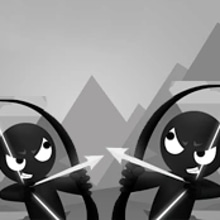
Archer vs Archer looks harmless for about two seconds. Two stick archers, a bow, an open space, and that classic idea: shoot the other one first. Easy, right? Then your first arrow floats a little higher than you expected, the opponent’s shot lands closer than it should, and suddenly you’re leaning forward like you’re in a tournament final you didn’t sign up for. That’s the charm of this game on Kiz10: it’s quick to understand, but it gets sweaty fast because every duel is a tiny mind game wrapped in physics.
This isn’t a shooter where you hold the trigger and pray. It’s an archery duel where your best weapon is control. You aim, you choose power, you respect the arc, and you try to land hits while your opponent is doing the exact same thing. Misses aren’t just misses, they’re information. Every arrow tells you something about distance, angle, and timing. You start as a casual player. Five minutes later you’re quietly calculating the trajectory like you’re an engineer who hates losing.
AIM, RELEASE, REGRET, REPEAT 🎯🌀
The loop is pure: line up your shot, release, watch the arrow travel, react. The travel time is important because it adds tension. You don’t just click and instantly win or lose. You watch the arrow fly and your brain has enough time to panic, celebrate early, or realize you aimed two pixels too high. That tiny delay turns every shot into drama.
And the arc is the star. Archery games live and die by how good that arc feels. In Archer vs Archer, the arc creates those beautiful moments where you adjust by a hair and suddenly you’re landing clean hits like you’ve “figured it out.” Then you get overconfident, aim for a flashy shot, and your arrow sails past their head like it’s trying to escape the duel entirely. It’s a constant dance between precision and temptation.
DUEL ENERGY: YOU VS THEM, BUT ALSO YOU VS YOU 😬🏹
The opponent is obviously the threat, but the real opponent is your impulse to rush. When you feel pressure, you want to shoot faster. When you want revenge for a miss, you shoot faster. When you land a hit and you think you’re on fire, you shoot faster. And this is usually when you lose control of your aim and start making sloppy decisions.
A good duel rhythm is slower than you think. It’s not slow gameplay, it’s deliberate gameplay. You take a breath, aim clean, and commit. The game rewards that calm. It punishes the “I need to shoot right now” mindset, because an arrow launched in panic is still an arrow launched in the wrong direction. Winning often comes down to who stays composed when the duel gets messy.
THE BEST SHOTS ARE NOT ALWAYS THE HARDEST ONES 🧠✨
At some point you’ll try to land the perfect high arc, the kind that drops onto the opponent like a dramatic finishing move. Sometimes it works and you feel like a legend. But the game quietly teaches you that consistency wins more duels than hero shots. A reliable mid-arc hit you can repeat is more valuable than a risky miracle shot you only land once every ten tries.
You start noticing patterns: how far the archers stand, how much power is needed, how the arrow behaves at different heights. You’ll miss, then adjust a little lower. Miss again, then adjust a little higher. And suddenly you’re dialed in. That moment feels great because it’s earned. It’s not luck, it’s learning. That’s why Archer vs Archer is so replayable on Kiz10: you can feel yourself getting better in real time.
TWO PLAYER CHAOS: FRIENDSHIPS GET TESTED ⚔️😂
If you play the two player mode, the game turns into a different kind of entertainment. Now it’s not just you trying to beat an AI or a challenge, it’s you trying to beat a human sitting next to you who is absolutely going to laugh when you miss. The tension becomes social. The reactions become louder. The trash talk appears out of nowhere. And the best part is that it stays fair because the controls are simple and the skill is readable. You don’t lose because the game hid a mechanic from you. You lose because you flinched, rushed, or got too greedy.
Two player archery duels are the perfect kind of competitive game: short rounds, instant rematches, and enough “almost” moments to keep both players convinced they should have won. If your arrow barely misses, you’ll claim it was a warm-up. If theirs barely hits, you’ll call it luck. The game doesn’t care. It just loads the next duel and watches you argue with physics again. 😅
WHY IT FEELS LIKE A PUZZLE GAME IN DISGUISE 🧩🏹
Here’s the sneaky part: Archer vs Archer is basically a physics puzzle game wearing an action costume. Every shot is a mini equation: distance, angle, power, timing. You adjust, test, and refine. That’s puzzle thinking, just faster and with more dramatic sound effects in your imagination. When you approach it like a puzzle, your performance improves. When you approach it like a frantic shooter, it becomes chaos.
This is also why the game stays interesting even when you’ve played a lot. The “problem” is never identical. A duel can shift based on how the opponent plays. Some opponents shoot high and risky. Some shoot low and consistent. Some try to bait you into rushing. You end up adapting, not memorizing, and that makes each match feel alive instead of repetitive.
SMALL TIPS THAT FEEL BIG WHEN YOU USE THEM 🏹🧠
The biggest improvement usually comes from a boring habit: watch where your arrow lands and adjust only a little. People tend to overcorrect after a miss. They aim way higher, or way lower, and then they miss again and spiral. Small changes win. Another habit is choosing a “default” shot you trust, then only changing it when the situation demands it. Your default becomes your anchor. Your anchor keeps you calm. Calm keeps you accurate.
And if you’re playing under pressure, focus on the next clean hit, not the whole duel. Don’t think “I need to win.” Think “I need one good shot.” Then another. That mindset keeps your hand steady and stops your brain from doing that dramatic overthinking thing where you miss because you imagined missing. Yes, that happens. A lot. 😭
Archer vs Archer is the perfect bow and arrow duel on Kiz10 because it turns simple controls into real tension. It’s quick, competitive, and oddly satisfying when you land a clean shot after a tiny adjustment. Whether you’re chasing wins solo or battling a friend in two player mode, it’s the kind of game that makes you say “again” before you even realize you lost. 🏹🎯🔥



 4.3 (49 votes)
 Share
Share
 Embed
Embed


