🟡 Hummed lights and carpet that swallows sound
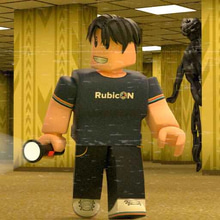
The Backrooms do not welcome you. They absorb you. Yellow walls stare back in that sickly office color nobody chooses on purpose, ceiling tiles buzz like trapped bees, and the carpet turns your footsteps into secrets you can barely hear. You take two steps and the hallway repeats. You take ten and the hallway repeats again, except the corner you trusted yesterday now opens into a storage room that did not exist this morning. Alone, you count breaths and follow the safest noise you have. With friends, you lean on proximity voice chat and realize how human voices turn courage into something you can actually measure.
🧭 Exploration as a survival skill
This is not a sprint to a glowing exit sign. Each level hides its logic in plain sight, asking you to read the room with patience instead of panic. You learn to scan ceiling grids for the one panel that sits wrong, trace scuffs on baseboards to a door that’s been opened too often, and feel the air shift when a new corridor steals heat from your skin. Maps are living rumors. Someone swears there is a ladder near the humming vent. Someone else insists the humming vent is exactly where the thing likes to wait. You decide what to believe, and the level quietly updates the moment you commit.
🔌 Quiet puzzles, loud consequences
Progress comes from small chores that become lifelines under pressure. A key ring on a low shelf. A circuit panel with one breaker that refuses to sit still. A generator that coughs awake only if you prime it with the right rhythm. None of these tasks are hard alone. They become urgent when something is listening. You will crouch behind a file cabinet, counting clicks on a lock while your team calls distances in whispers, and every number feels like it’s written on your pulse. Then the door sighs open and the hallway beyond is darker than it should be, because the Backrooms love a good punchline.
🗣️ Proximity voice chat that actually matters
The game turns your microphone into a mechanic. Speech only travels as far as it should, so volume control is not just etiquette, it’s survival. Close to your teammates, planning comes naturally. Too far, and their words thin into a smear of vowels that makes you move faster without meaning to. You call a corner, they echo it, and the echo itself is comfort. You try a soft “hello” into an empty conference room and hate yourself when you get an answer that is not human. Laughter helps. Jokes slice tension. But the first time someone’s voice drops into a flat whisper and says don’t run you listen, because the Backrooms reward groups that behave like a group.
👁️ Entities you mostly meet by mistake
You will not always see them first. Sometimes you feel them as a pressure change, a blind spot that refuses to resolve, or a patch of silence too perfect to be real. When they show, they do not care about your plans. They cut your routes, herd you into bad choices, and punish carelessness with the kind of speed that teaches respect instantly. Hiding works when you pick cover that breaks your outline and stop breathing like you’re narrating a panic attack. Running works when you decided on a bail route two rooms ago. Standing still works when you trust the dark more than the corridor. Fighting back does not exist. Survival is strategy with legs.
🔦 Tools that feel like habits
Your gear is simple and honest. A flashlight you learn to flick off before turning corners. A notepad of mental markers you keep alive by repeating them out loud. A handful of interactables that matter more for timing than for spectacle. You check for keys without thinking, test doors with the smallest touch, and save your loud actions for when the room can afford them. A repaired breaker opens a path and also draws attention, so you decide whether the shortest route is worth the longest shadow.
🧩 Solo nerves, squad rhythm
Playing solo is a study in stubbornness. You whisper to yourself, build tiny rituals, and learn the personality of each level until your confidence feels earned. Playing in a team is music. Two players trade roles on the fly. Three can sweep rooms in arcs that cover blind angles. Four can overtalk and step on each other’s instincts unless you practice a little patience. Proximity chat keeps everyone honest. If your partner can’t hear you, you are too far to help, and the Backrooms love those gaps.
📍 Micro navigation that keeps you alive
The Backrooms reward people who notice small things. Light that hums at a slightly different pitch. A copy of the same stain three rooms in a row. Carpet fibers brushed backward near a vent that means someone crawled recently, and maybe it wasn’t a someone. You start hanging breadcrumbs in your head that only your group understands. Two coughs means return. One soft click means hold. A single word for bailout that you test in low voice like a key under the doormat.
🎧 Sound design that walks with you
This world is mixed to make your brain do extra work. Fluorescents crackle in uneven loops, so you hear patterns that might not exist. Distant taps become footsteps when you are tired. Vents sigh like they’re keeping secrets. Headphones turn all of this into a sixth sense. Without them, you see a corridor. With them, you feel a presence slightly left of center, and you choose the right instead of guessing. Do not ignore your ears; they are the best map you get.
🧠 Panic management as a mechanic
You will have bad minutes. You will run when silence was smarter. You will talk too loud when you should have mouthed yes and pointed. The trick is to treat mistakes like weather, not character flaws. Reset your breath at the edge of a safe room. Count four in, four hold, four out, and the floor stops dancing. The Backrooms punish spirals, not single errors. A calm player changes a lobby. One person who remembers to say lights off becomes the reason everyone sees an exit.
🚪 Endings that feel like choices, not cutscenes
Escape is not a fireworks show. It is a layered decision tree where your route, your discipline, and your luck shake hands at the final door. Sometimes you sprint into cold air and laugh because your body needed to. Sometimes you step into another level that smiles like a trap because it is. The game respects your effort with multiple ways to finish a run: clean break, messy crawl, or clever detour you will brag about later. And if you fail, the Backrooms do not gloat. They simply remain, waiting, the way a maze waits for the next pair of shoes.
💛 Why you will queue another run
Because the rooms never sit exactly the same. Because your team’s in jokes become tools. Because one perfect whisper save can carry a whole evening. Because you can feel yourself getting better at reading spaces and reading people. Because fear here is not about cheap shocks; it’s about attention, teamwork, and that delicious moment when a door opens and everyone squeezes through in one breath. The Backrooms are unfair in interesting ways, and interesting unfairness is the kind you keep learning until it starts to feel fair.





 2 (172 votes)
 Share
Share
 Embed
Embed


