🧮 Click, slide… aha
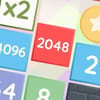
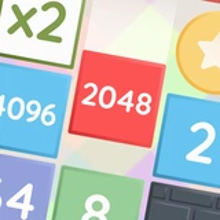
It starts with a tiny grid, a handful of numbers, and that itch behind your eyes that says this will be “one more round” for an hour. Block Fusion is a Math Number Puzzle Game about nudging little tiles until the board sings. Two 3s kiss into a 6, a 6 greets a 4 to make 10, then—wait—10 plus 5 isn’t just 15, it’s a combo because you lined it up under a multiplier cell without fully meaning to. You pretend it was luck. It wasn’t. Your thumbs already learned the rules your brain is still narrating.
➕ The grammar of numbers (it’s friendlier than school)
Every move is a sentence. Matching equal tiles fuses them (2+2 → 4, 4+4 → 8, and so on), but Block Fusion doesn’t stop at sameness. Adjacent sums work too: put 2 beside 3 and they snap into a tidy 5. Even/odd rules sneak in; evens stack into bigger, cleaner chunks, odds like to pair with neighbors or prime-bomb into surprises. Prime tiles—2, 3, 5, 7, 11—behave like tiny celebrities. Nudge two primes into a sum and they flash with a “Prime Pair” bonus. Square numbers glow differently, as if the board knows 16 is secretly a rectangle wearing a crown.
🧠 “Risk a row or bank the math?”
You can brute-force merges, sure, but the game rewards restraint. Hold a 9 on the edge so it can meet either a 7 or a 2, depending on what the next spawn throws at you. Bank a 4 in the corner while you build two 8s to set up the 4+8+8 → 20 chain that clears a whole lane. It’s a puzzle, but it feels like stockpiling good intentions. The board is small on purpose; pressure makes plans honest, and honest plans turn into those “I am a genius” clears you pretend not to screenshot.
🎯 Goals that read like dares
Each level hands you targets that feel simple until the timer winks. “Make 3 perfect squares.” “Hit 25 exactly twice.” “Create a Fibonacci run: 1, 1, 2, 3, 5.” You think, easy, then realize the spawn queue is real and your 5 just ate your 2 by accident. The best goals twist familiar math into little riddles. Build a chain of evens. Clear all primes. Maintain parity in the bottom row for six turns. It’s clever without being smug, the exact line where learning hides inside play.
🧲 Board toys that bend the rules (lightly)
The grid isn’t a silent witness; it helps. Multiplier cells double a fused result if the merge happens on them. Converter cells flip parity—drop an odd and it emerges even, like a tiny math salon. A “Sum Gate” steals overflow and tucks it into a vault tile you can cash later (12+12 on a gate becomes 24 plus a bonus 6 in your pocket). Wildcards appear rarely and listen to neighbors: snuggle a wildcard up to a 7, it becomes 7; next to a 10, it acts like two 5s—sneaky, but the good kind. Nothing is random-random; it all has rules you can learn and bend.
📈 Combos that feel like showing off (and are)
Chain merges grant escalating multipliers, and a soft, smug chime marks each link. Set up a corridor—4 beside 4 beside 8 beside 8—and trigger from the left: 4+4 → 8, 8+8 → 16, then slide a 16 from above for 16+16 → 32. The meter sparkles, the score jumps, your coffee goes cold because your brain forgot time. Spillover math—like 7+7 over a gate producing 14 with a banked 0—keeps chains tidy when they should’ve become soup. That’s the line between “fun clutter” and “oh, I made a plan.”
🧩 Modes for whatever your neurons want today
Classic is the clean diet: no timers, just target tiers and the slow joy of a board you sculpt into obedience. Sprint throws a two-minute clock at you and asks for specific outputs—three fifteens, one twenty-five, a prime trio—fast. Zen is a hammock with numbers; infinite undos, no goals, only the satisfaction of turning a messy grid into a museum of squares and tidy tens. Challenge cards remix the laws: “Primes decay in 3 turns,” “Evens lock until matched,” “Wildcards refuse odd neighbors.” They sound cruel; they’re actually spicy.
📚 “Wait, I think I like math now…”
The trick of Block Fusion is that it teaches by delight. You start noticing patterns you forgot you knew. 9 isn’t just 9, it’s 3×3, a square hungry for a 7 to become 16. 12 splits neatly into 7+5 or 8+4 or 6+6; which split you choose changes next turn’s landscape. When a level asks for 3 perfect squares, you plan 4, 9, 16 like a chef staging ingredients. It’s tangible. Your moves become recipes. Somewhere in the run, you whisper “nice” at a clean 25 because numbers—bear with me—are handsome when they behave.
🧪 Power-ups that feel like tools, not cheats
You earn tokens for tidy play and spend them sparingly. Swap lets you trade places between two tiles; the game applauds when that swap forms an immediate merge. Split cracks a tile into two legal parts—turn a 10 into 4 and 6, or a 12 into twin 6s for symmetry nerds. Nudge slides a single block one cell without moving the row, a tiny miracle for corners you wrote off. You can finish the campaign without tools; using them just opens routes your thumbs were begging for.
🎵 The sound of thinking
Clicks are soft, merges ring with a little glass bell, primes have a polite sparkle, squares drop with a deeper chime that says yes this is proper. The soundtrack is part lo-fi, part “study with me,” never intrusive, occasionally lifting when you chain four merges like the game is high-fiving you with violins. Turn on headphones and you’ll time moves to the beat without meaning to. It’s okay. That’s how focus grows.
🎨 Clean grid, cozy vibes, honest UI
Colors do the heavy lifting. Evens live in cool hues, odds warm up the board, primes wear a subtle halo, squares carry a faint grid within their face like graph paper nostalgia. The font is crisp, the spawn queue peeks in the corner without spoiling the surprise, and the “one more move” glow only appears when a legal merge exists, which saves you from sighs. It’s minimalist but not sterile. You’ll take a screenshot the first time you tile the entire bottom row in perfect tens. You will. We all do.
🧠 Micro-strategies you steal on sight
Work from the top down so gravity births new merges instead of burying chances. Keep a “staging corner” for primes; pair them intentionally, don’t let a stray 3 eat your future 7. When chasing targets, think factor trees—25 isn’t just 25; it’s 5+5 or 9+16 if you’re feeling square. Break deadlocks with odds; evens make walls, odds make doors. If the board clutters, pivot to cleanup goals—two tens, one eight—then resume your grand plan with more oxygen in the grid. And never waste a wildcard on a small number unless it lands a chain; treat them like polite miracles with boundaries.
🏆 Progress that feels earned, not farmed
Stars unlock boards with new quirks—arrow cells that force the direction of merges, mirror rows that reflect values, limited-move stages that play like chess puzzles. Cosmetic themes arrive as trophies rather than purchases: chalkboard scribbles, neon math club, paper-and-pencil with eraser smudges. None of it changes rules, but it changes mood. And mood matters when you’re convincing yourself to try a Fibonacci goal again because that last 8 refused to cooperate like a diva.
👋 Why it shines on Kiz10
Instant play, smooth swipes, no install drama. Whether you have five minutes or a mellow evening, Block Fusion slides into your browser with tight inputs and quick restarts. Share a link, compare target clears with friends, and brag about the time you chained 4→8→16→32 under a multiplier cell you totally placed on purpose. You did. Don’t be shy.
🚀 Last move, best move
The board is one turn from messy, but the queue says 7, and you’ve been saving a 9 next to a converter since forever. Drop, flip, 9 becomes 10, 10 meets 6 on a multiplier for 16, 16 kisses the waiting 9 under a square bonus and—there it is—25, target met, row cleared, brain purring. Block Fusion turns tiny arithmetic into tidy fireworks, the kind that go off inside your head. Load it on Kiz10, slide a tile, and let numbers behave beautifully for once.



 4.5 (150 votes)
 Share
Share
 Embed
Embed