🎨 A world gone pale and one tiny hero stuck inside the problem
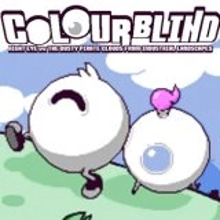
Colourblind starts with a premise that feels simple for exactly one moment, and then suddenly it becomes strange, clever, and weirdly emotional. The world has lost its color. Not in some vague poetic way, either. In a real, mechanical, dangerous way. Platforms fade into outlines, hazards hide in plain sight, and the rules of the world keep shifting depending on which colors you can actually bring back. On Kiz10, that gives Colourblind a very special kind of energy. It is a puzzle platform game, yes, but it also feels like a rescue mission inside a broken painting where reality only behaves properly when the right shade wakes up again. The original Nitrome game is built around reaching the end of each level by touching color totems that activate differently colored objects and hazards.
And that is exactly why the game sticks.
You are not just running and jumping through another ordinary side-scroller. You are interacting with the world’s logic itself. A platform that was nothing a second ago suddenly becomes solid. A barrier stops existing. A threat reveals its shape. Everything feels unstable until you understand the color system, and once that system clicks, Colourblind turns into one of those delightful puzzle adventures where every room feels like a tiny argument between your brain and the level designer. Great argument. Slightly rude sometimes. Very memorable.
👁️ When color is not decoration but survival
The smartest thing about Colourblind is that color is not cosmetic here. It is the whole machine. Many games use bright palettes to look cheerful or stylish. This one uses color as law. That difference matters. The right hue changes what you can touch, where you can walk, what can hurt you, and how the room can even be solved. The Nitrome description and fan documentation both point to the same core loop: touch colored paint totems, activate matching objects, and use those changes to reach the exit.
That creates a beautiful kind of tension.
At first, the world looks stripped down, almost ghostly. Then a color returns and suddenly the whole space rearranges itself in your head. Now you see a route that did not exist before. Now a previously harmless-looking area seems suspicious. Now the jump you thought was impossible turns out to make sense. The game keeps doing that over and over, which makes every level feel alive. Not in a noisy way. In a clever way.
And because the color system is tied directly to movement, Colourblind never drifts into being “just” a puzzle game or “just” a platformer. It sits right in the middle. Your timing matters, but so does your understanding. Your reflexes can save you, but only if your logic got you to the right place first. That mix is what gives the game its bite.
🧩 Every room is a logic trap wearing platform shoes
Good puzzle platformers do something sneaky. They make you feel like you are exploring, but really they are teaching you a language. Colourblind does this beautifully. At first, you are mostly reacting. Touch a totem, notice what changed, try a jump, hope for the best. Then, little by little, the rooms start making more sense. You stop guessing as much. You start predicting. This color will make that bridge real. That one will remove the obstacle. If I keep this active, I can cross here, but maybe I lose access to something else later.
That is where the game becomes dangerously addictive.
Because now every level is more than a challenge. It is a system you want to understand completely. You are no longer just trying to get through. You are trying to solve the tower of weird visual logic in front of you with as little embarrassment as possible. Sometimes you nail it and feel brilliant. Sometimes you jump confidently into a space that does not exist anymore because the active color changed and now gravity is personally involved. Also educational.
The best part is that the game earns its difficulty. It does not feel random. When you fail, the usual response is not “that was unfair.” It is “ohhh, right, I activated the wrong color at the wrong time.” That kind of failure is powerful because it invites another try instead of pushing you away.
🌈 The world keeps changing, so your brain has to keep up
Colourblind works because it constantly changes how you read space. That is much harder than it sounds. In many platform games, once you understand how high you jump and how fast you move, the world becomes stable. In this game, the world itself is unstable. The path is not always there until the correct color makes it real. Hazards can fade, appear, or change importance depending on which palette is active. The play experience described across Nitrome and play pages is exactly that: use paint totems, patch color back into the world, and solve rooms whose logic depends on hue.
That keeps the whole adventure fresh.
One section might feel almost calm, with you carefully turning colors on and off to reveal a route. The next one becomes a timing problem where the puzzle is already solved in theory, but your hands still need to cooperate in practice. That variety matters. It stops the game from becoming repetitive. Each room can twist the same mechanic in a slightly new direction, and the result feels much richer than the game’s simple visual style might suggest.
There is also something oddly charming about the main concept. You are restoring a deadened world by bringing color back into it. That gives the puzzle-solving a little extra soul. It is not just technical. It feels restorative. Like every success is not only progress through a level, but one small piece of life returning to a broken place.
🏃 Tiny jumps, huge consequences, classic Nitrome cruelty
Movement in Colourblind matters because the game never lets puzzle logic replace platform pressure completely. Even after you understand the room, you still have to execute. That is important. It means the game stays active. A route can be correct and still fail if your timing is sloppy. A safe-looking platform can still become your enemy if you do not respect how the colors interact with the environment. The browser versions and mobile listing both describe it as a platformer where you use paint to restore the full spectrum and solve color-based puzzles.
That combination of puzzle and execution is exactly where the tension lives.
A pure logic game gives you time. A pure platformer tests your hands. Colourblind asks both parts of you to work together, which is always a little dangerous and always much more fun. When it clicks, it feels fantastic. You solve the room, move cleanly, hit the correct route, and leave the section feeling smarter than you did thirty seconds earlier. Hard to beat that.
And because each success changes how the world looks and behaves, progress always feels visible. You are not merely clearing a stage. You are altering the space itself. That gives the game a stronger sense of payoff than many minimalist platformers.
✨ Why Colourblind fits Kiz10 so well
Colourblind belongs on Kiz10 because it offers one of the best browser-game combinations around: simple controls, smart puzzles, memorable visual mechanics, and constant replayable tension. You can understand the basic idea quickly, but the way the levels build on the color mechanic keeps the experience engaging far beyond the first few rooms. It is exactly the sort of game that feels light at first and then slowly reveals how thoughtful it really is.
For players who enjoy puzzle platform games, logic-based side scrollers, color mechanics, and browser adventures that reward both thinking and timing, Colourblind is a strong pick. It has that classic compact design where every room matters, every mechanic has purpose, and every victory feels properly earned.
So yes, Colourblind is about bringing color back. But more than that, it is about learning how a world works when visibility, solidity, and danger are all tied to the same strange beautiful system. It turns shade into strategy, movement into problem-solving, and every new hue into one more key that changes the whole map in your head.
That is a great hook. And in Colourblind, it never really stops being clever.





 4.6 (6 votes)
 Share
Share
 Embed
Embed