🎨 A room full of paint, secrets, and bad omens
Cube Escape: Arles does not begin like a loud game. It slips in quietly. No explosions, no heroic entrance, no dramatic speech from a villain with suspiciously perfect teeth. You are simply there, inside a strange bedroom in Arles, surrounded by paintings, furniture, tiny details, and the kind of silence that makes every click feel important. It is a point and click room escape game built around observation, curiosity, and that delicious little tension that appears when a normal object suddenly feels very, very wrong. On Kiz10, the whole experience lands with that perfect eerie rhythm: slow at first, then weird, then somehow even weirder. The game is listed there as a puzzle game, while Rusty Lake describes it as a room-escape episode centered on gathering painting materials, exploring the room, and making art come alive.
This is not the kind of puzzle adventure that begs for your attention. It stares at you from across the room and waits for you to get uncomfortable enough to investigate it. And of course you do. Because that is how these games work. A drawer looks harmless until it doesn’t. A painting feels decorative until it starts acting like a witness. A chair is just a chair for maybe six seconds, and then your brain starts whispering, no, something is wrong here.
🖼️ When the walls start feeling alive
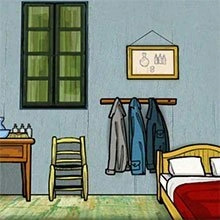
What makes Cube Escape: Arles so memorable is the atmosphere. This is a room escape game, yes, but it behaves like a feverish little piece of interactive art. The bedroom is based on the famous Arles setting associated with Vincent van Gogh, and the game places you in a compact, enclosed space where almost everything has a purpose, a clue, or a threat hiding under the surface. Rusty Lake identifies it as the third episode in the Cube Escape series, and broader series references place this chapter around Van Gogh in Arles, which explains why the visuals feel like art history wandered into a dream and forgot how to leave.
That mix is exactly why the game hits so hard. The room is small, but it never feels empty. It feels loaded. Every corner seems to hold a tiny secret with its arms folded, waiting for you to prove you deserve the next clue. You click on a painting and suddenly you are no longer just solving a puzzle, you are decoding a mood. You inspect objects and get the odd sensation that the game is not only testing your logic, but also your willingness to trust your own instincts. Which, honestly, is rude. Very effective, but rude.
And then there is the visual language. Bold colors. awkward stillness. little surreal interruptions that arrive out of nowhere like a thought you wish you had not had. Cube Escape: Arles understands a beautiful thing about escape games: fear does not always need monsters. Sometimes a room, a brush, a bed, and a silent face in a picture are enough to make you sit up straighter.
🧩 Click, doubt, repeat
The gameplay loop is beautifully simple. Explore the room. Click everything. Collect items. Combine ideas. Solve one puzzle so another one can laugh at you from the opposite wall. This is classic point and click puzzle design, but it is arranged with enough personality that it never feels mechanical. You are not just finding keys for locks because games are legally required to include keys and locks. You are participating in a chain of strange logic where every solved problem feels like peeling back another layer of a story that may or may not be healthy for your brain. In the best way.
Some puzzles are immediate. You see the clue, you connect the dots, you feel clever for eight glorious seconds. Others are the slow-burn type. The kind that sit in the back of your head while you wander around the room muttering, okay, so why does that object exist, why is that shape there, why do I feel judged by a sunflower. Then it clicks. Literally and mentally. And that payoff is wonderful.
The game also knows how to use space. Because the environment is compact, progress feels intimate. You are not sprinting across giant maps or drowning in meaningless collectibles. You are learning a room. Studying it. Annoying it. You become familiar with every angle, every suspicious detail, every object that initially seemed harmless but later reveals its true purpose with the dramatic energy of a stage actor pulling off a mask 🎭.
🕯️ The charm of being trapped somewhere stylish
There is something oddly cozy about Cube Escape: Arles, even when it is clearly trying to unsettle you. Maybe it is the room itself. Maybe it is the painterly aesthetic. Maybe it is the fact that the game does not scream. It whispers. It lets discomfort build in little waves. One moment you are calmly searching for a clue. The next, you are staring at the screen with that very specific expression gamers get when they think, ah, so we have entered nightmare territory now.
That tonal balancing act is where the game shines. It never turns into cheap chaos. It stays deliberate. Controlled. Even its strangest moments feel placed with care, like the game is guiding you into a bizarre psychological maze while pretending this is all perfectly normal behavior for a bedroom in Arles. You know it is not normal. The game knows you know. And somehow that makes it better.
On Kiz10, Cube Escape: Arles fits beautifully for players who enjoy browser puzzle games with atmosphere, escape room mechanics, hidden clues, and a heavier mood than the average casual brain teaser. It is not a noisy arcade distraction. It is the kind of game you open thinking you will play for ten minutes and then suddenly realize you have been staring at paintings, combining objects, and mentally bargaining with a chair for far longer than expected.
🧠 For players who like puzzles with personality
Not every puzzle game needs to be pleasant. Sometimes it should be a little off. A little crooked. A little too interested in making you uncomfortable. That is where Cube Escape: Arles earns its place. It trusts players to notice details, to experiment, to fail a little, and to enjoy the process of feeling slightly lost before the next answer snaps into view.
If you love room escape games, hidden object tension, surreal adventure scenes, and puzzle design that feels handcrafted rather than assembled on a conveyor belt, this one has real bite. It is elegant, eerie, clever, and occasionally absurd in the most unforgettable way. The whole thing plays like a small interactive nightmare painted with care and sealed inside a cube.
And honestly? That is a compliment.
On Kiz10, Cube Escape: Arles is the sort of browser puzzle game that lingers after you close it. Not because it is loud, but because it is strange in all the right places. The room stays with you. The images stay with you. Even the little puzzles keep echoing in your head like unfinished thoughts. You escaped, sure... probably. But the game still feels like it knows something you don’t 🕰️
So click carefully. Observe everything. Trust nothing too quickly. In this room, art is not decoration, silence is not comfort, and every solved puzzle feels like you have just opened a door that maybe should have stayed shut.





 Share
Share
 Embed
Embed


