🔦 Static corridors, living fear
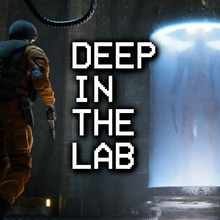
The camera doesn’t follow you; it waits for you, like the building has already chosen the angles from which it wants to watch you break. Deep in the Lab recreates that deliciously tense ‘90s survival horror vibe with pre-rendered backdrops, hard shadows, and just enough grain to make every doorway feel like a dare. You move through a private archaeology of mistakes—abandoned mugs, toppled carts, flickering monitors that blink in a language you almost recognize—while the soundtrack trades melody for machinery. Somewhere below, a generator coughs. Somewhere above, something drags its memory across tile. You are very small here, and that’s the point.
🧪 The five floors and their secrets
This place is stacked like a bad idea: reception with locked roll-down shutters, research suites arranged in smug symmetry, containment wings that hiss when they breathe, a maintenance level that thinks it’s a labyrinth, and a top floor that never expected to be visited by anyone who still has a pulse. Each floor rewrites the rules with its own brand of cruelty—splashy emergency lights that ruin depth perception, glass corridors that mirror movement and make you second-guess your silhouette, storage bays where the aisles feel a centimeter too narrow for comfort. You’re not here to clear rooms; you’re here to navigate a mood, and the map becomes a diary of places you survived by inches.
🗝️ Keys, puzzles, and the joy of a stubborn lock
Deep in the Lab understands that a good puzzle isn’t a riddle, it’s a ritual. You’ll examine specimen tags to extract a door code hidden in the Latin names’ initials, align coolant pressures to match a scribble in a mechanic’s logbook, and slot oddly shaped fuses into a panel that was clearly designed by someone who hates round things. Keys aren’t just keys: a visitor badge piggybacks a magnetic signature; a broken keycard becomes useful again when you realize the reader only cares about the first three digits; a brass master key opens two doors and ruins your confidence in both. The best moments are the quiet ones—kneeling to compare floor scuffs, noticing a blood trail that stops before a vent because someone crawled, not dragged.
🔫 Monsters you can fight—or not
The game gives you a weapon and then punishes you for treating it like a solution. Drawing or stowing your sidearm is a choice with weight; the holster click sounds too loud in the smallness of the hall. Ammunition is a rumor. Swing or squeeze and something falls, but the cost is always printed on your next encounter. Maybe you roll backward (right click) to let a lunge exhaust itself, then slip past; maybe you bait pathing through an open door and slam it with a laugh you don’t admit to. When you do commit, the left click feels final, the hit-stop rude, the echo of your shot an RSVP to everything nearby. Mercy is a resource too. Sometimes sparing a monster now buys you quieter backtracking later. Sometimes it doesn’t. That uncertainty is the bite.
🧭 Controls that make panic readable
Old school, intentional, and deliciously tactile: A and D to move left and right along the scene’s axis like a stage that hates actors. E to interact—a cautious touch for doors, drawers, panels, bodies that might be asleep but probably aren’t. CTRL to draw or undraw your weapon, a habit you’ll learn to do only when the geometry agrees. Left click to attack, right click to roll; the roll isn’t a superhero cartwheel, it’s a scrabble for ground that buys you a sliver of invulnerability and a bruised elbow. P opens and closes your in-world menu, M flips open the crinkled map you pretend you don’t need, and ESC yanks you to options or skips an FMV when your nerves are done being polite. Limited saves mean you’re always negotiating with your future self—now or later, safe or greedy.
🧰 Inventory as philosophy
This isn’t a carry-everything fantasy. It’s a pocket math simulator with teeth. Do you take the spare battery pack or the extra magazine? The solvent for the resin-sealed cabinet or the med-spray that might save you from your next misread? Combining items is its own little dopamine drip: strip copper wire from a lamp to jury-rig a bypass, use cloth and solvent to clean a lens that reveals a UV code, wrap a cracked keycard to stiffen it just enough for a single swipe. Every slot is a confession of what you’re planning to survive—combat, puzzles, or a long walk through a place that doesn’t like your footsteps.
🎞️ FMV like a knife between stillness
When the videos interrupt, they don’t apologize. Glimpses of staff briefings with smiles that never reach the eyes. Body-cam flickers from a team that went down two floors and came back as a rumor. Surveillance splices where the timecode jumps and the corridor rearranges itself when no one is watching. The FMV isn’t nostalgia; it’s texture. It tells you how the lab lies to its cameras and how the building prefers you to remember it: blurry, partial, arguable. Skipping them is allowed, but they stain the rooms even after you smash ESC.
📜 Save points that feel like prayers
Limited saves transform desks, terminals, and wall recorders into altars. You plan routes around them. You hoard them like candy you earned with bruises. When you finally slot one in, the relief tastes like cheap coffee, and you make a promise you’ll immediately break: slower, cleaner, smarter from here. The save economy makes small victories huge—unlocking a shortcut is a miracle, not a convenience, and suddenly a room you hated becomes your favorite because it sits between you and a recorder that hums like forgiveness.
🧠 Micro-tech for macro survival
Roll through attack startup, not impact; the invulnerability frames live where the animation breathes in, not where it exhales. If a creature pivots toward you, sidestep along the pre-rendered depth before committing to a retreat; monsters overshoot when the camera angle changes. Examine items twice—most objects carry a second inspect node that only appears when you rotate them slowly. When backtracking, go empty-handed; drawn weapons make your turn radius feel heavier. Peek at corners by inching your sprite to trigger footstep audio without line-of-sight; if you hear a wet drag, don’t enter fast. And the classic: listen for power hum variations—higher pitch means the breaker you need is on this floor; darker hum means you’re about to learn a new exit.
🎧 Sound that teaches you how to be afraid
No bombast, just cleverness. Vents rattle with a metallic rattle that grows, step by step, until you can point at the panel with your eyes closed. Door seals wheeze in different rhythms depending on whether the next room is pressurized, contaminated, or lying. Your heart isn’t on the HUD, but it’s in the mix; under stress, the soundscape tightens, so when silence returns, you actually flinch. Headphones change the game. You’ll start navigating by echo, mapping spaces by how your footsteps argue with concrete.
🧩 Stories in crumbs, not cutscenes
Emails half-deleted mid-sentence. A child’s drawing on printer paper, taped inside a locker that pretends it was never opened. A schedule board where one name is erased so aggressively the whiteboard shine is dull in that rectangle forever. The lab confesses as objects, and your detective work becomes archaeology—who stood here, who ran, who stayed to turn off one last switch and never reached the stairs. You assemble a motive from residue, then the game makes you prove it with a door that opens only if you really understood.
🔥 One hallway, one decision, everything
You’ve got two shells and a conscience. The containment wing hums in a way your teeth don’t like. A locked office asks for a code you think you’ve derived from the specimen jars; you’re probably wrong by one number and you’ll pay for it. A crawler nests at the bend, a lunger patrols the longer run. You stow the weapon, roll under the arm at the precise half-beat, slide to the keypad, and gamble on the inverted sequence because the logbook author wrote everything backward after midnight. The light clicks green. Inside: a battery, a save station, a note that names a door you haven’t seen yet. Outside: soft scratching, closer now. You breathe, save, and walk out anyway, because that’s the contract—curiosity first, safety later.
🧭 Why it feels like a lost classic
Deep in the Lab doesn’t chase spectacle; it chases pressure. Pre-rendered scenes frame you like a suspect. Puzzles honor the space instead of floating above it. Combat exists but doesn’t forgive. Resources are rude in a way that makes your best decisions feel earned. FMV interludes salt the world with truthy lies. Limited saves turn routes into strategies and strategies into stories you’ll tell with your hands. On Kiz10, it’s a lovingly vicious throwback: tense, methodical, cinematic in stillness, and endlessly replayable for players who like their horror with rules, consequences, and the occasional perfect escape.





 Share
Share
 Embed
Embed


