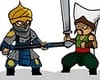
⚔️🩸 DUEL TIME, NO HERO SPEECHS
Die By Sword Duell doesn’t pretend you’re on a noble quest. It throws you into a duel and basically says, “Alright. Prove it.” That’s the whole attitude: sharp steel, short patience, and a battlefield that feels like it was built for ego to collapse. On Kiz10, it lands as a sword fighting duel game where the fun isn’t in looking fancy, it’s in surviving the tiny, nasty moments between attacks. You know the ones… when you hesitate, when you overcommit, when you swing too wide, and your opponent calmly turns your confidence into a quick defeat. It’s rude. It’s thrilling. It’s the kind of fighting game where you learn faster because losing happens fast 😅⚔️
The core concept is deliciously simple: you face an opponent, you trade sword strikes, and you try to win the duel. But the real gameplay is hidden inside timing and control. Die By Sword Duell rewards players who can stay calm and choose their moments, not just swing like a blender. The sword is not a magic wand. It’s weight. It’s range. It’s a commitment. Every time you attack you’re announcing your plan to the room, and if your plan is sloppy, the room punishes you.
🛡️🧠 THE IMPORTANT PART: YOU’RE NOT “ATTACKING,” YOU’RE INVESTING
A lot of players jump into sword duels and immediately try to spam offense, like more swings equals more victory. Die By Sword Duell has a way of making that strategy feel embarrassing. You swing wildly, you miss, you drift into bad position, and suddenly you’re the one being pressured. The game teaches a harsher truth: the best attack is the one you can recover from. That means short, controlled strikes. It means spacing. It means knowing when to step back instead of chasing a hit that isn’t there.
It also creates that amazing mental tug-of-war where your brain and your hands fight each other. Your brain says, “Wait for the opening.” Your hands say, “NOW!” And then you watch your sword fly into empty space, and you feel the regret arrive before the enemy even hits you. That’s the duel experience. It’s not just about reflexes. It’s about discipline.
🗡️💨 SPACING: THE SECRET WEAPON NOBODY RESPECTS UNTIL IT HURTS
Sword fighting games live and die on distance. Too close and you get stuffed. Too far and you can’t threaten. Die By Sword Duell makes spacing feel personal because it’s often the difference between landing a clean hit and getting punished immediately. You start paying attention to little details: how long your reach really is, how fast your opponent closes distance, how a step to the side changes the whole angle of the exchange.
And because duels are tense by nature, you end up with these micro-moments where everything slows down in your head. You see the opponent shift. You see the sword move. You decide whether to block, dodge, or counter. Sometimes you nail it and you feel like a genius. Sometimes you guess wrong and you get clipped, and your internal monologue becomes very quiet for a second, like, “Okay. Not that.” 😅
⚙️😈 WHEN THE FIGHT TURNS MESSY, IT GETS FUNNIER AND SCARIER
The best duels aren’t clean. They’re messy. They’re the ones where both fighters are low on health, both are nervous, and every move feels like it could end the round. Die By Sword Duell shines in that chaos because it turns simple mechanics into drama. A near miss feels like a jump scare. A sudden hit feels like a plot twist. A clutch block feels like the best decision you’ve made all day.
There’s also a specific kind of comedy in sword duels: the moment you try something heroic and it fails immediately. You go for a big strike, you whiff, and the opponent punishes you like they’ve been waiting their whole life for that exact mistake. You can’t even be mad. It’s too clean. You just sit there thinking, “Fair.” Then you hit restart. Of course you do.
🏟️🔥 THE ARENA FEELS LIKE A PRESSURE COOKER
Die By Sword Duell works because the setting doesn’t distract you. It focuses you. Duel games don’t need a massive open world to be intense; they need a tight space where every movement matters. That tightness creates pressure. You’re always close enough to be threatened. You’re always one misstep away from danger. And because it’s on Kiz10, the loop is fast: fight, learn, fight again. The game doesn’t ask for a big time commitment. It asks for your attention, right now, for the next thirty seconds, and then it either rewards you or humiliates you. Sometimes both.
😬🧩 THE MIND GAME: BAIT, PUNISH, DON’T FALL FOR YOURSELF
One of the sneakiest parts of duel combat is how often you lose to your own habits. You do the same opener. You panic-block too early. You always swing after backing up. The game becomes a mirror. If you’re predictable, you get punished. If you vary your timing and stay patient, you start controlling the pace.
That’s why the game feels less like a random brawl and more like a mental trap. You’re constantly asking questions without realizing it. Is that attack real or bait? Is that pause a trap? Should I swing now or wait half a beat longer? And the worst feeling is realizing you got baited by something obvious. Not the opponent’s skill, but your own impatience. That’s the duel lesson, delivered sharply.
⚔️🌀 THE MOMENT YOU “GET IT”
There’s a point where everything changes. You stop chasing every hit. You stop swinging just because the sword is available. You start moving with intention. You test range. You throw a safe poke. You back up. You wait. Then you punish at the right moment and suddenly the duel feels controlled, like you’re writing it instead of surviving it. That’s the addictive part. Die By Sword Duell isn’t only about winning; it’s about feeling yourself improve.
And improvement here feels real because it’s small and specific. You learn to not overcommit. You learn to reset spacing after a hit. You learn to stay calm when the opponent pressures. You learn that a single clean strike is worth more than five messy swings. The game doesn’t give you that knowledge as a tip. It gives it to you as consequences. Which is… effective. 😅
🧠⚡ QUICK SURVIVAL ADVICE THAT WON’T RUIN THE FUN
If you want a better chance of winning, treat your sword like it has weight. Don’t swing unless you’re ready to recover. Keep a comfortable distance, then step in only when you see a real opening. If you land a hit, don’t instantly chase. Reset your position first. Chasing is how you get reversed. Also, if you miss, don’t panic-swing again. That’s how the duel ends quickly and not in your favor.
Most importantly, don’t let one loss tilt you into reckless play. Duel games punish tilt harder than anything else. Your worst enemy isn’t the opponent. It’s the moment you decide to “force it.” You can’t force timing. You have to earn it.
🏁🩸 WHY IT’S HARD TO STOP
Die By Sword Duell is perfect “one more fight” material. It’s quick, intense, and brutally honest. Every round teaches you something, even if the lesson is just “I should not have done that.” On Kiz10, it’s the kind of sword fighting game you load up for a few duels and then realize you’ve been chasing a clean win for way longer than you planned. Because it always feels close. It always feels fixable. It always feels like the next duel is the one where you finally stay calm, times the strike, and win like you meant to. ⚔️🔥





 Share
Share
 Embed
Embed