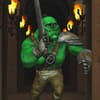
🕯️🗡️ The door shuts. The dungeon breathes. You move.
Dungeon Fury doesn’t introduce itself like a polite fantasy tale. It throws you into stone corridors that feel damp, tight, and unfairly confident, like the dungeon already knows you’re going to make a mistake. Torches flicker, shadows wobble, and somewhere in the distance there’s the low, ugly sound of trouble waking up. You’re here for one reason: survive the labyrinth, carve a path through the monsters, and prove you’re faster than the next swing aimed at your face. It’s an action dungeon crawler that lives on momentum, quick reactions, and that delicious “I can’t stop now” feeling that hits when you barely survive an encounter and realize the next hallway is already asking for more.
What makes Dungeon Fury feel sharp on Kiz10 is the immediacy. No long downtime, no slow build-up into combat that’s scared of being exciting. You step forward and danger is already part of the scenery. Orcs and nasty creatures don’t politely queue up, they pressure you. They push your spacing, punish hesitation, and force you into that classic dungeon mindset where every step matters and every room can turn into a tiny disaster if you get greedy. And yes, you will get greedy at least once. Treasure glints, enemies crowd, and suddenly you’re thinking “I can finish them all” right before you learn why that thought is dangerous.
👹🔥 Orcs don’t negotiate, they rush
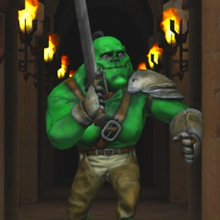
The enemies in Dungeon Fury aren’t there to be decorative. They’re there to make you move. Orcs, especially, carry that blunt, relentless energy: big bodies, big hits, and zero respect for your personal space. The game’s combat rhythm feels like a simple rule with a thousand variations: hit first or get hit. That sounds straightforward until you’re in a hallway with awkward angles, an enemy stepping in and out of range, and your brain trying to decide whether to commit or bait a safer opening.
You’ll quickly learn that timing is your actual weapon. Not just swinging wildly, not just charging like a hero in a painting, but choosing the moment when you can strike without eating a counterattack. The best runs feel almost like a dance, except the dance floor is stone and the partner is an orc who wants you to stop existing. You step in, land a clean hit, step out, reset your position, then press again. When you do it right, combat feels smooth and controlled. When you do it wrong, it feels like the dungeon itself is laughing.
🧠⚔️ Reflex combat with a brain behind it
Dungeon Fury rewards fast hands, but it quietly rewards smart decisions even more. The dungeon doesn’t just test your reaction speed, it tests your judgment. Do you push deeper into a room to finish a target, or do you pull back and keep the doorway as your safety line? Do you chase the last enemy because you want the quick win, or do you pause because you heard movement behind you and you know what that usually means? This is the kind of game where the environment becomes part of the fight. Corners can save you. Narrow passages can protect you. Open spaces can betray you.
There’s a satisfying feeling that comes from learning the rhythm of danger. At first everything feels chaotic, like enemies appear and you react late. Then you start reading the dungeon. You recognize patterns in how threats approach. You start predicting where the next clash will happen. The game stops feeling like random violence and starts feeling like controlled pressure, like you’re driving the pace instead of being dragged by it. That’s when it becomes addictive, because it’s no longer just “can I survive,” it’s “can I survive clean.”
💰🗝️ Loot temptation and the curse of one more room
Dungeon games have a special way of making you do irresponsible things. You clear a room and feel safe for half a second. Then you see loot, coins, or the promise of something useful, and suddenly your caution evaporates. Dungeon Fury leans into that classic temptation. It makes you want to push forward, because pushing forward is exciting, and because every extra encounter feels like progress. The problem is that progress has a price, and the dungeon collects it when you overextend.
This creates a great emotional loop. You take a risk, you survive, you feel powerful, you take a bigger risk, and then the dungeon slaps you back into humility. But it doesn’t feel unfair. It feels like a lesson. The game is constantly teaching you the difference between bravery and impatience. Bravery is stepping into danger with a plan. Impatience is stepping in because you want it over quickly. The dungeon punishes impatience ruthlessly, and honestly, that’s what makes your victories feel earned.
🧱🩸 Corridors that turn into pressure cookers
The dungeon layout matters because tight spaces amplify everything. In a wide arena, you can improvise. In a corridor, you must commit. Your movement lanes are limited, your angles are restricted, and every mistake feels bigger because there’s less room to recover. That’s where Dungeon Fury gets its “fury” feeling. You’re always close to danger. You’re always one step away from being cornered. You can’t drift through the map half-awake; you have to play like you mean it.
Some of the most intense moments come when you realize you’re boxed in, not by a single enemy, but by a crowd. That’s when you stop thinking about winning and start thinking about escaping. You look for a gap, you time a move, you take a hit you didn’t want to take, and you survive by inches. Those moments are loud in your head even if the game is quiet. You can feel your focus narrow, your breathing change, and then, when you finally break free, you get that burst of relief that makes you grin like a maniac. It’s stressful in the fun way, like riding a roller coaster you chose voluntarily.
🌀😅 The confidence spike that ruins you
Every player has the same arc in games like this. You start cautious. You get a few clean fights. You feel good. Then your confidence spikes and you start making “hero choices.” You rush an enemy. You ignore your spacing. You assume the next corridor is safe because the last one was. And the game punishes that exact moment, because it knows that’s when you stop paying attention.
The funny part is that you’ll blame the game for a second. Then you’ll realize it was you. It was always you. You got greedy, you got sloppy, you stopped respecting the dungeon. That’s not a bad thing. That’s the loop. It makes every retry feel meaningful, because you’re not just repeating content, you’re correcting behavior. You’re building discipline. You’re learning to stay sharp even when you feel strong.
🧭✨ How to survive longer without turning into a statue
If you want to improve in Dungeon Fury, the most useful habit is playing with a plan but staying flexible. Use corners and narrow passages as your safety tools. Don’t take fights in the middle of open rooms if you can pull enemies into a more controlled space. Keep your spacing clean and don’t swing just because you can swing. Wait half a beat, let the enemy commit, then punish. That half beat is everything. It’s the difference between “clean hit” and “trading damage until you lose.”
Also, treat each room like it has a second wave hiding somewhere, because it oftens feels like it does. Even when things look quiet, move like the dungeon is ready to punish you for relaxing. That mindset sounds paranoid, but it’s the good kind of paranoid, the kind that keeps you alive long enough to enjoy the run.
Dungeon Fury on Kiz10 is a sharp, fast dungeon action experience where orc fights feel immediate, corridors feel dangerous, and your best weapon is calm timing under pressure. It’s the kind of game that makes you lean forward, makes you mutter at your own mistakes, and makes you restart with the same stubborn thought every time: okay… this time, I’m getting out. 🕯️🗡️















 4.2 (33 votes)
 Share
Share
 Embed
Embed