🎆🦁 A Festival Board That Refuses to Sit Still
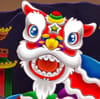
Firework Fever: The Dance Of The Lion drops you right into that loud, glittery moment when the night sky is already cracking with color and everyone’s pretending they’re calm. You’re not calm. You’re staring at a board full of fireworks, lantern-bright tiles, and little bursts of potential, and you can practically hear the drums in the background going faster the longer you hesitate. This is a match 3 puzzle game on Kiz10 with a big seasonal heartbeat: Chinese New Year vibes, lion dance energy, and that joyful pressure of trying to make everything pop at the perfect time. It’s bright, festive, and deceptively sharp, because the board is always one move away from turning into either a masterpiece… or a sad little mess where nothing matches and you start bargaining with the universe.
At first you think, okay, classic rules, swap three, clear tiles, move on. Then the game starts throwing little “festival problems” at you. You need certain colors. You need a target count. You need to break through obstacles that feel like they were placed by someone who hates fun. And suddenly it’s not just swapping, it’s planning. Your best move isn’t always the move that clears the most tiles. Sometimes it’s the move that sets up the next explosion. Sometimes it’s the move that creates a special firework, the kind that turns the board into a chain reaction you can feel in your teeth.
🥁✨ The Lion Dance Rhythm: Why Timing Feels Personal
There’s a reason this one feels different from a random candy board. The theme gives it a pulse. The lion dance isn’t just a cute title, it’s the mood of the gameplay: fast beats, sudden bursts, a little chaos, a lot of spectacle. You’ll catch yourself playing in a rhythm without noticing. Swap, clear, pause, scan, swap again. Your eyes start hunting for patterns the way you’d hunt for a safe step in a crowd. And when you spot a juicy setup, like two possible matches that can be linked, your brain lights up like you just heard the crowd cheer.
The best part is that the board often rewards bravery, but only the smart kind. You can go for the obvious match to keep things moving, sure. Or you can hold for a second, make a weird-looking swap, and suddenly you’ve created a power piece that detonates a line, clears blockers, and makes the whole board cascade like a mini firework show inside the puzzle itself. That’s the “dance” part: you’re not just matching, you’re choreographing.
🧨🧩 Matching Fireworks: Simple Rules, Sneaky Consequences
The core mechanics are friendly, but the consequences are not. A basic match clears tiles and nudges the board forward, but the game loves asking, “Cool… and what now?” Because every clear shifts the layout. Tiles fall. New colors show up. Your perfect plan can collapse into randomness if you don’t think one step ahead. It’s not unfair, it’s just lively. The board behaves like a crowd during a festival: it moves, it changes, it doesn’t care if you had a spreadsheet.
So you start developing habits. You start looking for matches near the bottom to trigger bigger cascades. You start avoiding “wasted swaps” that barely do anything. You start aiming for four and five matches because specials are the real power in a match 3 game like this. A single special can save a level that’s slipping away, especially when objectives get tight and you can feel the last few moves approaching like a countdown.
🐉⚡ Power Pieces: Small Matches, Big Explosions
This is where Firework Fever: The Dance Of The Lion gets delicious. When you match more than three, the board begins to hand you tools that feel like festival magic. Line-clearing rockets, explosive bursts, combo fireworks that wipe clusters, the kind of stuff that turns “I might fail” into “actually… watch this.” And the game quietly teaches you the most important lesson: don’t just create specials, combine them.
Combining specials is where the real fireworks happen. You’ll line two power pieces up, swap them together, and suddenly the board isn’t a puzzle board anymore, it’s a celebration. Tiles vanish, obstacles crumble, and the objective counter jumps like it just drank energy. It’s the most satisfying feeling in a puzzle game: not just clearing, but clearing with style. The best clears feel loud even though you’re just swapping icons.
And then the game teases you. It gives you almost the perfect combo… but one blocker sits in the way like a stubborn bouncer at a party. That’s when you have to get clever. Do you spend moves clearing the blocker? Do you trigger the special early to avoid losing it? Do you gamble on a cascade creating what you need? You’ll make the call. Sometimes it’s genius. Sometimes it’s chaos. Either way, it’s never boring.
🏮🧱 Obstacles That Feel Like Festival Decorations With Teeth
A good match 3 game needs obstacles, and this one understands how to make them feel thematic instead of random. You’ll run into tiles that don’t want to move, layers that need multiple hits, locked sections that force you to clear around them first, and other “please stop having fun for two seconds” mechanics. But that’s what makes the board interesting. Without obstacles, you’d just match mindlessly. With obstacles, you have goals, priorities, and that constant little pressure of efficiency.
The funny part is how quickly you start talking to the board like it’s a person. “Okay, give me one red match.” “Please drop a yellow here.” “No, not there, WHY there?” 😅 It’s a very human experience. The board becomes a stubborn dance partner and you’re trying to lead without stepping on toes.
🎇😅 The Emotional Loop: Confidence, Panic, Redemption
Match 3 games are basically tiny emotional rollercoasters and this one leans into it. You’ll start a level feeling confident, like you’ve done a hundred boards like this. Then you’ll get a few bad drops and suddenly you’re in the danger zone, scanning for anything that works, making “emergency swaps” that you know aren’t ideal. Then you create one special by accident, combine it with another, and the whole level flips back into your favor in two seconds. That swing is the addictive part.
And when you lose, it usually feels… fair. Annoying, yes, but fair. You’ll know what you did wrong. You chased a small match instead of setting up a special. You ignored the obstacle too long. You used a big combo too early. You got greedy. The game doesn’t need to punish you harshly. It just lets you see the lesson clearly, and that makes you want another try immediately.
🌙🎉 Why It’s a Perfect Kiz10 “One More Level” Game
Firework Fever: The Dance Of The Lion works beautifully on Kiz10 because it fits both moods. If you want a quick session, you can play a couple of levels and feel the satisfaction of clearing objectives. If you want to get obsessed, you can chase cleaner wins, bigger combos, better special timing, and that perfect “festival chain reaction” run where everything lines up like the universe finally decided to be nice.
It’s colorful without being noisy in a tiring way, challenging without being cruel, and themed in a way that makes each explosion feel like part of a celebration instead of a random effect. The lion dance mood gives the whole thing identity. You’re not just matching tiles. You’re keeping the night alive, one burst at a time, trying to make the board sing before the moves run out. And when it all goes off perfectly, it doesn’t feel like you solved a puzzle. It feels like you directed a tiny firework show with your fingertips. 🎆🦁





 Share
Share
 Embed
Embed